
This section of the website is set up with the intent to demonstrate and highlight some of the work and projects being carried out in Honduras that focus on inventorying, outreach programs, monitoring, protection, etc. We welcome any individuals doing any of this work to make submissions to be posted in this section.

Robert Gallardo doing audio recordings at Malcote Nature Reserve
Topics and/or areas covered:
- Tawahka-Asangni Biosphere Reserve
- Rio Platano Biosphere Reserve
- Highlands of western and southwestern Honduras
- Hummingbird Nectar Gallery
- Lake Yojoa
- Department of Copan
- North Coast
- Olanchito,Yoro (Honduran Emerald site)
- Bay Islands and Pelagic
Tawahka-Asangni Biosphere Reserve (TABR) Expedition-March 18-29, 2004
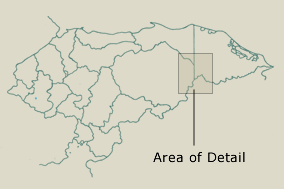
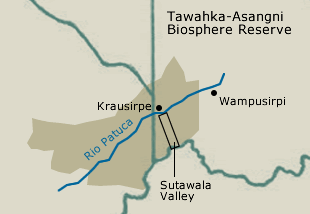
The TABR is part of one of the largest remaining tracks of wilderness areas left in Central America. Together with the Rio Platano Biosphere Reserve (RPBR), Patuca N.P., Caratasca W.R., the Rus Rus and Rio Kruta Biological Reserves and the Nicaraguan Mosquitia these areas comprise several million hectares. They provide refuge and act as a stronghold for some of the regions' most endangered animals such as the Manatee, Jaguar, Giant Anteater, Harpy and Crested Eagles and both the Scarlet and Great Green Macaws.
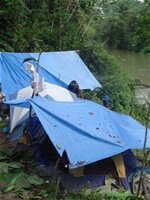 Tawahka Field Camp
The Tawahka reserve encompasses about 233,000 hectares and is situated between the southern border of the RPBR and the Nicaraguan border. Its borders lie mostly within the Departments of Gracias A Dios and Olancho. It is home to the Tawahka people who, with only a population of about 1,000, comprise one of the smallest indigenous groups remaining in Honduras. Their largest villages are Krausirpe and Krautara.
The reserve consists almost entirely of lowland broadleaf forest and borders some tracts of Caribbean pine savanna on its northern border. There are low-lying hills and many near-vertical limestone escarpments, quite reminiscent of some southeast Asian landscapes. Traversing the east and northeast parts of the reserve are the Montanas de Colon and Sierra Warunta respectively. These hills reach a maximum elevation of 865 m. Also traversing the reserve in a s.w. to n.e. direction isthe mighty Patuca River which enters into the Caribbean between the Caratasca and Brus Lagoons. Until recently this area has remained in nearly pristine condition with the Tawahkans being the principal occupying residents, but ladino colonizers are taking a foothold and clearing land for cattle and agriculture.
Upstream from Krautara, connecting the Patuca R. to the Coco R. are two, almost contiguous valleys. The Sutawala Valley has a small river running out of it and was chosen as our study site. It has been an area for recent sightings of both the Crested and Harpy Eagles.
The overall goal of the expedition was to look for and document unrecorded species which were expected to range northward into Honduras. More than 20 species of birds are to be expected (see list on pg. 158, "Birding Honduras; A Checklist and Guide", by Anderson and Bonta, 2002). Also, an unknown number of other flora and fauna new to Honduras would also be expected.
A number of people were invited to take part in this expedition with the final total being six participants and three local guides. Mateo and Christianne, two students from the Zamorano Ag. Univ. collected orchid samples for their herbarium. Robert and Irma did both butterfly and bird surveying while Pam and Dennis did mostly bird surveying.
The following was the day to day itinerary and outline of activities:
March 18 Flight from La Ceiba to Wampusirpe. Birding around the village and adjacent pine savanna
March 19 A.M. birding in the pine savanna Boat trip up Patuca R. Picked up local guide, Dionisio Cruz in Krausirpe. Overnight on gravel bar near the entrance of the Sutawala Valley.
March 20 Entered the Sutawala Valley and established base camp Some birding around camp.
March 21- March 24 Inventorying in Sutawala Valley
March 25 Return to Wampusirpe
March 26 Birding in pine savanna around Wampusirpe
March 27 Birding around Wampusirpe
March 28 Travel to Ahuas
March 29 Flight to La Ceiba
Although we didn't get to see a Harpy Eagle we made some significant finds including several new birds and one new butterfly for Honduras. We also established frequency data for a number of species whose status in Honduras was uncertain. Audio recordings were also obtained for many desirable species.
The following list contains the birds recorded on this expedition:
Bird List (MS Word, 39Kb)
NOTES ON CERTAIN SPECIES
- Semiplumbeous Hawk (Leucopternis semiplumbea) Two individuals were called in on March 23 with a tape whence tehy soared just over the canopy above us and responded vocally then perched nearby on a knoll.
- Black-collared Hawk (Busarellus nigricollis) This is an uncommon bird of prey in Honduras with most recent sightings coming from La Mosquitia. One adult was seen by Pam on March 23 at the confluence of the Sutawala and Patuca Rivers.
- Aplomado Falcon (Falco femoralis) In Honduras this falcon inhabits mostly pine savanna or pine/oak woodlands and is uncommon. However, in the Mosquitia savanna habitat it would probably prove to be fairly common if more field work were to be done. On three visits into the pine savanna we observed one individual on March 19 that perched on a snag in a large opening.
- Tawny-faced Quail (Rhynchortyx cinctus) Like many of the forest-dwelling quails this one is difficult to observe and is uncommon to rare in Honduras apparently ranging northeast to Tela. One female was seen deep in the Sutawala Valley on March 22.
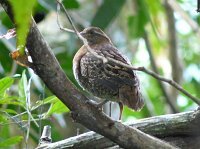
- Black-throated Bobwhite (Colinus nigrigularis) In Honduras this quail has been recorded only in the pine savannas of La Mosquitia. We found it to be quite common in the savannas around Wampusirpe inhabiting grassy and scrubby areas in small to medium sized groups.
- White-throated Crake (Laterallus albigularis) This crake reaches its northern limit of distribution along the Rio Platano in eastern Honduras. It inhabits wetlands with scrubby growth. We found it to be common along the Rio Patuca and is easily taped in and seen well.
- Gray-breasted Crake (Laterallus exilis) This tiny crake was historically recorded along the Rio Segovia (Monoe, 1968) until R. Gallardo recorded it at Lake Yojoa in Feb 2004. We found it to be common all along Rio Patuca, hearing its "piping" notes amongst the tall grass. At Wampusirpe we heard six individuals in a small area along a section of the river and were able to call one out into the open right at our feet.
- Great Green Macaw (Ara ambiguus) This large macaw reaches its northern limit of distribution in eastern Honduras. Two individuals were seen on March 20 at the entrance of the Sutawala Valley flying high overhead. It is much more abundant along the Rio Platano ( see Field Work-Rio Platano Bioshphere Reserve).
- Scarlet Macaw (Ara macao) This macaw once had a wide distribution in Honduras, even into the early 1900's. It is now restricted to isolated areas of Olancho and throughout La Mosquitia. One individual was seen on March 20 at the entrance of the Sutawala Valley. It is much more abundant along the Rio Platano (see Field Work-Rio Platano Biosphere Reserve).
- Mealy Parrot (Amazona farinosa) This large parrot's distribution in Honduras occurs along the Caribbean slope and historically inland to Lake Yojoa and is an uncommon to fairly common species. However, in the Tawahka reserve we found it to be quite common and outnumbering all other parrot species. It appears to be more common here than anywhere else in Honduras.
-
Spectacled Owl (Pulsatrix perspicillata) This is one of the largest owls in Honduras and is found primarily along the Caribbean slope in broadleaf forest and is uncommon to fairly common. One individual was observed in the early a.m. hours on March 23 and an audio recording was obtained. (
 AUDIO)
 - Black-and-white Owl (Ciccaba nigrolineata) This large, forest dwelling owl is fairly common along the Caribbean slope. One individual was heard in the p.m. hours on March 21. The call of this bird can be heard in the background on the audio clip of the Spectacled Owl.
- Snowcap (Microchera albocoronata) This tiny hummingbird reaches its northern limit of distribution in the rainforests of eastern Honduras where it is uncommon (to rare?). with very few recent records. When found it is often near a stream or river just inside the forest. One male was observed on March 21.
-
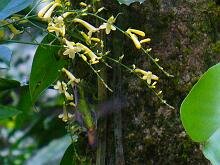 Female
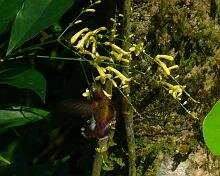 Male
Male - Bronze-tailed Plumeleteer (Chalybura urochrysia) This large hummingbird also reaches it northern limit of distribution in eastern Honduras. One male was seen on March 20 while feeding near ground level on a yellow Justicia flower.
-
Black-throated Trogon (Trogon rufus)
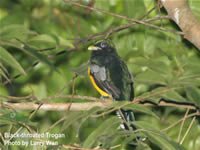
This yellow-bellied trogon ranges to western Honduras (2 sightings in Copan Ruins), but is more frequently found along the north coast. In the Tawahka reserve we found it to be common and was observed daily. -
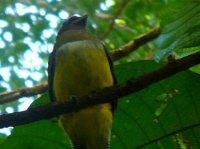 Female
 - Rufous Motmot (Baryphthengus martii) Surprisingly, this large motmot was not heard nor seen in the reserve, but occurs as fairly common in the adjacent Rio Platano.
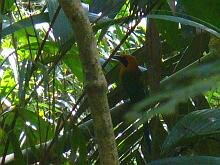
- Keel-billed Motmot (Electron carinatum) This rain forest motmot is common to fairly common along northern Honduras into La Mosquitia. One individual was observed on March 22 sitting alongside a Broad-billed Motmot. The latter was called in with a tape recording and began to call incessantly. Upon returning approx. 25 minutes later the Keel-billed was found there as well. For more info, photos and audio recording see "Birds of Special Interest".
- Broad-billed Motmot (Electron platyrhynchum) This rain forest species reaches its northern limit of distribution in northwest Honduras at the Lancetilla Botanical Gardens near Tela. In the Tawahka reserve we found it to be fairly common, being called in with a tape on two occasions; March 22 and 23.
- Great Jacamar (Jacamerops aurea) This species previously ranged from Costa Rica down into S. America. On March 20 we discovered one female at our base camp at the entrance of the Sutawala Valley. It was perched approx. 30 ft. high on an exposed branch and did not call. Video footage was obtained (See "Birds of Special Interest" for photo). It constitutes a range extension of some 500 km. and is sure to exist in eastern Nicaragua as well.
-
Chestnut-mandibled Toucan (Ramphastos swainsonii)
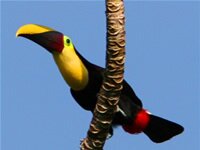
This, our largest toucan, ranges from e. Honduras to S. America. In Honduras it is only reported from the La Mosquitia region where it inhabits broadleaf rain forest and edge and is common to fairly common. It is found from sea level to at least 800m. - Rufous-winged Woodpecker (Piculus simplex) This rain forest dwelling species reaches its northern limit of distribution in northern Honduras though I know of no recent records there. We found it to be fairly common in the Tawahka reserve where it was heard on several occasions and a short audio recording was obtained.
- Checker-throated Antwren (Myrmotherula fulviventris) This antwren is found in Honduras only in La Mosquitia and in uncommon. When found, however, it is usually accompanying other species in mixed flocks of other antwrens and antshrikes. One male was observed in the Sutawala Valley on March 21.
- Chestnut-backed Antbird (Myrmeciza exsul) This antbird reaches its northern limit of distribution in northern Honduras along the Nombre de Dios mountains and inhabits humid rainforest. Records are few with most occuring in La Mosquitia. One individual was seen on March 22 in the Sutawala Valley.
- Golden-crowned Spadebill (Platyrinchus coronatus) This small and unusual flycatcher reaches its northern limit of distribution in Honduras east of the Sula Valley. It inhabits rainforest to at least 1,100m .and is uncommon. One individual was observed on March 22 feeding solitarily inside mature forest at mid levels.
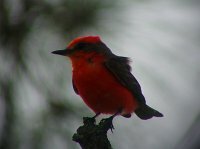
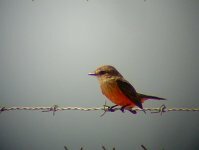
- Vermillion Flycatcher (Pyrocephalus rubinus) This beautiful flycatcher inhabits the lowland pine savannas of La Mosquitia. Although previously published as uncommon (Bonta and Anderson, 2002) we found it to be quite common all around Wampusirpe favoring marshy areas, but also found elsewhere.
-
- Snowy Cotinga (Carpodectes nitidus) The historic range for this lovely bird is La Ceiba (Nombre de Dios mountains) with no recent records from there. All recent sightings are from La Mosquitia. One individual was seen in the Sutawala Valley on March 21.
-
Black-throated Wren (Thryothorus atrogularis) This forest dwelling wren is a Mesoamerican endemic whose previous range was from Nicaragua to w. Panama. On March 21 around 6:00 a.m. I heard one singing inside the forest. I used a pre-recorded tape to call it in and it responded immediately by coming in and began to sing. The bird was seen well by Irma and me and I also obtained an audio recording. (AUDIO)
- Stripe-breasted Wren (Thryothoru thoracicus) This small Mesoamerican endemic also previously ranged from Nicaragua to Panama. On March 21 we heard one singing in the forest at base camp. Again, I used a pre-recorded tape to call it in and a pair immediately came into camp. We obtained video and audio recordings of them. For photo and audio recording see "Birds of Special Interest".
- Song Wren (Cyphorhinus phaeocephalus) This strange, but delightful wren has its northern limit of distribution in eastern Honduras where it was historically recorded along the Segovia River (Monroe, 1968). In the Sutawala Valley we found it to be fairly common where we found it on several occasions. For more info see "Birds of Special Interest".
- Slate-throated Gnatcatcher (Polioptila schistaceigula) On March 21 we observed a mixed flock of birds high up in the subcanopy. I heard a gnatcatcher species calling when both Dennis and I briefly observed an almost all black bird of gnatcatcher posture and size before it disappeared into the foliage. No audio nor video was obtained. The bird is known from central Panama down into S. America.
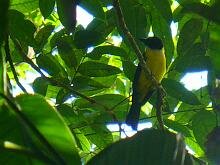
- White-throated Shrike-Tanager (Lanio leucothorax) This lovely forest dwelling tanager reaches its northern limit of distribution in eastern Honduras. We recorded it several times (mostly in mixed flocks) in the Sutawala Valley where it is fairly common.
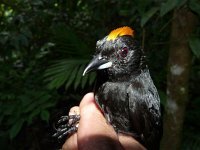
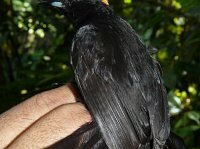
- Tawny-crested Tanager (Tachyphonus delatrii) This rainforest tanager reaches its northern limit of distribution in eastern Honduras. On March 21 we recorded several individuals in the Sutawala Valley.
-
- Blue-and-gold Tanager (Bangsia arcaei) A possible sighting of one in mixed flock with other tanagers. Only seen briefly and not likely a Gray-headed Tanager (E. penicillata) as the bird seen was approx. 25 ft. up in the trees. Bird apparently not recorded in Nicaragua.
-
Yellow-crowned Euphonia (Euphonia luteicapilla) I first recorded this bird for Honduras in 2002 along the Rio Platano upon observing 3 individuals. We found it to be common around Wampusirpe as well as the Sutawala Valley. Audio recordings were obtained. (AUDIO)
- Grassland Yellow-Finch (Sicalis luteola) Surprisingly not recorded in the short grassy areas around the village or pine savanna on this trip.
- Slate-colored Grosbeak (Saltator grossus) We found this bird to be fairly common to common in the Sutawala Valley where it was heard or seen almost daily. I obtained an audio recording of its song. For more info see "Birds of Special Interest".
Rio Platano Biosphere Reserve
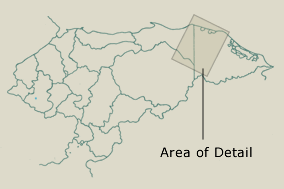
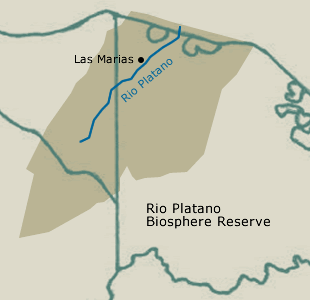
The RPBR is a UNESCO site that was established in 1982. It covers nearly 2 million acres and contains extensive wetlands consisting of marshes (seasonal and permanent), rivers, mangrove-lined lagoons and seasonal flood forest. There are also extensive scrubby dune and beach habitat along the coast. Large tracts of Caribbean pine/grass savanna are also present. Further inland one finds immense tracts of humid broadleaf forest containing much old growth up to an elevation of over 1,100m.
To date nearly 500 species have been recorded here with at least another 50 to be expected. Some of the most endangered species in Central America such as the Scarlet and Great Green Macaws are still found with relative ease. The Harpy and Crested Eagles still find refuge here with a number of recent sightings. Excursions into the reserve frequently yield previously unrecorded species and new species for Honduras. The easiest way to enter is to fly from La Ceiba to Palacios or Brus Lagoon and explore from there. The more adventurous route enters in from Olancho then raft down the length of the Platano River through the heart of the reserve; an epic eleven day trip (See "Tours" for more info).
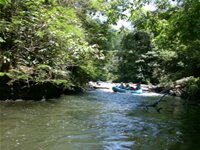 Rafting the Rio Platano
The following dates and locations are periods in which R. Gallardo resided or visited the reserve when bird records were kept.
March 1995 to May 1996. Robert resided in the village of Raista along the north coast during his Peace Corps Service. Birds were recorded in the vicinity as well as the rainforests around Ibans Lagoon.
April 17-21, 1997. Visit to the north coast of the reserve.
Aug. 13-16, 2001. Visit to the north coast with one client.
April 10-16, 2001. Trip up the Platano R. with four clients.
Jan. 3-6, 2002. Visit to the north coast.
March 28-April 4, 2002. Rio Platano Headwaters tour with J. Salaverri and his clients.
April 11-21, 2003. Rio Platano Headwaters tour with J. Salaverri and four birding clients of Gallardo, (constituted first birding inventory done in this part of the reserve).
April 25-28, 2003. Visit to the north coast of the reserve.
Feb. 11-14, 2004. Trip up the Rio Platano with clients.
Jan. 21-30, 2005. Trip to the reserve with Emerald Planet and the Nature Conservancy (Raista, Brus Lagoon, and Las Marias).
July 31 to Aug. 11, 2006. Rio Platano Headwaters tour. Found two new species for Honduras on this trip. See Trip Reports.
July 4 to 11, 2007-part of longer Honduras tour. Spent 3 days in Pico Dama area.
Jan. 8-1, 2008- Tour into the Rio Platano reserve to Las Marias then a 4 day trip up to Pico Dama.
February 2-14, 2009 -Rio Platano Headwaters Tour. Tour with J. Salaverri and 6 of Robert?s clients.
April 22- May 2, 2009- Rio Platano Headwaters Tour. A trip made with J. Salaverri and friends James Adams and Andrew Vallely.
March 4-16, 2010- Rio Platano Headwaters Tour. A trip made with J. Salaverri and a group from Missouri (MCHF & MDNR). Includes a day trip to La Tigra N.P:
The following list contains the birds that have been recorded within the reserve to date:
Bird List (MS Excel, 44Kb)
- Rufescent Tiger-Heron (Tigrisoma lineatum) This species reaches its northern limit of distribution in eastern Honduras. Although in some literature it is stated as being rare (Ridgely, 1989) or uncommon (Howell, 1995), it can usually be detected within the seasonal flood forest up in the subcanopy on the south side of Ibans Lagoon and occasionally along the edges of the Rio Platano. It is probably also frequents similar habitats along Brus Lagoon.
- Fasciated Tiger-Heron (Tigrisoma fasciatum) This forest dwelling tiger-herons known previous range was from Costa Rica to S. America. On a Rio Platano Headwaters trip in August 2006, Andrew V. and I observed one adult along a boulder-strewn section far upriver. Upon first encountering the bird it was alongside the river then it flew up into a tree where we observed it. Its dark nape and finely gold and black barred wings were the key characteristics seen. The bird has not yet been recorded in Nicaragua, but likely occurs there in similar habitat, perhaps in the Bosawas Reserve.For more info and great pictures go to ?Birds of Special Interest?.
- Agami Heron (Agamia agami) This beautiful heron is perhaps one of the most difficult to observe in Honduras due to its seclusive habits. It usually inhabits slow backwaters in seasonal flood forest or shady pools along creeks and rivers. One was observed along the Rio Platano on Apr. 1, 2002 during a Headwaters Tour. Two were also seen along a waterway en route to the village of Banaca on the south side of Ibans Lagoon in 1995.
- Green Ibis (Mesembrinibis cayennensis) This species reaches its northern limit of distribution in eastern Honduras. It is fairly common along some rivers and seasonal flood forest despite some published information (Howell, 1995).
- Black-collared Hawk (Busarellus nigricollis) This is an uncommon bird of prey in Honduras with most recent sightings coming from La Mosquitia. One adult was seen soaring on April 4, 2002 above the Rio Platano and another on Jan. 27, 2005 in the same vicinity.
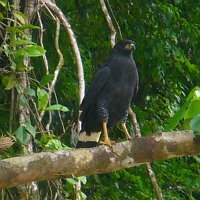
- Great Black-Hawk (Buteogallus urubitinga) This nearly all-black raptor can be easily confused with the Common Black-Hawk (B. anthracinus) and care must be taken in their identification. Two of the key features to identify the Great are seen in this picture: the heavily barred thighs and the cere which has less yellow than the Common.
- White-tailed Hawk (Buteo albicaudatus) This lovely hawk is uncommon throughout Honduras. Where found it is usually inhabiting a short grass savannah which is common in Olancho and part of La Mosquitia.
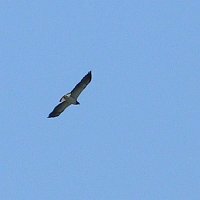
- Ornate Hawk-Eagle (Spizaetus ornatus) This handsome bird of prey ranges from Mexico to s. America. It is found mostly in or near humid broadleaf forest habitats from near sea level to well over 2,000m. It has been found to be common in the Rio Platano area. On one occasion we observed an adult diving after and missing an iguana along the riverbank.
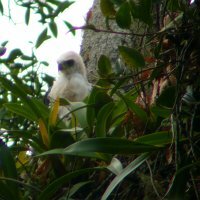
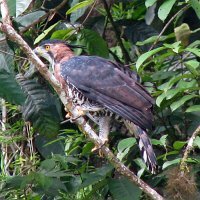
- Skua sp. (Catharacta sp.) On April 11, 2001 four observers and I watched a large bird chasing what appeared to be a Royal Tern offshore near the mouth of the Rio Platano. The bird was considerably larger than the tern and as it turned we saw "windows" on the underside of the wings. The other four had considerable experience with pelagic species and believed we were seeing a skua. Other records from the Caribbean have recorded the Great Skua (C. skua) so it is quite likely that this was the bird we observed.
- Large-billed Tern (Phaetusa simplex) This South American tern is typically found east of the Andes along rivers and occasionally wander to Central and N. America. On April 28, 2003 Eddy Bodden, Irma and I found one sitting alongside a flock of Royal Terns on a sandbar near Palacios in the northwest corner of the reserve. We walked to within about 40 ft. of the bird and clearly saw that it was a P. simple with its large, yellow bill and black cap. It was considerably smaller than the Royal Terns it was sitting next to.
- Scaled Pigeon (Patagioenas speciosa) One of Honduras´ loveliest pigeons. It is uncommon and infrequently seen within its rain forest habitat. It usually occupies the canopy and sub-canopy levels where it may sit quietly. At times it will perch on a high conspicuous snag where it sings. Most of my sightings have been from the Reserve.
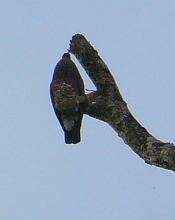
- Blue Ground-Dove (Claravis pretiosa) The male of this species is a two tone blue gray, much like a Blue-gray Tanager, but the female is a dull brown. This species can be quite common along the river banks of the lower Rio Platano, especially during the dry season.
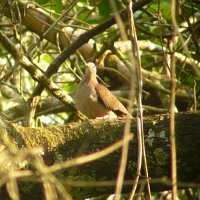
- Pheasant Cuckoo (Dromococcyx phasianellus) In Honduras this cuckoo typically inhabits lighter forest and thick scrub or second growth and is infrequently seen. On April 12, 2003 two of us observed one accompanying a mixed flock in deep rainforest at 1,100m. It was observed on our hike en route to the Rio Platano headwaters.
- Yellow-naped Parrot (Amazona auropalliata) The taxonomic status of this species and A. oratrix has not yet been fully resolved. The "Yellow-naped" group occurs in Honduras on the Bay Islands (where it is highly endangered of local extirpation), Gulf of Fonseca (where it is fairly common on Isla El Tigre), and La Mosquitia (where it is common to fairly common). Its habitats include semi-deciduous forest, secondary broadleaf forest and lowland Caribbean pine savanna. They have the unfortunate disposition of learning to be good "talkers" and are frequently found as household pets. In La Mosquitia they can still be seen in flocks consisting of up to 50 birds.
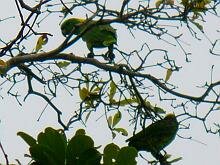
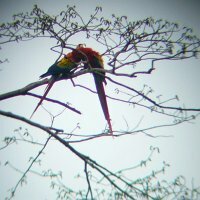
- Great Green Macaw(Ara ambiguus) This beautiful macaw has a stronghold in the reserve with the greatest numbers being found in the core zone. It is typically seen in pairs or small flocks and at times can be approached within thirty feet or so. Many are usually seen on the Rio Platano Headwaters Tour.See Birds of Special Interest for more information
- Scarlet Macaw (Ara macao) This macaw is still fairly common to common in the reserve and at times can be seen in large flocks, especially outside of the nesting season and where there is a large fruiting tree.See Birds of Special Interest for more information.
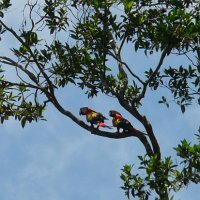
- Crested Owl (Lophostrix cristata) This large, humid forest owl is somewhat scare and local in Honduras. One individual was seen and heard on the nights of July 6-8, 2007 around the Pico Dama campsite within the Reserve. It constitutes the first record for Rio Platano.See Birds of Special Interest for more information
- Stygian Owl (Asio stygius) On Aug. 14, 2001 E. Bodden and I along with a tourist found an individual sleeping in a Caribbean Pine on the south side of Ibans Lagoon in the late a.m. hours. This large owl with curved ear tuffs and vermiculated chest pattern were seen well, even without binoculars. A. stygius is also found in Belize in the same habitat. This sighting constitutes the first record for Honduras.
- Ocellated Poorwill (Nyctiphrynus ocellatus) Only recently reported for Honduras (Anderson, 1998) this small forest dwelling poorwill is regularly seen along the Rio Platano up into the headwaters area almost to an elevation of 1,000m. It is often found flying low over the river at dawn and dusk searching for insects, either singly or in pairs. One pair was observed on a day roost which consisted of a small, horizontal branch about one foot above the ground. They were approached to within a few feet before they flew.
- Gray-rumped Swift (Chaetura cinereiventris) This dark swift is similar in appearance to many of the other Chaetura, but its large, shiny, light gray rump readily separates it. During the August 2006 Headwaters trip Andrew V. and I observed a number of flocks on three consecutive days. As individuals fed and dropped against the forest background the gray rump was easily seen. They fed alongside another black colored swift. This bird was on the list of species to watch for.
- Brown Violet-Ear (Colibri delphinae) This hummer is typically uncommon in Honduras (two sightings of mine along Pico Bonito N.P.), but have been found to be locally common in the reserve. On Apr. 12, 2003 we found four separate individuals during the hike into the Rio Platano headwaters. They were all seen between 800-1,100m.
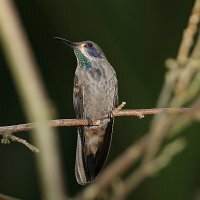
- Blue-chested Hummingbird (Amazilia amabilis) On Apr. 18,2003, during a Rio Platano Headwaters tour we observed a female of this species for several minutes as it fed on a blooming Inga tree. Its speckled throat and black-tipped, flesh-colored bill were seen well by both Dennis Beall and I. Its previous limit of distribution was somewhere in eastern Nicaragua and this sighting constitutes the first Honduran record.
- Hummingbird nest This nest was shot along the trail leading up to Pico Dama. Perhaps it belongs to the Bronze-tailed Plumeleteer which was seen in the vicinity feeding on some blooming shrubs with pink flowers (see ?Hummingbird Nectar Sources? under ?Field Work-Highlands? for a photo of the flower).
- Snowcap (Microchera albocoronata) This tiny hummingbird reaches its northern limit of distribution in the rainforests of eastern Honduras where it is uncommon (to rare?) with very few recent records. When found it is usually near a stream or just inside the forest along a river. One male was seen on Apr. 14, 2003 along the Rio Platano (day 2 of rafting on Headwaters Tour). It was feeding inside the forest near the river's edge on a shrub with small, white flowers about 8-10 ft. off the ground.See Tawahka section for more information and photos
- Keel-billed Motmot (Electron carinatum) This forest dwelling motmot is common to fairly common along northern Honduras into La Mosquitia. One was seen in the upper reaches of the Rio Platano at the put-in spot. It was perched on a leafless snag a few feet above the river in the shade.See Birds of Special Interest for more information
- Green-and-rufous Kingfisher (Chloroceryle inda) This rain forest dwelling kingfisher was first recorded for Honduras in 1995 despite previously published information ( Anderson and Bonta, 2002). A former Peace Corps Volunteer (Erik Nielsen) informed me in mid 1995 that he observed a kingfisher "in the rainforest" that appeared to be a C. inda. On the south side of Ibans Lagoon I found them to be locally fairly common where they inhabit slow, meandering, shallow to deeply cut canals that run through the rainforest. They are, however, difficult to approach.
- Yellow-eared Toucanet (Selenidera spectabilis) This beautiful toucanet inhabits deep rainforest east of the Sula Valley and is uncommon in Honduras with most sightings coming from Pico Bonito N.P. On a visit to the reserve in May 1994 I observed one that accompanied a Keel-billed Toucan in deep rain forest outside the village of Limonal, Rio Sico.See Birds of Special Interest for more information
- Rufous-winged Woodpecker (Piculus simplex) This rain forest dwelling species reaches its northern limit of distribution east of the Sula Valley with most recent reports coming from La Mosquitia. One pair was seen climbing vines just inside the forest along the Rio Platano on Apr. 3, 2002. One was also heard on Apr. 16, 2003 along the Rio Platano.
- Slaty Spinetail (Synallaxis brachyura) This bird ranges from n. Honduras into S.A. Although there are historic records from Lancetilla where it is supposed to be sympatric with the Rufous-breasted Spinetail I have actually not found either one there. The Slaty, however, is fairly common in eastern Honduras and is typically found skulking in scrubby vegetation, often along rivers. Its rattling, bouncing ball vocalization often gives away its presence.
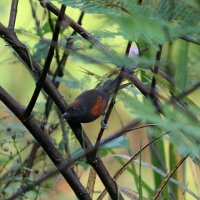
- Scaly-throated Leaftosser (Sclerurus guatemalensis) This species ranges from s. Mexico to n. S.A. It inhabits humid broadleaf forest and is almost always found on the ground probing leaflitter. This individual was mist-netted during the Rio Platano Biological Expedition of 2008.
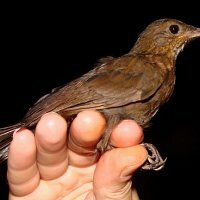
- Fasciated Antshrike (Cymbilaimus lineatus) This bird is known in Honduras only from the La Mosquitia region and eastern Olancho. It inhabits rain forest and edge, preferring thick, overgrown areas. It is fairly common in the Rio Platano area and is not usually seen unless a tape playback is used whence it readily comes in to view.
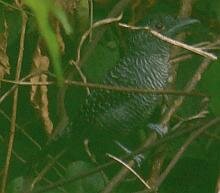
- Checker-throated Antwren (Myrmotherula fulviventris) This antwren reaches its northern limit of distribution in eastern Honduras where it is uncommon. One male was seen accompanying a small mixed understory flock on Apr. 17, 2003 along the upper reaches of the Rio Platano.
- Streak-crowned Antvireo (Dysithamnus striaticeps) This antwren has its northern limit of distribution in the rain forests of eastern Honduras where it is uncommon. On Jan. 26, 2005 one female was observed accompanying a mixed understory flock along the Rio Platano.
- Stub-tailed Spadebill (Platyrinchus cancrominus) This tiny flycatcher inhabits moist, broadleaf forest and edge. Once its call is learned it can be readily detected, but is difficult to observe. It is an active understory feeder and hops around in a seemingly frantic manner as it pounces on insects.
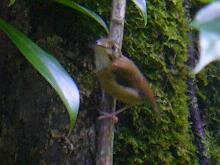
- Golden-crowned Spadebill (Platyrinchus coronatus) This forest dwelling flycatcher reaches its northern limit of distribution in Honduras east of the Sula Valley. One was seen on the hike into the headwaters of Rio Platano on Apr. 12, 2003. Ths bird is infrequently encountered in Honduras and is usually found singly in dense woodland.
- Tawny-chested Flycatcher (Aphanotriccus capitalis) On Feb. 14, 2004 I observed an unusual Empidonax-like flycatcher feeding about 4 feet above the groun in a dense tangle adjacent to the Rio Platano near the village of Las Marias. This is the birds' known habitat in some literature (Ridgely, 1989). Clearly seen were the buffy wing bars and gray-colored head. Unfortunately, the bird was not vocalizing as I had my recording equipment in hand. It was observed for no more than 15 seconds. No other lowland rainforest dwelling flycatcher has these distinctly colored wing bars and contrasting head colors. This bird is apparently scarce within its range (Ridgely, 1989) whichis northeast Costa Rica to eastern Nicaragua, but was likely to turn up in eastern Honduras (Anderson & Bonta, 2002).
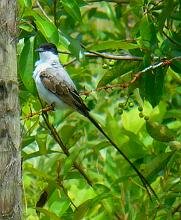
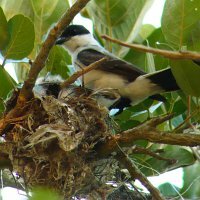
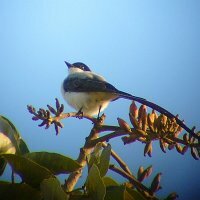
- Fork-tailed Flycatcher (Tyrannus savanna) This lovely resident long tailed flycatcher is found in scattered localities throughout the country in open areas. It is particularly common in the savannas of the La Mosquitia region where in some areas hundreds can be seen in one day.
- Rufous Piha (Lipaugus unirufus) This bird is found along the Caribbean slope and inhabits humid, broadleaf forest. It typically inhabits the canopy and can be hard to see. Its loud whistle usually gives away its presence. It is common within the Reserve.
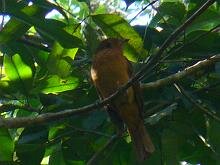
- Speckled Mourner (Laniocera rufescens) This bird is infrequently found in Honduras, but we have observed it twice in the headwaters of Rio Platano. One was seen on Apr. 13 and another on Apr. 17, 2003. Both individuals were seen perched quietly in the subcanopy in mature forest. It is probably more frequent in its appropriate habitat than records indicate (Anderson & Bonta, 2002) due to its solitary and secretive habits. See Birds of Special Interest for more information
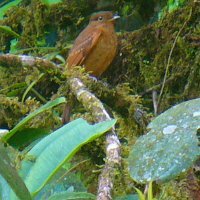
- Lovely Cotinga (Cotinga amabilis) Although commonly seen in certain areas around Pico Bonito N.P. this gorgeous bird is infrequently recorded elsewhere in Honduras. One male was spotted on Apr. 13, 2003 on the second day of the hike into the Rio Platano headwaters. It and the Snowy Cotinga were seen at the exact same locale. This species is, however, much more common, at least locally, than some literature may indicate (Anderson & Bonta, 2002). See Birds of Special Interest for more information
- Snowy Cotinga (Carpodectes nitidus) This species has been rarely encountered in Honduras outside of La Mosquitia. On Apr. 13, 2003 six individuals were seen in the headwaters of Rio Platano. One individual was perched in the canopy of a large tree as it fed on fruits. Eventually it took wing and flew approx. 1/2 mile across a valley to confront another Snowy Cotinga and chased it up and over a large hill. Another individual was also seen on Apr. 15, 2003 down lower on the Rio Platano. This canopy-dwelling species is probably more abundant in its proper habitat than published records indicate (Anderson & Bonta, 2002).See Birds of Special Interest for more information
- Three-wattled Bellbird (Procnias tricarunculata) This unusual cotingid reaches its northern limit of distribution in Honduras east of the Sula Valley. They are found within its range in hilly and mountainous areas of Olancho and La Mosquitia from near sea level to over 2,300 m. One was heard on Apr. 13, 2003 in the headwaters (second day of hike) of Rio Platano and am informed that they are frequently found in the general vicinity (J. Salaverri, pers. comm.).
- White-ruffed Manakin (Corapipo altera) This manakin reaches its northern limit of distribution in Honduras east of the Sula Valley with most recent records from Olancho or La Mosquitia. One male was seen on Apr. 12, 2003 on the hike into the headwaters of Rio Platano at approx. 900m.
- Mangrove Swallow (Tachycineta albilinea) This swallow typically inhabits lowland areas and is found near bodies of water. It is particularly common along the north coast. It is very common along the Rio Platano river itself where hundreds can be seen daily feeding and perching on snags.
- White-fronted Nunbird (Monasa morphoeus) This nunbird also reaches its northern limit of distribution in eastern Honduras. It also typically is found high in the canopy and will come down low to feed at army ant swarms.
- Bicolored Antbird (Gymnopithys leucaspis) This is one of our obligate antbirds which is almost always found associated with army ants. It is often quite easily approached when found at an ant swarm. It ranges from e. Honduras to s. America.
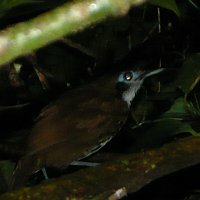
- Wing-banded Antbird (Myrmornis torquata) Previously unrecorded for Honduras this species was first seen by John Ascher during the 2008 Rio Platano Biological Expedition. On a subsequent trip in April 2009 James Adams secured this photo of a male. To date it has only been found behind the La Cueva camp along the Rio Platano, but may well exist elsewhere in the reserve or even in Tawahka. It ranges from e. Honduras to s. America, being quite uncommon and local in C.A. For more info see ?Birds of Special Interest
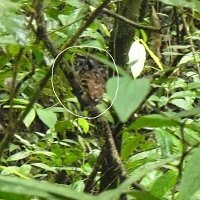
- Eye-ringed Flatbill (Rhynchocyclus brevirostris) This species ranges from s. Mexico to n. S.A. It inhabits mostly humid broadleaf forest, but occasionally humid mixed pine/oak forest. Sometimes seen singly and often with canopy mixed species flocks. It is widespread in Honduras, but uncommon everywhere. This individual was mist-netted during the Rio Platano Biological Expedition of 2008.
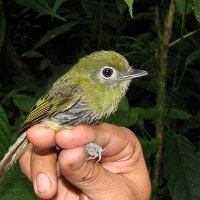
- Streak-chested Antpitta (Hylopezus perspicillatus) This species was only recently recorded in Honduras in 1983. It is uncommon to fairly common along the Rio Platano corridor. It is far more often heard than seen. The bird photographed here took well over one hour just to track down its voice. Several minutes upon sitting down on a log I turned to my right to see it just sitting on that vine singing away. A tribute to its ventriloquil capabilities.
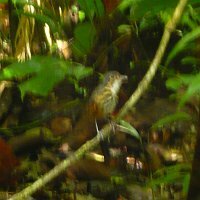
- Tropical Pewee (Contopus cinereus) This resident pewee is found along the Caribbean slope, but is not common anywhere. It is, however, fairly easy to find in the vicinity of Las Marias, Rio Platano.
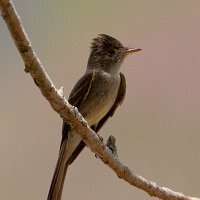
- Long-tailed Tyrant (Colonia colonus) This lovely little flycatcher has its northern limit of distribution in eastern Honduras. It occupies open to semi-open areas where there is a suitable snag for it to perch on where it sallies out to catch insects. It is common all along Rio Platano.
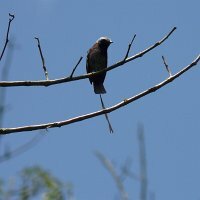
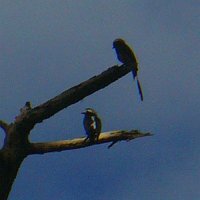
- Gray-capped Flycatcher (Myiozetetes granadensis) This charming flycatcher is found from e. Honduras into s. America. It is common around Las Marias, Rio Platano where it inhabits semi-open areas. It can initially be confused with the common Social Flycatcher.
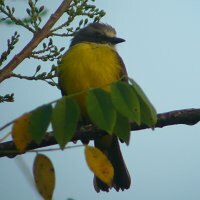
- Piratic Flycatcher (Legatus leucophaius) This is one of our Austral migrants which come up from S. America to breed. They are found mostly in low, humid valleys at scattered locales throughout Honduras. In La Mosquitia they are common and less common westward. They are often associated with Oropendola colonies where they too build nests. Usually seen and heard calling from atop a tree.
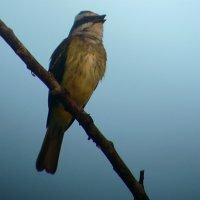
- Stripe-breasted Wren (Thryothorus thoracicus) On July 10, 2007 one individual was heard and positively identified one hour downriver (north) of Las Marias in area known as El Chile. It was calling from thick, riverside vegetation. This constitutes the first record for the Reserve and a range extension from its previously known locality in the Sutawala Valley within the Tawahka-Asangni Biosphere Reserve.
- White-breasted Wood-Wren (Henicorhina leucosticta) This wren is quite common throughout Honduras in humid broadleaf forests from sea level to at around 1,500m. They are more commonly heard than seen as they are great skulkers in the forest understory. Like many wrens they have a highly varied repertoire.
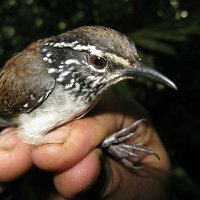
- White-throated Thrush (Turdus assimilis) Although typically encountered in the western and central highlands of Honduras we observed one along the trail on Apr. 12, 2003 while hiking into the headwaters of Rio Platano at an elevation of 1,100m.
- Slate-colored Solitaire (Myadestes unicolor) Another bird that is typically a western and central highland species. One individual was heard singing along the trail on Apr. 12, 2003 en route to the headwaters of Rio Platano at approx. 1,100m.
- Black-throated Blue Warbler (Dendroica caerulescens) This lovely wood warbler is rarely encountered on mainland Honduras and I have only seen two specimens in nearly 13 years. One male in alternate plumage was observed closel as it fed at ground level in the village of Raista on the north coast of the Reserve in Apr. 1995.
-
Golden-crowned Warbler (Basileuteru culcivorus) Typically a highland species found in western and central Honduras. Several individuals were seen along the trail on Apr. 12, 2003 at 1,100m. en route to the headwaters of Rio Platano.
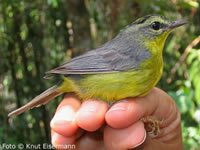
- Palm Warbler (Dendroica palmarum) This migrant resident wood-warbler is common along the coast in Rio Platano, especially in the pine-grass savannas where groups of up to 20 or more can be found together. Although appearing in Howell and Webb?s range map as occurring along the north coast I have not personally found it outside of La Mosquitia.
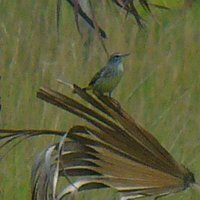
- Gray-crowned Yellowthroat (Geothlypis poliocephala) This species occurs throughout much of the country in semi-open areas, scrub and light woodland. I photographed this lovely male singing on the south side of Ibans Lagoon.
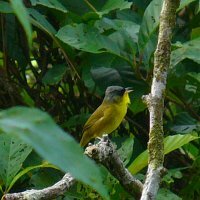
- Buff-rumped Warbler (Phaeothlypis fulvicauda) This warbler ranges from n. Honduras to s. America. It is quite common along river and streams in most of the La Mosquitia region. This individual was mist-netted during the Rio Platano Biological Expedition of 2008.
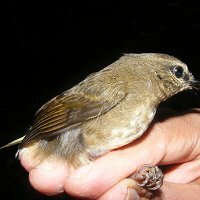
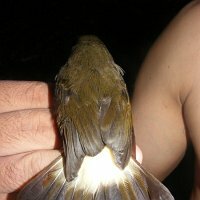
- Tawny-crested Tanager (Tachyphonus delatrii) This lowland rainforest tanager reaches its northern limit of distribution in eastern Honduras. They have been found principally along primary rainforest edge in the core zone of the Reserve. One small flock was seen on Apr. 2, 2002 along the Rio Platano in the headwaters. Individuals were also seen on Apr. 15, and 17, 2003 along the Rio Platano in the headwaters.
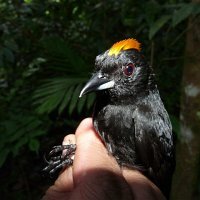
- Passerini´s Tanager (Ramphocelus passerinii) This handsome bird is found along the Caribbean slope in humid areas. It prefers rain forest edge and semi-open areas. It is quite common within the reserve. The female is a dull brown, but retains the bluish bill.
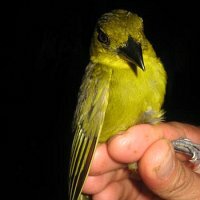
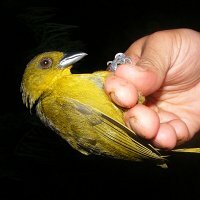
- Olive Tanager (Chlorothraupis carmioli) This bird was previously unrecorded for Honduras, but has proven to be quite common to abundant in the upper Rio Platano watershed. It is often found in large noisy flocks and at times with mixed species flocks of Tawny-crested and White-shouldered Tanagers. This individual was mist-netted during the Rio Platano Biological Expedition of 2008.
- Yellow-crowned Euphonia (Euphonia luteicapilla) This euphonia was expected to exist in Honduras (Monroe, 1968) as it occured in eastern Nicaragua. This first sighting was made on Apr. 3, 2002 of a male and female along the Rio Platano just upriver from the village of Las Marias.
- White-vented Euphonia (Euphonia minuta) This euphonia is infrequently encountered in Honduras and resides on the Caribbean slope and typically occurs along forest edge. Two males and several females were observed near the village of Raista on Jan. 6, 2002.
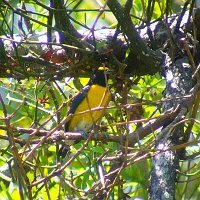
- Rufous-winged Tanager (Tangara lavinia) This beautiful forest dwelling tanager reaches its northern limit of distribution in Honduas east of the Sula Valley. Published information record it as uncommon here (Howell & Webb, 1995 and Anderson & Bonta, 2002), but I have found it to be fairly common and locally common at certain locales. Individuals were even photographed at the Lodge at Pico Bonito in Dec. 2003 at close range. One male and a female were seen on the morning of March 29, 2002 in the Rio Platano headwaters at approx. 300m. Another male was seen on Apr. 12, 2003 accompanying a mixed flock at 1,100m. during the hike en route to the Rio Platano headwaters.
- Shining Honeycreeper (Cyanerpes lucidus) This species is listed and uncommon in Honduras (Anderson & Bonta, 2002), but I have found it to be fairly common in certain locales, especially around Pico Bonito N.P. and La Mosquitia. On Apr. 1, 2002 we observed individuals along the Rio Platano in the headwaters. On Apr. 13,17 and 18 we observed many males and females at three locations along Rio Platano feeding on a red, bottle brush-like flowering vine.
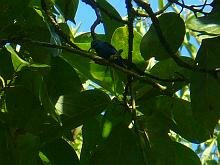
- Slate-colored Seedeater (Sporophila schistacea) This species was first recorded for Honduras in 1983 by M. Marcus and its current frequency is listed as uncommon (Anderson & Bonta, 2002). However, I have found it to be very common locally along the Rio Platano upriver from Las Marias on the 4th and 5th days of rafting during both Headwaters Tours I have done in 2002 and 2003. They are heard singing atop small trees adjacent to the river usually some 15-25 ft. high, but are difficult to observe. See Birds of Special Interest for more information
- Grassland Yellow-Finch (Sicalis luteola) To the best of my knowledge and published data available this species has not been recorded anywhere else in Honduras outside of La Mosquitia where it is locally common to abundant. It resides and feeds in short grassy areas, often where livestock graze. One flock of 200+ was seen on Jan. 3, 2002 in a front yard in the village of Nueva Jerusalem on the north coast of the Reserve. Small flocks were also seen around the village of Brus Lagoon on Jan. 24 and 28, 2005.
- Orange-billed Sparrow (Arremon aurantiirostris) This is the only true rainforest dwelling sparrow in Honduras. It is found principally along the Caribbean slope in the understory or adjacent second growth. Although brilliantly patterned it is often quite difficult to observe.
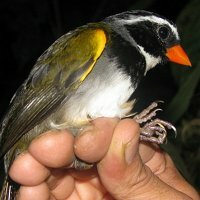
- Botteri's Sparrow (Aimophila botterii) This sparrow is known in Honduras from only the La Mosquitia where is resides in the pine-grass savanna. On March 26, 2004 we observed one along the airstrip in Wampusirpe on the edge of the Reserve.
- Slate-colored Grosbeak (Saltator grossus) This forest dwelling grosbeak reaches its northern limit of distribution in eastern Honduras and was recorded in 1983 by M. Marcus. On Apr. 20, 1997 I found one in thick second growth vegetation on the south side of Ibans Lagoon in the Reserve. For more info. See "Birds of Special Interest".
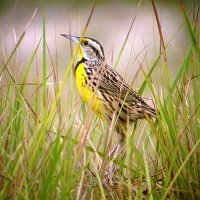
- Eastern Meadowlark (Sturnella magna) Although this bird is widespread in Honduras and appear to be the same species their vocalizations seem to be quite different. It is quite likely that the birds now known as ?Eastern Meadowlark? throughout its wide range will be split into various species. This photo was taken in Brus Lagoon, Gracias A Dios.
Highlands of western and southwestern Honduras
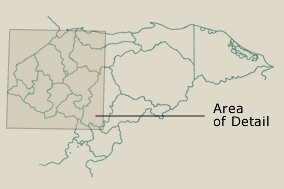
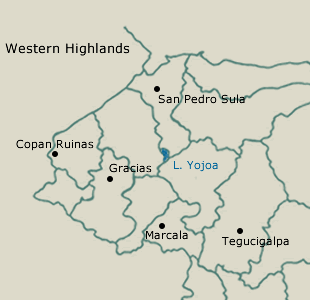
Although there are highlands throughout Honduras this section is devoted to mountains of western Honduras. This includes areas found all or in part of the Departments of: La Paz, Intibuca, Lempira, Ocotepeque, Copan, Santa Barbara, Cortez, Francisco Morazan and Comayagua. This area is comprised of a series of discontinuous mountain ranges and contains most of the highest peaks found in Honduras. Found here are a number of national parks and reserves including Cusuco, Celaque, Santa Barbara, Cerro Azul Copan, Cerro Azul Meambar and Montecristo-Trifinio National Parks. Other protected areas include: Erapuca, Opalaca, Guisayote, Mixcure, Montecillos and a few other other small ones.
Although there are a number of low-lying valleys with humid, broadleaf forest occurring here, this section is focusing on highland species typically found above 1,000m. This section also does not include the Dept. of Copan as it is treated separately. There are some two dozen species that end their southern limit of distribution within this area or just barely reach northwestern Nicaragua.
The following accounts are for certain species typically found in greater abundance in theses highlands or some that may be scarce altogether. This section also includes a Lake Yojoa supplement as it falls within the biogeographical area and where a number of interesting species have been found.
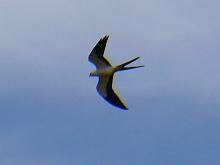
- Swallow-tailed Kite (Elanoides forficatus) This magnificent bird is found throughout the country in nearly all habitats at any elevation, but is more common at mid-elevations and lower highlands. Some individual birds are also migrants. Sometimes seen in groups of a dozen or more.
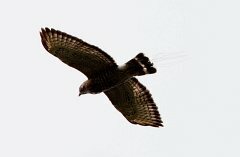
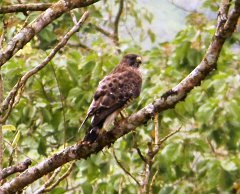
- Broad-winged Hawk (Buteo platypterus) This medium size raptor can be found throughout the country as wintering residents and commonly as transients. Around April during migration it can sometimes be found in the hundreds.
-
-
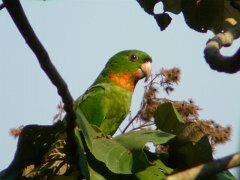
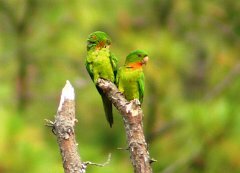
Red-throated Parakeet (Aratinga rubritorques)
The extent of orange on the throat of this parakeet is variable, but most populations found in Honduras tend to have entire orange throats. In some parts of the country flocks of up to 50 birds or more can still be seen. The La Muralla area has exceptionally high numbers of these birds. -
-
Whiskered Screech-Owl (Otus trichopsis) This small owl ranges through the highlands of western Honduras
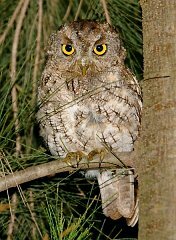 in pine/oak habitat mostly above 1,000m. Like most screech-owls, its presence is usually only detected at night and can usually be lured in with a tape recording. One was heard on the evening of Apr. 3, 2005 near Gracias, Lempira. This photo was taken at the Entre Pinos resort in El Salvador just over the border from Ocotepeque.
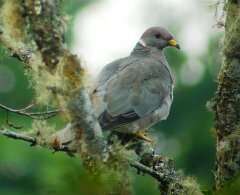
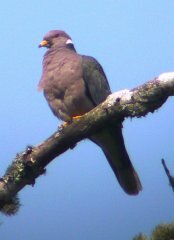
- Band-tailed Pigeon (Patagioenas fasciata) This is our highest ranging large pigeon and is found throughout the highlands. It occupies pine-oak and cloud forest habitats and can be found in small flocks. It is common in the La Esperanza and Marcala areas.
-
-
White-faced Quail-Dove (Geotrygon albifacies) This large dove ranges from e. Mexico,
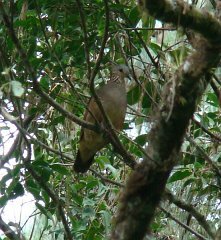 the Guatemalan and Honduran highlands to north-central Nicaragua. It is a highland species that occurs from around 1,000m. to at least 2,500m. in humid pine/oak woodland and broadleaf forest. It is often found walking on the ground where it searches for food. Although it is widespread in Honduras it can be a rather difficult bird to observe. Its low, resonating call is heard far more often than the bird is seen.
 -
Great Swallow-tailed Swift (Panyptila sanctihieronymi)
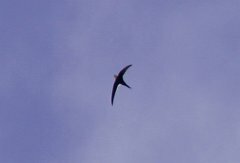 Honduras is perhaps the best country to observe this wonderful bird. Places like Celaque N.P., La Tigra N.P. and Copan often produce this species for those who are looking for it. One of its vocalizations is reminiscent of a Killdeer. It often flies in a light rain whence it can be seen flying very low overhead.
-
Humminbird Netar Gallery
This new section is dedicated to show some of the flowers that our 41 species of hummingbirds use and each species that I have observed feeding on them. Some of these flowers are exotics or cultivars while the majority of them are natives. Thanks goes to Dahlia Sanchez and Paul House for identifying some of the flower photos to species. Some have yet to be identified.
-
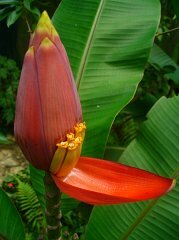 Banana flowers of nearly all kind produce nectar that attracts a wide array of hummers, especially if the plants are near more natural surroundings where hummers will come out of a rainforest to feed.
- Long-billed Hermit
- Stripe-throated Hermit
- Wedge-tailed Sabrewing (See Birds of Special Interest for photo)
- Violet Sabrewing
- Azure-crowned Hummingbird
- Rufous-tailed Hummingbird
- Cinnamon Hummingbird
- Stripe-tailed Hummingbird
-
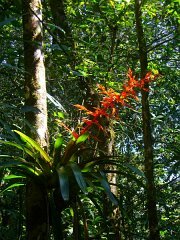 Plant blooming in February. Malcote Private Nature Reserve. Violet Sabrewing Crowned Woodnymph Stripe-tailed Hummingbird Bromeliads in general are good nectar sources for hummers all over the country and include other species such as:
- Salvin`s Emerald
- Honduran Emerald
- Azure-crowned Hummingbird
- Cinnamon Hummingbird
- Green-throated Mountain-Gem
- Green-breasted Mountain-Gem
- Magnificent Hummingbird
- Slender Sheartail
- Sparkling-tailed Hummingbird
-
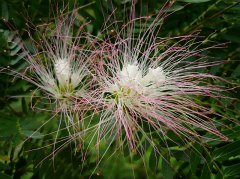 Originally from n. S.A. Found throughout country as an ornamental. Blooms in mid rainy season.
- Cinnamon Hummingbird
-
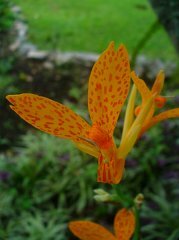 Canna flowers come in a variety of colors, shapes and sizes. Many of the smaller flowering varieties are good for hummingbirds.
- Cinnamon Hummingbird
- Long-billed Hermit
- Rufous-tailed Hummingbird
-
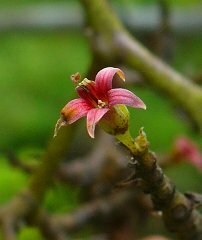 The flowers of the tree that gives us cashew nuts is fairly small and inconspicuous, but I have seen two hummingbird species feeding on it around the swimming pool at the Lodge at Pico Bonito, one of which was quite the surprise. The Violet-headed was seen feeding on and off at the tree all day for two consecutive days on April 15, 2005. It is regularly found on the nearby ridge trail.
- White-bellied Emerald
- Violet-headed Hummingbird
-
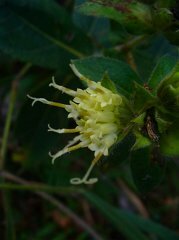 Celaque N.P. Villa Verde route Plant blooming in February.
- Sparkling-tailed Hummingbird-female
-
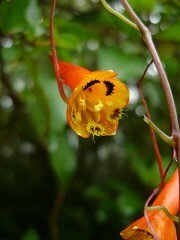 Rio Amarillo, Copan Plant blooming in December.
- Emerald-chinned Hummingbird
- Green-throated Mountain-Gem
- White-eared Hummingbird
-
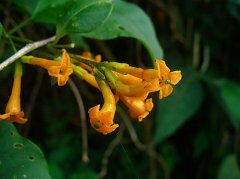 This wildflower is a scraggly vine encountered on the El Rosario side of La Tigra N.P.
- Green-breasted Mountain-Gem
-
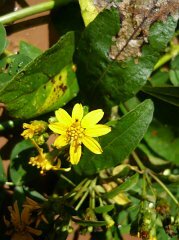 This wildflower is a small bush that was found blooming in Sept. along the main trail in La Tigra N.P. Visiting it was a male
- Wine-throated Hummingbird.
-
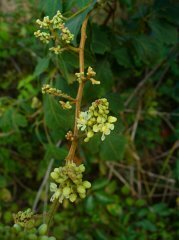 Copan Ruinas. Road to La Laguna-San Francisco Scandent vine-like plant growing along road. Blooming in January.
- Salvin`s Emerald
-
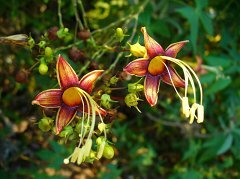 I found this weedy vine alongside the road behind Hacienda San Lucas that leads to La Pintada. It was blooming in April. Paul House did not even know what family it belonged to.
- Cinnamon Hummingbird
- Salvin`s Emerald
-
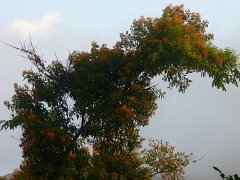
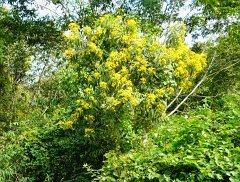 The following three plants are favorite nectar sources for the Black-crested Coquette. The pinkish flower is a medium sized tree found around the Los Pinos visitor center at Lake Yojoa. The yellow composite flowers are found in hilly country around Copan. The orange mistletoe flower was found at Pico Bonito when during an August visit a number of coquettes were seen feeding on it. Also fond of that particular mistletoe is the Brown Violet-Ear, also at the same locale.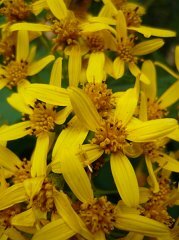
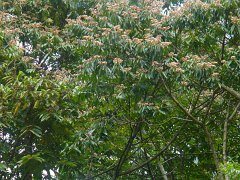
-
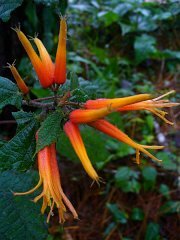 This scraggly, large shrub grows in many mid to high elevation sites throughout the country. It is common along roads and other semi-open areas that do not get cut or eaten by livestock. It blooms from at least Oct. to March. The dominant species guarding this plant is the Azure-crowned.
- Green Violet-Ear
- White-eared Hummingbird
- Azure-crowned Hummingbird
- Green-throated Mountain-Gem
-
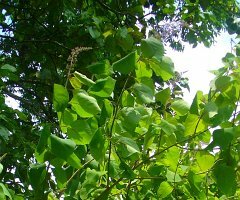 This native shrub occurs in semi-open areas . It blooms during the rainy season from at least June through Dec. This was photographed at the Enchanted Wings Nature Center in Copan Ruins.
- Salvin`s Emerald
-
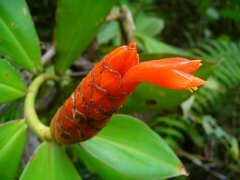 The equivalent to our New World gingers, these plants can be found throughout the country, mostly at low to middle elevations. Plant growth is often in a spiral manner. Their blooms attract hummingbirds.
- Stripe-throated Hermit
- Long-billed Hermit
-
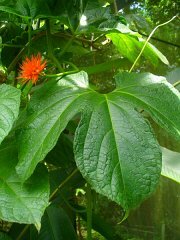
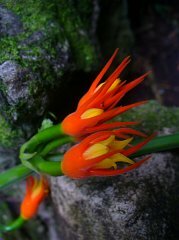 This native vine and crawling plant grows in humid areas, especially along the north coast. It is fairly common around the northern perimeter of Pico Bonito N.P., especially near the entrance to the 2,000 hectare CURLA study area. It can bloom on and off most of the year once a plant reaches maturity.
- Long-billed Hermit
- Scaly-breasted Hummingbird
- Violet Sabrewing
- White-necked Jacobin
- Stripe-tailed Hummingbird
- Rufous-tailed Hummingbird
- Purple-crowned Fairy
-
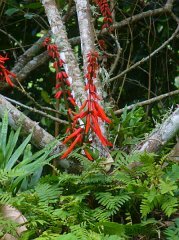 This grows into a medium size tree that can put out a fairly large number of blossoms. I have seen the red form and orange flowering trees scattered around the country. They also are favorite nectar sources for many birds including Jays, Oropendolas and Orioles.
- Magnificent Hummingbird
- Azure-crowned Hummingbird
- Green-breasted Mango
-
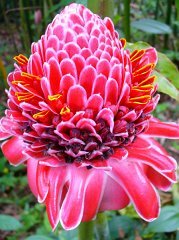 This exotic species is found in many tropical areas as an ornamental and used in the cut flower trade. Where the flowers are not cut it can attract a number of species.
- Band-tailed Barbthroat
- Long-billed Hermit
- Stripe-throated Hermit
- Scaly-breasted Hummingbird
- Rufous-tailed Hummingbird
-
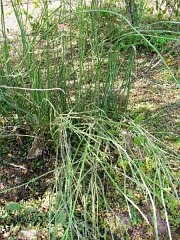
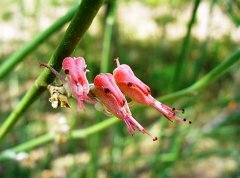 Honduran Emerald Reserve, Olanchito, Yoro. Scrawling plant similar in appearance to a Horsetail, but leafless. Blooming in Feb.
- Honduran Emerald
- Salvin`s Emerald
- Cinnamon Hummingbird
-
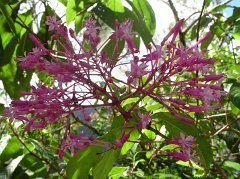 Native highland plant found commonly alongside roads. Blooming in Feb. Also attracts Papilio garamas swallowtail and Catasticta teutila sulphur butterflies as well as Skippers ( family-Hesperiidae). It is a very important nectar source for the larger highland species.
- White-eared Hummingbird
- Green-throated Mountain-Gem
- Green-breasted Mountain-Gem
- Amethyst-throated Hummingbird
- Garnet-throated Hummingbird
-
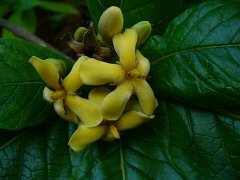 This native tree is locally called Irayol in Copan and blooms from June to about Sept. It is a medium size tree with large leaves. It is a favorite nectar source for this hummer, being visited frequently throughout the day.
- Cinnamon Hummingbird
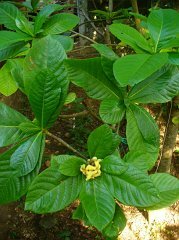
-
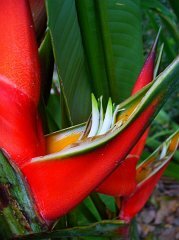 Ornamental growing at the Pico Bonito Lodge, La Ceiba.
- Blooming in April.
- Long-billed Hermit
- Stripe-throated Hermit
-
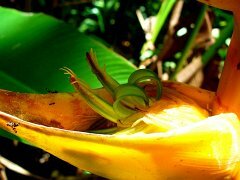 Pico Bonito N.P. rainforest. Blooming in July. Violet Sabrewing many males seen dominating a stand of these flowers along the trail at the Lodge at Pico Bonito
-
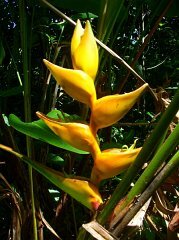
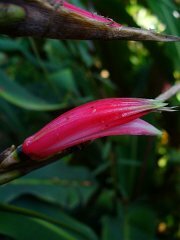 This Heliconia is planted at the Enchanted Wings Nature Center in Copan, but we originally brought it back from La Mosquitia.
- Cinnamon Hummingbird
-
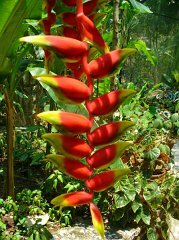 Enchanted Wings Nature Center, Copan Ruins, the Lodge at Pico Bonito. Blooming in May.
- Long-billed Hermit
- Stripe-throated Hermit
- Rufous-tailed Hummingbird
- Cinnamon Hummingbird
-
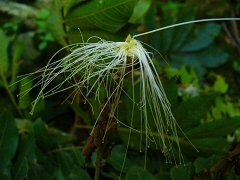 There are a number of common names for this large genus of leguminous trees called Ingas. One common name in Honduras is guama. The many species can bloom from Feb. through at least August and where blooming can attract a wide array of hummingbird species. The largest concentration and number of hummers I ever saw on flowering Ingas was near La Fortuna, Cerro Guanacaure during a Choluteca Bird Count. There were literally several hundred hummers in a very small stretch of creek bed that consisted of 8 species, the most striking being the Blue-tailed. An incredible photo of this species will soon be uploaded.
- Crowned Woodnymph
- Blue-throated Goldentail
- White-eared Hummingbird
- White-bellied Emerald
- Azure-crowned Hummingbird
- Berylline Hummingbird
- Blue-tailed Hummingbird
- Blue-chested Hummingbird
- Rufous-tailed Hummingbird
- Cinnamon Hummingbird
- Long-billed Starthroat
- Plain-capped Starthroat
- Sparkling-tailed Hummingbird
- Ruby-throated Hummingbird
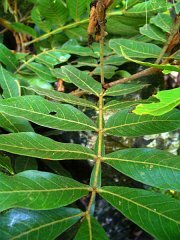
-
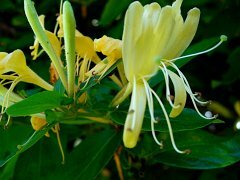 An exotic. Is growing as an escaped plant on the perimeter of La Tigra N.P. on the El Rosario side.
- White-eared Hummingbird
- Azure-crowned Hummingbird
- Green-breasted Mountain-Gem
-
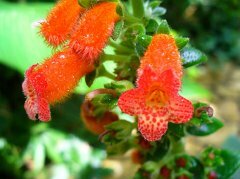 This small herbaceous plant grows at mid-elevation sites at least in western Honduras. It is typically found alongside roads and blooms in the rainy season.
- White-eared Hummingbird
- Stripe-tailed Hummingbird
-
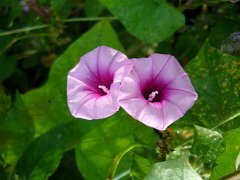 Convolvulaceae- This family of vines can be found throughout much of Honduras in mostly second growth or cut over areas. There are many colors.
- Ruby-throated Hummingbird
-
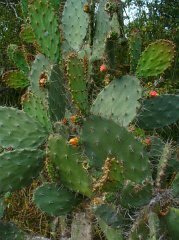
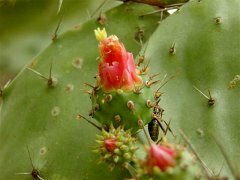 Opunita sp. Cacti is found in many valleys in Honduras. The Aguan Valley that falls within the rain shadow of the Nombre de Dios Mountains has a wide variety of cactus species. Here the Opuntia is an important nectar source.
- Honduran Emerald
- Salvin`s Emerald
- Cinnamon Hummingbird
-
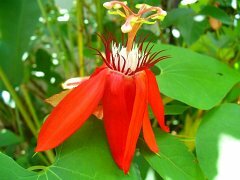 This is a native Passionflower that is used in some gardens as an ornamental. It can be found at the Enchanted Wings Nature Center in Copan Ruinas and at the Pico Bonito Lodge.
- Long-billed Hermit
- Stripe-throated Hermit
- White-bellied Emerald
- Rufous-tailed Hummingbird
- Cinnamon Hummingbird
-
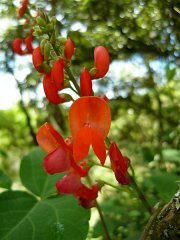 I am uncertain if this is a native legume. I have found this vine growing in the mts. above Tegucigalpa and along the Opatoro-Guajiquiro road. It flowers from approximately Aug. to Feb. and grows in open to semi-open areas, especially around cultivations.
White-eared Hummingbird
I am uncertain if this is a native legume. I have found this vine growing in the mts. above Tegucigalpa and along the Opatoro-Guajiquiro road. It flowers from approximately Aug. to Feb. and grows in open to semi-open areas, especially around cultivations.
White-eared Hummingbird -
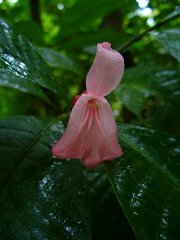 This medium size flower grows out of a large shrub/small tree found commonly along the lower trail that leads to Pico Dama, Rio Platano Biosphere Reserve.
- Bronze-tailed Plumeleteer
-
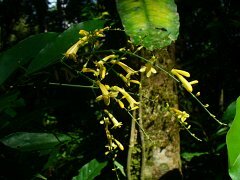
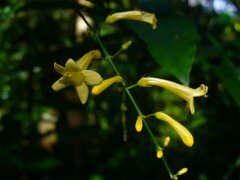 This small yellow, tubular wildflower blooms in spikes and can be a large shrub. I have seen it at the Pico Dama camp in La Mosquitia and around the Lodge at Pico Bonito. It grows mostly along forest edge where there is ample sun and blooms from Jan. to March. The Snowcap was seen feeding on it continuously at the Pico Dama site daily and included females as well as adult males and juvenile males. See photos of them under Field Work- Tawahka.
-
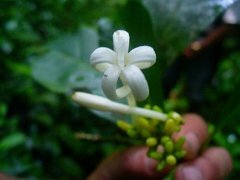 This flower was found in the Pico Dama area in La Mosquitia. It is a small tree and was found blooming in July. It was growing as a forest understory species. A female Snowcap was observed feeding on it. Snowcap
 -
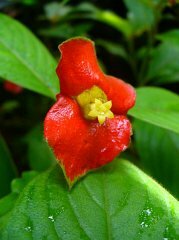 Throughout lowland and mid-elevation rainforests and edge. Blooms nearly throughout the year.
- Stripe-throated Hermit
- White-eared Hummingbird
- Azure-crowned Hummingbird
- Stripe-tailed Hummingbird
-
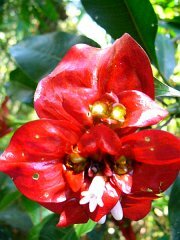 Throughout mid-elevation rainforests. Blooms mostly in summer-Feb- through May. One of the best wildflowers to see a large array of hummers. Cerro Azul Meambar N.P. has an abundance of these flowering shrubs.
- Long-billed Hermit
- Stripe-throated Hermit
- Violet Sabrewing
- Brown Violet-Ear
- Crowned Woodnymph
- White-eared Hummingbird
- White-bellied Emerald
- Azure-crowned Hummingbird
- Stripe-tailed Hummingbird
- Green-throated Mountain-Gem
-
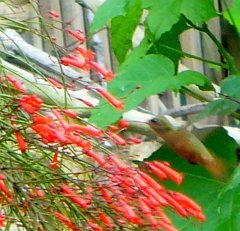
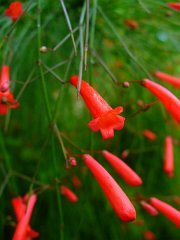 This common garden plant can be found in many places. A wild species is also found in mid-elevation area. In Copan Ruinas the central park has a huge elevated planter filled with R. equisetiformis and always has a number of Cinnamon hummers around. At the Enchanted Wings Nature Center in Copan I have observed the following species feeding on it.
- Cinnamon Hummingbird
- Salvin`s Emerald
- Black-crested Coquette- only rarely
-
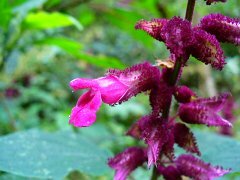 This small herbaceous plant was found in Celaque N.P. blooming in the month of April.
- White-eared Hummingbird
-
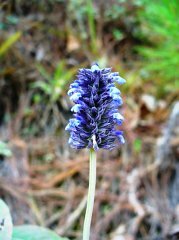 His small herbaceous plant was found along the road in the entire Opatoro-Guajiquiro highland area. It blooms from June to early March.
- White-eared Hummingbird
- Sparkling-tailed Hummingbird
- Wine-throated Hummingbird
-
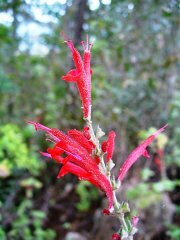 This plant grows up to about 4 ft. tall and produces a large number of flowers. Where it grows in abundance it can attract a large number of species. It grows throughout the highlands of western Honduras. It is abundant in the Opatoro-Guajiquiro highland area and blooms from June to early March. Large patches of this can produce quite the hummingbird show as species jostle for nectar.
- Green Violet-Ear
- White-eared Hummingbird
- Azure-crowned Hummingbird
- Green-throated Mountain-Gem
- Amethyst-throated Hummingbird
- Sparkling-tailed Hummingbird
- Wine-throated Hummingbird
-
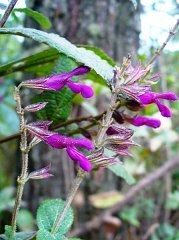 This is another small herbaceous plant that produces small purple flowers. It grows along roadsides and other clearings such as abandoned corn fields. It blooms from June to early March. Found in the Opatoro-Guajiquiro highlands.
- White-eared Hummingbird
- Sparkling-tailed Hummingbird
-
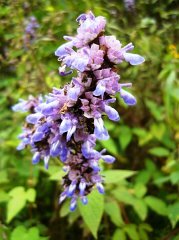 I found this wildflower in the foothills on the southern side of Copan Valley. They bloom mostly in Feb. & March.
- White-eared Hummingbird
- Azure-crowned Hummingbird
- Salvin`s Emerald
-
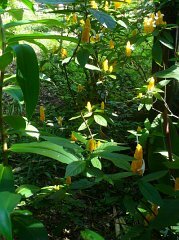
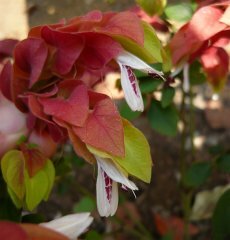
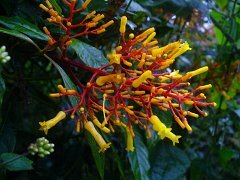
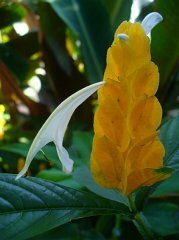 (Justicia sp.-Acanthaceae)- The pictures here are cultivar found widely in gardens. There are, however, native Justicia species and other related Acanthaceae genera that I have seen also serve as nectar sources. Those are often found growing in the understory of humid broadleaf forest.
- Cinnamon Hummingbird
- Bronze-tailed Plumeleteer
- Salvin`s Emerald
-
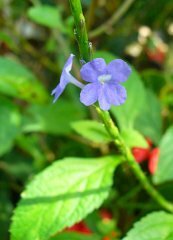 This native wildflower grows in disturbed areas throughout much of Honduras. It can grow to at least 4-5` high in some places. Most common color is purple, but at least in the Copan area there is a fuchsia colored form.
- White-bellied Emerald
- Rufous-tailed Hummingbird
- Cinnamon Hummingbird
-
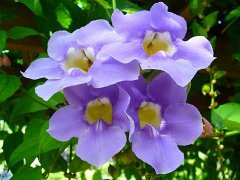 This is an exotic species from Asia. It can grow to enormous proportions if left unchecked as is the case by the first canopy tower at the Lodge at Pico Bonito. From my observations most hummingbirds take nectar entering the corolla from behind. The Streak-backed Oriole also takes nectar from it as seen regularly at the Enchanted Wings Nature Center in Copan Ruins.
- Long-billed Hermit
- Stripe-throated Hermit
- Crowned Woodnymph
- White-bellied Hummingbird
- Rufous-tailed Hummingbird
- Purple-crowned Fairy
-
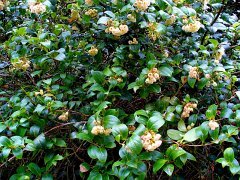
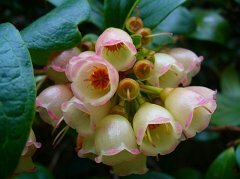 This bell-shaped flower grows in clusters on plants that reach small tree proportions. It grows in cloud forests above 1,500 masl. I have only seen it at La Tigra N.P., but is sure to exist elsewhere. When in peak bloom around Jan. and Feb. a large bush can be a spectacle attracting large numbers of hummers. See Birds of Special Interest- Green-breasted Mountain-Gem to see a photo of this species in flight as it feeds on this flower.
- Green-breasted Mountain-Gem
- Amethyst-throated Hummingbird
- Garnet-throated Hummingbird
-
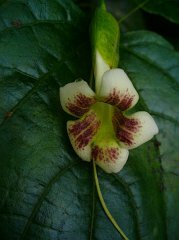 This flowering vine was found along the main entrance road and the blooms constantly attracted hummers.
- Rufous-tailed Hummingbird
- Long-billed Hermit
- Stripe-throated Hermit
-
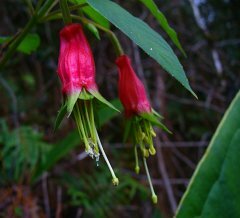 I include this flower that I found in bloom in Celaque N.P. in April 2008 approaching the Los Naranjos camp site at an altitude of at least 2,200 masl while working on the Celaque bird guide. Although I did not observe any hummingbirds feeding on the flower it no doubt serves as a nectar source for some highland species.
 -
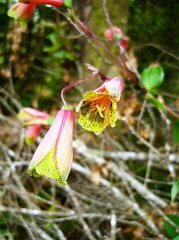 This interesting flower was found all along the roadside between the turnoff to Opatoro to Guajiquiro, but I have seen it elsewhere in Honduras. It grows as a scraggly vine.
- White-eared Hummingbird
- Green Violet-Ear (Colibri thalassinus)A most beautiful hummingbird, this violet-ear can be found throughout the highlands. It occurs in open to semi-open areas where it searches for flowers such as Savlias. Individuals found in the Opatoro-Guajiquiro area tend to have more extensive purple on the upper chest and even throat than illustrations show in regional field guides.
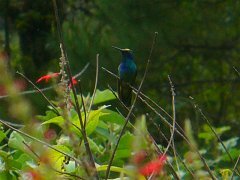
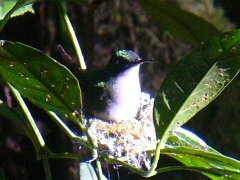
- Emerald-chinned Hummingbird (Abeillia abeillei) This is one of Honduras` tiniest hummers. Although there are historical records throughout the country it is actually quite difficult to find. I have seen it but in only two locales; at Cerro Negro in Copan and this nesting female at Santa Barbara N.P.
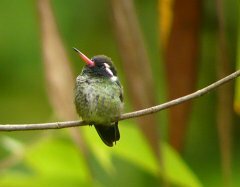
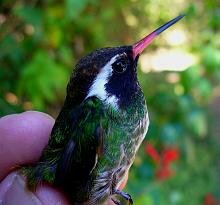
- White-eared Hummingbird (Hylocharis leucotis) This hummer is one of the most common species encountered in the highlands, especially in southwestern Honduras. The bird in hand was rescued from a spiny legume at La Tigra N.P.
-
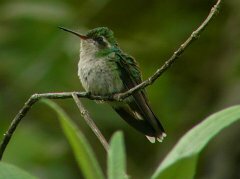
Azure-crowned Hummingbird (Amazilia cyanocephala) This is Honduras' most widespread
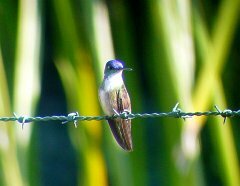 hummingbird species. The two different groups found here inhabit pine/oak forest, humid broadleaf forest and the La Mosquitia pine savanna. It ranges from e. Mexico, Guatemala, Belize, Honduras to w. Nicaragua. In many highland sites in pine/oak forests it is usually the dominant species and chases away other hummingbirds from nectar sources.
 - Stripe-tailed Hummingbird (Eupherusa eximia) The conspicuous brown upper wing patch easily discerns this species from others. It inhabits pre-montane and lower montane forests throughout Honduras. It also undergoes altitudinal migration. This photo was taken at the Pico Bonito Lodge on the periphery of Pico Bonito N.P.
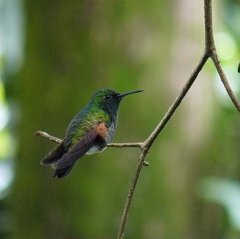
- Green-throated Mountain-Gem (Lampornis viridipallens) This Mesoamerican endemic ends its southern range limit west of the Sula Valley. It is fairly common above 1,000m. around forest edge where it feeds on a wide variety of flowering plants. We have recorded it at Celaque N.P. and the mountains around Marcala, La Paz.
-
Green-breasted Mountain-Gem (Lampornis sybillae) This species occurs in montane forests east of the Sula Valley to north-central Nicaragua, almost making it a Honduran endemic and a much sought after bird due to its restricted range. One of the easiest places to observe it is in La Tigra N.P. as it feeds on flowering bromeliads.
?For more info see Birds of Special Interest?.
-
Amethyst-throated Hummingbird (Lampornis amethystinus)
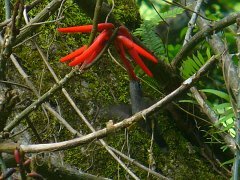 This large hummingbird is fairly common throughout the highlands of Honduras. It is found primarily along forest edge and adjacent areas with scattered trees with food sources.
 -
Garnet-throated Hummingbird (Lamprolaima rhami)
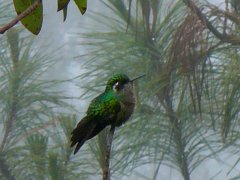 This large, Mesoamerican endemic is typically confined to higher elevations than most other Honduran hummers, mostly above 1,500m. We have found it at Cerro Azul Meambar N.P., Marcala and common at Guisayote Biol. Reserve.
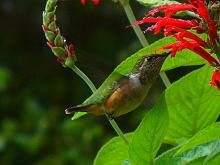
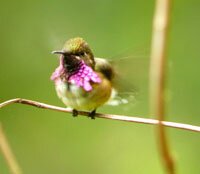
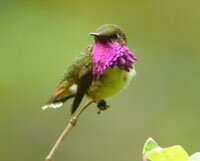
 - Sparkling-tailed Woodstar (Tilmatura dupontii) This is our only blue throated hummingbird. The male is spectacular by not only having a blue throat, but is adorned with a large white collar and a long, checkered tail. It cocks its tail up when in flight. The flight itself is amazing in that it hovers ever so slowly while probing into flowers, often near ground level. When alarmed, however, it can move at a typical lightning hummingbird speed. It ranges in the highlands from w. Mexico to n. Nicaragua. It is found at scattered localities in Honduras, but I have found it more commonly in the highlands of Marcala, especially when the myriad of Salvia wildflowers are in bloom.
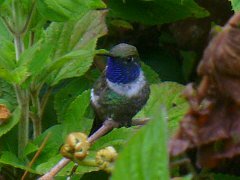
- Wine-throated Hummingbird (Atthis ellioti) This charming, tiny hummer is found in the highlands of western Honduras and is uncommon to locally common. The photos here were taken at La Tigra N.P.
-
?For more info see Birds of Special Interest?.
-
Mountain Trogon (Trogon mexicanus) Also known as the Mexican
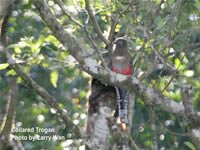 Trogon, it occurs in the highlands from northwest Mexico to southwest Honduras as a common to fairly common species. It inhabits mostly montane forest habitats throughout and may be found singly PHOTO or pairs and at times with mixed flocks. It is fairly easy to observe at Celaque N.P. and the Opator/Guajiquiro highlands. (AUDIO)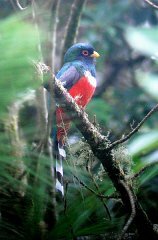
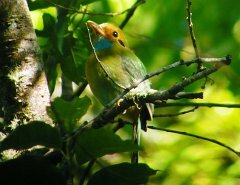
- Blue-throated Motmot (Aspatha gularis) This Mesoamerican endemic is restricted to montane habitats (pine/oak and broadleaf) above 1,500m. For more info. see "Birds of Special Interest".
-
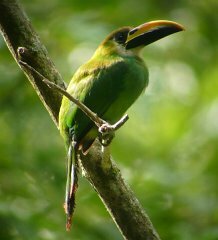
Emerald Toucanet (Aulacorhynchus prasinus)
This beautiful toucanet is our smallest species. It ranges from s. Mexico down into S. America. It inhabits humid pine/oak forests and rainforests. Although it can be found near sea level in some areas it is more common in highland forests up into the highest peaks in Honduras.
-
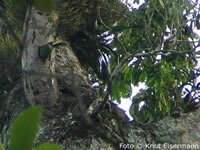 Nesting Site
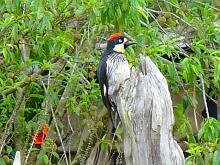
 - Acorn Woodpecker (Melanerpes formicivorus) This strikingly patterned species occurs throughout the Honduran highlands as a common bird and is also found in the Mosquitia pine savanna.
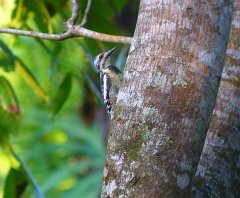
- Yellow-bellied Sapsucker (Sphyrapicus varius) This is our only migratory woodpecker species from N.A. It is found throughout most of the country, but is not numerous anywhere. However, its tell-tale signs of concentric holes in trees are seen far more often than the bird itself.
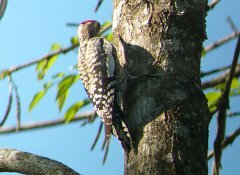
- Northern Flicker (Colaptes auratus) Our most colorful family member is found throughout much of Honduras in pine/oak forests. We found it particularly common in Celaque N.P. along the trail leading out of Belen Gualcho, Ocotepeque and passing through the park as well as around La Muralla, Olancho.
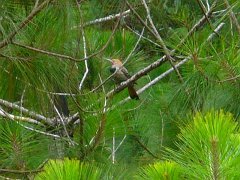
- Hairy Woodpecker (Picoides villosus) Occurring primarily in the interior highlands, this small woodpecker can be found inhabiting pine-oak and broadleaf forests and edge. I have seen small groups of up to 4 feeding together.
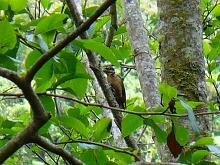
-
Tawny-throated Leaftosser (Sclerurus mexicanus)
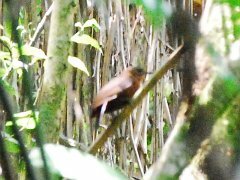 This understory Furnarid is widespread, but uncommon in Honduras and is found from near sea level to over 2,000m. It inhabits thick, forest undergrowth and can be difficult to see. The Malcote Nature Reserve in Copan and La Tigra N.P. are two places where it is more frequently encountered. (AUDIO)
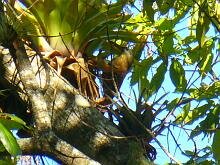
 - Strong-billed Woodcreeper (Xiphocolaptes promeropirhynchus) Honduras´ largest woodcreeper is found primarily in the interior higlands occupying pine-oak and cloud forest habitats. It is found to at least 2,000m. Although widespread it is infrequently encountered. When found it is usually seen probing bromeliads.
- Spotted Woodcreeper (Xiphorhynchus erythropygius) The Spotted is fairly common throughout Honduras in humid forest habitats. It can occur singly, in pairs and will also join mixed flocks.
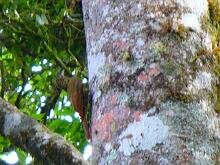
- Spot-crowned Woodcreeper (Lepidocolaptes affinis) One of the few woodcreepers that is typically confined to montane forest habitats. It can be found as solitary individuals or accompanying mixed species flocks. It is fairly common in the Opatoro-Guajiquiro highlands.
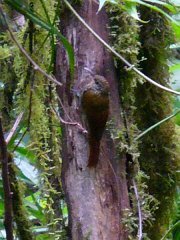
- Scaled Antpitta (Grallaria guatimalensis) Although probably a widespread species in Honduras it is infrequently (almost rarely) encountered, even in its proper habitat. It occurs primarily in montane broadleaf forest inhabiting the forest understory, usually on the ground. When flushed it may fly a short distance and may land on a branch and freeze, allowing the observer a view. The cloud forest of La Tigra N.P. may be one of the best places in Honduras to see this odd-looking bird.
-
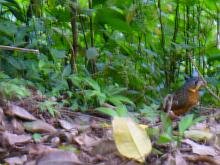
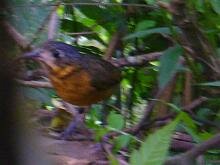
- Olive-sided Flycatcher (Contopus cooperi) This migrant flycatcher can be found throughout the highlands of Honduras. It can typically be seen perched on a snag on ridge lines within highland forests.
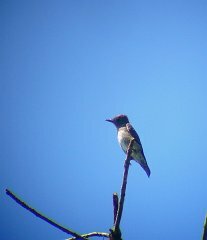
- Greater Pewee (Contopus pertinax) Our largest pewee is found throughout the piney highlands either singly, in pairs or at times in mixed flocks. It can usually be found along the entrance road in Celaque N.P.
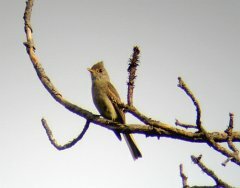
- Western Wood-Pewee (Contopus sordidulus)It is fairly common in the Opatoro-Guajiquiro area and in Celaque N.P. It is, however, generally uncommon throughout Honduras.
-
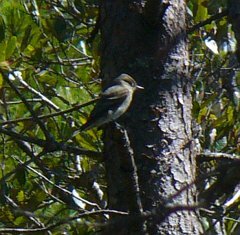
- Hammond`s Flycatcher (Empidonax hammondii) The migrant Empidonax flycatchers are notoriously difficult to identify on their wintering grounds unless one is very experienced with their peep calls. The Hammond`s, however, is usually not too difficult to discern as it has a flared eye ring and usually is found in highland forests, especially in pine/oak.
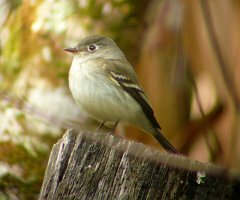
- Yellowish Flycatcher (Empidonax flavescens) One of the three resident Empidonax, the Yellowish is easily distinguished by its large white eye ring and washed out yellow coloration. It is found primarily in broadleaf forest habitats and is most common at higher elevations.
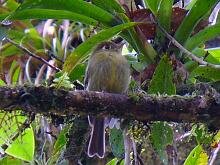
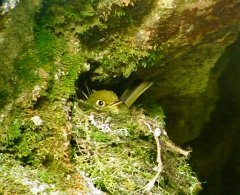
- Buff-breasted Flycatcher (Empidonax fulvifrons) This lovely bird is found in the southwestern highlands of Honduras and seems to favor riparian and marshy areas in and around pine-oak habitats. The bird is frequently found near appropriate marshes in the La Esperanza area.
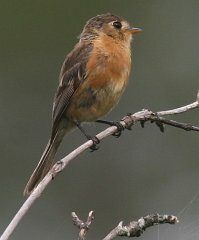
- Gray-collared Becard (Pachyramphus major) This lovely bird is uncommon in Honduras and is typically found in pine/oak habitats above 1,000m. The only place where I have found it on a regular basis has been Celaque N.P., usually amongst a mixed flock.
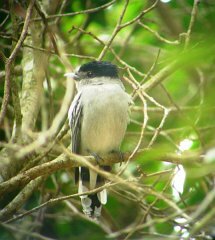
-
Steller`s Jay (Cyanocitta stelleri)
This jay is found throughout the western and southern highlands of Honduras. It inhabits pine-oak forests and travels in noisy groups. 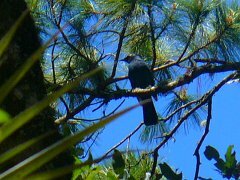
- Bushy-crested Jay (Cyanocorax melanocyaneus) For complete info. see "Birds of Special Interest".
-
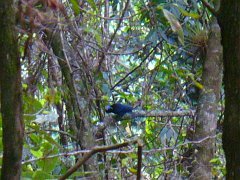
Azure-hooded Jay (Cyanolyca cucullata) This handsome highland species is typically found in montane habitats above 900m. and is locally common. It is usually found in pairs or small flocks and like most jays are quite vocal (AUDIO). They are commonly found along the trail in Celaque N.P. above 1,700m
-
Black-throated Jay (Cyanolyca pumilio) Of all the jays in Honduras this is the most difficult to observe as it is restricted to higher elevations (typically above 1,500m.) than the others and is less abundant. The one time I have observed it was on July 7, 2005 at La Tigra N.P. in mixed montane forest when a flock of them passed through with a group of Bushy-crested Jays (AUDIO).
-
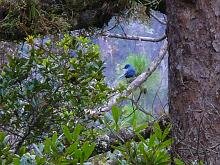
Unicolored Jay (Aphelocoma unicolor) This handsome highland jay is also uncommonly encountered in Honduras and is found in montane forest usually above 1,500m. The only place where I have con- sistently found it is in Celaque N.P. at 2,000m. where there is a marked transition between montane pine/oak habitat to montane broadleaf forest. They usually are found in small flocks of 5-8 birds and feed high up in the trees and respond well to tape playback (AUDIO).
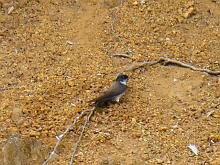
- Black-capped Swallow (Notiochelidon pileata) This Mesoamerican endemic is restricted to the highlands, usually above 1,400m. The only specimens listed in Monroe were taken near La Esperanza, Intibuca in 1963. I have actually found it to be much more widespread and locally common at certain areas. We have found them twice along the entrance road to Celaque N.P., Guisayote B.R. and actual breeding colonies along roadcuts near Opatoro/Guajiquiro at 2,000m.
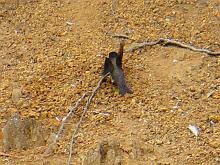
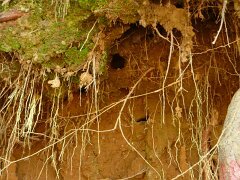
- Cave Swallow (Hirundo fulva) This migrant has only been recently recorded in Honduras. This bird was found sleeping on a wire at Hotel La Casona near Marcala, La Paz and may represent the first photo record for the country.
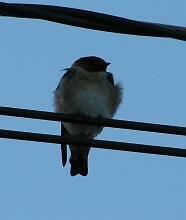
- Band-backed Wren (Campylorhynchus zonatus) The Band-backed has to be one of the loudest wrens occurring here. I have observed groups of up to 15 birds and their combined vocalizations are almost scandalous! They are found sporadically in the interior highlands. They inhabit pine-oak woodland, gardens, and broadleaf forest edge.
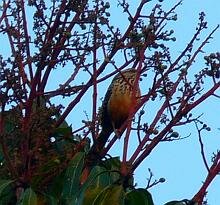
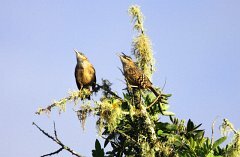
-
Rufous-browed Wren (Troglodytes rufociliatus) This tiny, Mesoamerican endemic is confined to montane forests above 1,700m. where it can be fairly common to common. They are typically found in pairs or small groups and often encountered in thick undergrowth where they can be AUDIO difficult to observe. We have found them in many places such as La Tigra and Celaque N.P.'s and Guisayote B.R. Like most wrens they respond well to a taple playback (AUDIO).
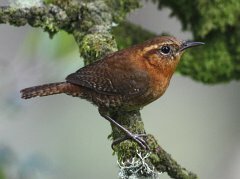
- Sedge Wren (Cistothorus platensis) This wren was historically found in Siguatepeque and Puerto Lempira (Monroe, 1968). It is unknown if the Siguatepeque populations still exist. In Dec. 2004 Irma and I found a previously unrecorded population near La Esperanza, Intibuca in a marsh alongside a road. Subsequent visits have shown that they also occur in a number of marshes in the valley, many of which have been altered by man. Should these marshes be drained the wrens would most likely disappear. For more info, see "Birds of Special Interest".
- American Dipper (Cinclus mexicanus) The only specimen listed in Monroe was taken at San Juancito (now La Tigra N.P.) at 1,800m. We found a local breeding population at Celaque N.P. where we observed an adult feeding juveniles along a river at about 1,500m. on Feb. 6, 2005.
- Eastern Bluebird (Sialia sialis) This species is found throughout Honduras from sea level to at least 2,000m. It is usually associated with pine or pine/oak habitats.
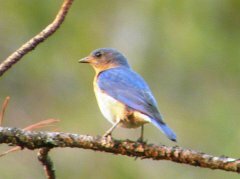
- Brown-backed Solitaire (Myadestes occidentalis) This species is fairly common throughout mid to higher elevation pine-oak forests and at times adjacent montane forest. Occasionally it can be found side by side with the Slate-colored Solitaire, especially in the mountains above Marcala, La Paz. Its long descending metallic whistle usually gives its presence away.
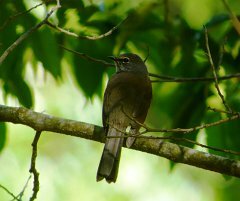
- Ruddy-capped Nightingale-Thrush (Catharus frantzii) This thrush inhabits the highlands throughout most of the country and is typically found higher than the Orange-billed. It is common along the plateau of Celaque N.P. and La Tigra N.P.
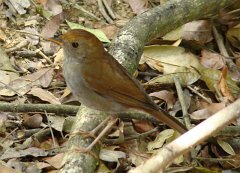
- Hermit Thrush (Catharus guttatus) During the inaugural 2006 V.E.N.T. Western Highland Tour 5 observers and I found one individual alongside a mountain road in the brush near Marcala, La Paz. It was observed at close range for several minutes and was determined to be the auduboni form.
- Black Robin (Turdus infuscatus) This striking member of the thrush family can be found in the highlands in western and central Honduras. It inhabits pine/oak and broadleaf forests. It can be easily found at La Tigra and Celaque N.P`s and the Opatoro-Guajiquiro areas.
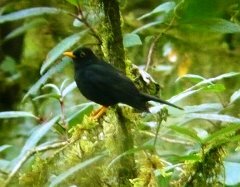
- Mountain Robin (Turdus plebejus) This robin is found throughout the highlands inhabiting montane forests. Although widespread I have not found it to be particularly common anywhere except Celaque N.P. where it is very common. It looks and sounds very similar to the common Clay-colored Robin, but the two are not sympatric.
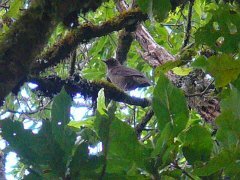
- White-throated Thrush (Turdus assimilis) This woodland thrush is found throughout the country from mid elevations to the lower highlands. In some areas, however, it can be found close to sea level such as in La Mosquitia. It can be seen at times foraging on the ground in coffee plantations or singing high up in the subcanopy.
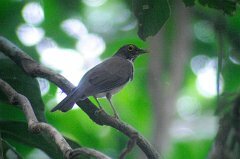
- Rufous-collared Robin (Turdus rufitorques) This large, montane thrush is published as uncommon in Honduras (Anderson & Bonta, 2002) and only one specimen is cited in Monroe, 1968. I have found it to be locally common at certain locales such as the vicinity of Guisayote B.R. and at Opator/Guajiquiro as well as a number of sightings at other locations.
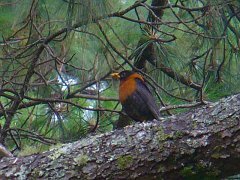
-
Slate-colored Solitaire (Myadestes unicolor) Although this highland thrush is common throughout much of Honduras it is worth mentioning here due to its beautiful flute-like songs. It is considered one of the best singers in the world and in Honduras its chorus can be heard in virtually every cloud forest habitat over 900m. In the months of Nov. to Jan. it descends to near sea level on the north side of Pico Bonito N.P.
(AUDIO 1), (AUDIO 2), (AUDIO 3). 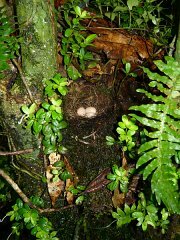
- Blue-and-white Mockingbird (Melanotis hypoleucus) For info, see "Birds of Special Interest".
-
Olive Warbler (Peucedramus taeniatus) This interesting bird use to be placed with the wood-warblers, but is now in its own family, Peucedramidae. It is commn to fairly common in highland pine/oak habitats usually above 1,000m. They are often found in mixed flocks with migrant and resident wood-warblers. They are commonly encountered in Celaque N.P. and the hills around La Esperanza, Intibuca (AUDIO).
- Crescent-chested Warbler (Parula superciliosa) This lovely, resident warbler occurs in the interior highlands of Honduras. Its soft, buzz-like vocalizations are quite different than any other resident warbler. It typically inhabits pine-oak associations and tends to stay in the sub-canopy or canopy. It is common at La Tigra N.P.
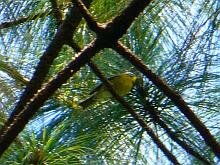
- Golden-cheeked Warbler (Dendroica chrysoparia) This wood-warbler has one of the smallest ranges of any in its breeding grounds of central Texas (National Geographic, 1999. Honduras is believed to be the wintering grounds for many and indeed we have found them to be widespread in pine/oak habitats throughout. Individuals can usually be found amongst mixed flocks in Celaque N.P. and in the hills of La Esperanza.
- Red-faced Warbler (Cardellina rubifrons) This beautiful warbler is uncommon in the western highlands of Honduras where apparently its southern wintering grounds terminate. They frequently occur in mixed flocks in pine/oak forest as well as montane broadleaf forest. We have found them at 2,000m. in Celaque N.P.
- Slate-throated Redstart (Myioborus miniatus) This colorful resident warbler is fairly common throughout Honduras from sea level to well over 2,2,00m. It inhabits broadleaf and pine-oak forests.
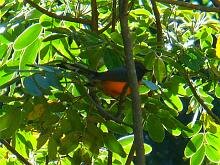
-
Painted Redstart (Myioborus pictus) This lovely bird
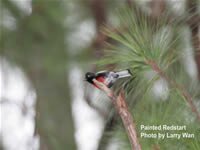 is common to fairly common throughout the highlands of Honduras in its appropriate habitat. It typically inhabits pine/oak woodland and mixed evergreen forest. It often is found in mixed flocks and tends to stay at mid to upper levels in the forest.
 - Golden-browed Warbler (Basileuterus belli) This highland resident ends its southern range in southwest Honduras. It is typically found in pairs or small groups in thick undergrowth in montane habitats usually above 1,500m.
- Common Bush-Tanager (Chlorospingus opthalmicus) This is the most abundant tanager in the highlands. They can be found in large flocks by themselves or accompanying other species. It inhabits mostly broadleaf forest, but may also occur in mixed pine-oak-broadleaf.
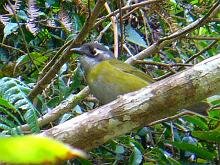
- Hepatic Tanager (Piranga flava) The Hepatic is found throughout the country from sea level in the Mosquitia pine savanna to over 2,400m. in the interior highlands. Its preferred habitat it pine-oak forest. The male is red and the female a dull yellowish brown.
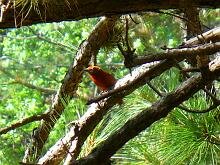
- Flame-colored Tanager (Piranga bidentata) This colorful tanager has a big range, but is worth noting as it is found as an uncommon to fairly common highland species. It is typically found in pine/oak habitats above 1,000m. and at times in adjacent scrubby habitat. We have found it at La Tigra N.P., La Esperanza, Opator/Guajiquiro, Celaque N.P. and Copan. It is particularly common along the lower trail at Celaque.
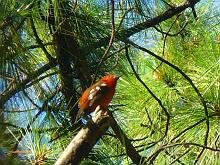
- Blue-crowned Chlorophonia (Chlorophonia occipitalis) This beautiful Mesoamerican endemic has its widest distribution in the Honduran highlands. It is typically found in montane broadleaf forest, but may descend into the lowlands during the winter. One of the best places to look for it is at fruiting mistletoe plants. It is fairly common to uncommon and we have found it at Guisayote B.R., Cerro Azul Meambar N.P. and Copan. For photo and audio see "Birds of Special Interest".
- Cinnamon-bellied Flowerpiercer (Diglossa baritula) This Mesoamerican endemic is found throughout the western and southwestern highlands no lower than 1,200m. It is typically found in open to semi-open areas or forest edge where it feeds at flowers. It can, however, be found in deep forest where certain understory flowers may be blooming. We have found it to be fairly common around Opator/Guajiquiro, La Esperanza and Copan.
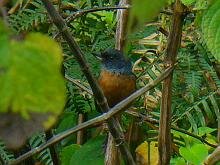
-
Rusty Sparrow (Aimophila rufescens) This is one of
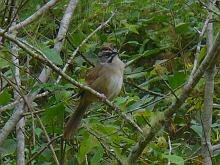 the most widespread native sparrows in Honduras, occupying a variety of habitats from sea level to well over 2,000m. It can be found in pine/grass savannas of La Mosquitia, scrub, and high up in pine/oak, mixed evergreen forests throughout. It typically is found along roadsides or forest edge in the understory. Often found in pairs or small groups. Will usually respond to "pishing" or a pygmy-owl call.
 - Eastern Meadowlark (Sturnella magna) Our resident meadowlark can be found in the interior of Honduras inhabiting open, grassy fields and pine forest edge. It also occurs in the Mosquitia pine savanna.
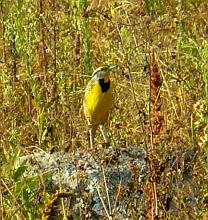
- Black-vented Oriole (Icterus wagleri) This stunning oriole occurs throughout the interior highlands. Strangely enough, it is usually associated with human settlements and is seldom found away from them. They even nest in peoples front yards. Individuals can usually be found around the houses at the entrance of Celaque N.P. This bird was photographed at hotel Los Gloriales near La Tigra N.P.
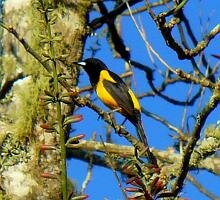
- Yellow-faced Grassquit (Tiaris olivaceus) This small seedeater is found throughout most of the interior in lower foothills up into the highlands. It inhabits semi-open areas with scattered shrubs and pine-oak forest understory. The male is unmistakable with its yellow facial markings, but the dull female (shown here) can be confused with other small birds.
Lake Yojoa
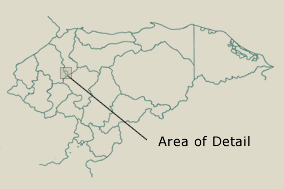
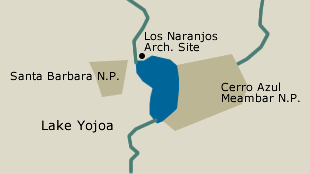
Lake Yojoa is Honduras' largest naturally occurring body of freshwater. Its odd footprint shape stamped into the Honduran geography is a natural blessing and a draw for tourists wishing to escape from the typical Copan and Bay Islands tourist route. It sits in a large depression believed to be formed by extinct volcanoes and is bordered by two impressive mountains that form Cerro Azul Meambar N.P. on the eastern side and Santa Barbara N.P. on the west.
The Lake is bordered by low and upland marshes on its southern, eastern and northern shores. On the west side the mountain of Santa Barbara comes crashing straight down to the lake with steep slopes coming right down to the waters' edge. Also found along the north shore is some pine habitat where there exists an interesting pygmy-owl. A number of interesting finds have been made here including new records for the country and the marshes may well turn up additional species.
- Black-bellied Whistling-Duck (Dendrocygna autumnalis) These colorful birds are widespread in Honduras being found in a variety of wetland habitats as well as marshy fields. They can often be found in large flocks around Lake Yojoa and along the entrance to Cuero y Salado W.R.
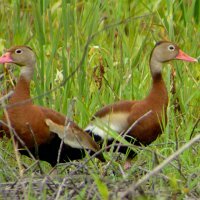
- New Species Here Muscovy Duck (Cairina moschata) Wild muscovy ducks are uncommon in most of Honduras with some records from La Mosquitia and Lake Yojoa. It is actually fairly common at the Lake. One can often get scope views of birds tucked away in the vegetation along the boardwalk at the Los Naranjos arch. site.
- Redhead (Aythya americana) During the January 2011 H.O.S. assembly meeting at Hotel Agua Azul, Lake Yojoa a number of us observed two males of this species. Not only was it a new country record, but one of the few records for C.A.
- Blue-winged Teal (Anas discors) Honduras` most abundant duck species is this resident migrant. In Choluteca it can sometimes be found by the thousands and is also very common at Lake Yojoa. It is also found at other marshes and small bodies of water throughout the country. At times it can be found far upriver at Rio Platano and Rio Patuca.
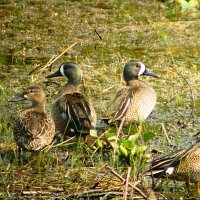
- Pied-billed Grebe (Podilymbus podiceps) This grebe is found in Honduras primarily inhabiting larger bodies of water such as lakes, lagoons and estuaries. It is common at Lake Yojoa. Its large size, coloration and ringed bill easily separate it from the much smaller, dark colored Least Grebe.
-
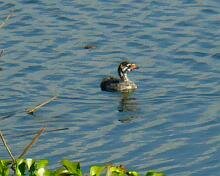
- Least Bittern (Ixobrychus exilis) This small bittern is rarely encountered in Honduras outside of Lake Yojoa where it is locally fairly common. It is found skulking amongst the cattails or perched almost motionless at the water's edge along the lake or at inlets. We have found it fairly easy to observe at Hotel Las Glorias.
- American Bittern (Botaurus lentiginosus) This North American migrant has been rarely recorded in Honduras (Monroe, 1968) with no known recent records. Its camoflauge pattern and secretive habits and insufficient observers probably account for the lack of recent records and it may well winter here in low numbers. On Feb. 24, 2005 during a VENT tour we observed one at long range along the southwest corner of the lake as it hunted in the marsh.
-
Bare-throated Tiger-Heron (Tigrisoma mexicanum)
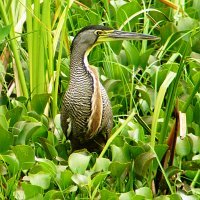
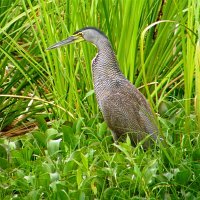
- Great Blue Heron (Ardea herodias) This is Honduras` largest heron and is a migrant resident. It can be found throughout most of the country. I even have a record of one at Marcala near some Tilapia fish ponds. It is most abundant at Lake Yojoa where I?ve seen groups of up to 100 or more.
-
This large heron is found along northern and southern Honduras and locally inland. It inhabits lakes, lagoons, rivers and marshes. It is frequently encountered around Lake Yojoa and Cuero y Salado W.R. - Juvenile
-
Little Blue Heron (Egretta caerulea)
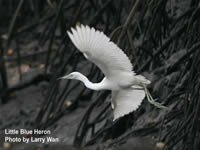 This is one of the most common herons in Honduras. It is typically found at ponds, lakes and brackish water habitats. Strangely enough, it has also been found far upriver along the Rio Platano in undisturbed rainforest. The juveniles are immatures are completely white and superficially look like Snowy Egrets.
- Tricolored Heron (Egretta tricolor) Although much more common along coastal areas this species can be found at the Lake in low numbers.
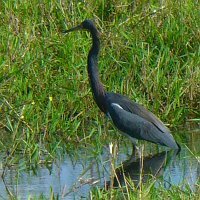
- Lesser Yellow-headed Vulture (Cathartes burrovianus) In Honduras this species is almost entirely restricted to open areas along the north coast. We have, however, recorded it in low numbers around the marshes of Lake Yojoa being far outnumbered at least 4:1 by the Turkey Vulture.
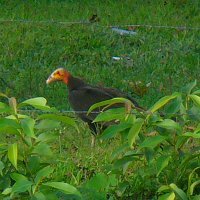
-
Snail Kite (Rostrhamus sociabilis) In Honduras this bird is almost entirely restricted to Lake Yojoa
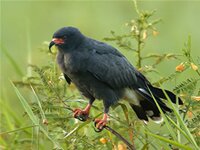 where it feeds on apple snails and I have only one other sighting in the Rio Lean basin. Although I have not conducted any formal field work on its abundance I have noticed a marked decrease in its numbers over the past five years. We use to observe many soaring by along the southwest corner and now we would be fortunate to see two. According to S. Howell this bird is "vulnerable to pollution and drainage" as is probably the case in Lake Yojoa and is worth investigating before the species' becomes more threatened here.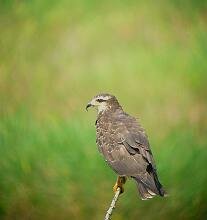
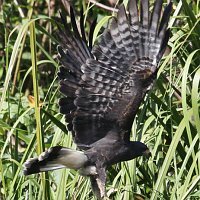
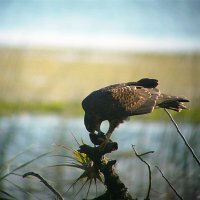
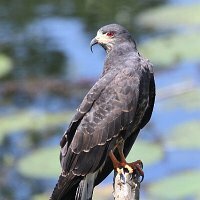
- White-tailed Kite (Elanus leucurus) This lovely kite is found throughout much of Honduras inhabiting open areas with grass. It is often seen sitting atop electrical poles or wires. It is one of the few birds of prey found here that can hover in a fixed position while hunting.
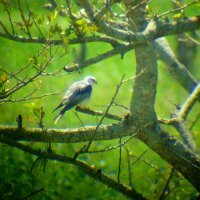
- Bat Falcon (Falco rufigularis) This charming little bird of prey is found throughout much of Honduras in a wide variety of habitats. It is usually found perched atop a large snag where it scans for prey. On one occasion I observed one eating a male White-collared Seedeater atop a telephone pole at Lake Yojoa.
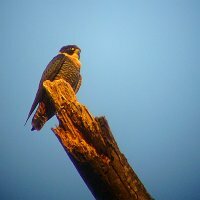
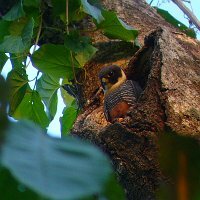
-
Gray-breasted Crake (Laterallus exilis) This tiny crake has a patchy distribution in Honduras and was historically recorded only along the Rio Segovia (Monroe,1968). In Feb. 2004 during a Naturalist Journeys tour I obtained a partial audio recording of a crake at Lake Yojoa that proved to be this species. On subsequent visits I have found it to be actually fairly common to common in the marshes at various locations, but can only be seen with extreme luck or patiently using a tape playback. It is not surprising that it was never collected here in the 1940's and 60's due to its small size and secretive habits (AUDIO).
- Sora (Porzana carolina) This is our only known migrant rallid from N.A. In most of Honduras it appears to be quite scarce, but has been found to be fairly common at the Lake.
- Yellow-breasted Crake (Porzana flaviventer) This species has a spotty distribution in C.A. and ranges to S.A. It was unreported in Honduras until recently. On Aug. 11, 2008 several observers an individual that flushed up twice in floating grass at Hotel Las Glorias. The bird flew toward us as two Ruddy Crakes were approaching us in response to an audio playback. The small size, light brown and black markings were seen on the bird in flight.
- Spotted Rail (Pardirallus maculatus) This bird was unknown to Honduras until it was found at Lake Yojoa in 1993. It is actually fairly common there and can sometimes be seen feeding along mudflats or creeping among the aquatic vegetation along some shore inlets.
- Purple Gallinule (Porphyrula martinica) This handsome bird can be found throughout Honduras where there is suitable habitat which usually is a slow moving river with piled up debris or around marshes and other wetlands. It is common at Lake Yojoa.
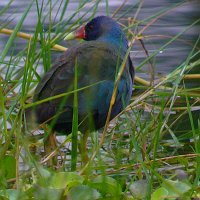
- Common Moorhen (Gallinula chloropus) The moorhen is found primarily along lagoons and lakes where it feeds on aquatic vegetation such as lily pads. It can be common at Lake Yojoa.
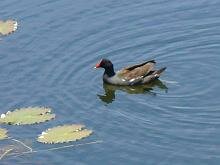
- American Coot (Fulica americana) This common aquatic bird is common at the Lake
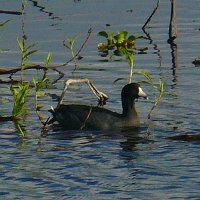
-
Limpkin (Aramus guarauna) This ibis-like
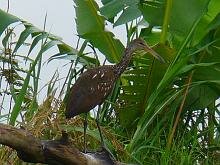 bird inhabits the Caribbean slope of Honduras to about 650m. It is common in the marshes around the lake where it feeds on apple snails, frogs, etc. Its dusk and dawn wailing calls are haunting and far-carrying (AUDIO).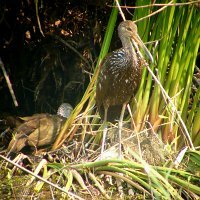
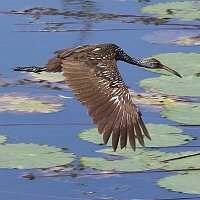
- Killdeer (Charadrius vociferous) This migrant resident shorebird inhabits a variety of habitats in Honduras including wetlands, riparian areas, old corn fields, grassy fields and even the arid scrub forest in Olanchito. They can be found singly or in small flocks.
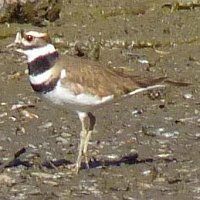
- Northern Jacana (Jacana spinosa) This bird is found throughout Honduras around aquatic habitats from rivers to marshes and flooded fields where they search for insects and other food.
-
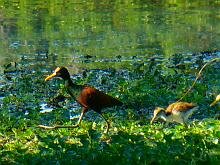
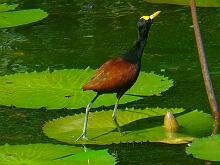
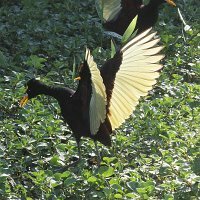
- Plain-breasted Ground-Dove (Columbina minuta) This species has only recently been added to the Honduran list when it was found in Olancho. There were unsubstantiated records for Lake Yojoa (Anderson & Bonta, 2002), but on Aug. 16, 2004 Barry Lyon (VENT employee) and I observed one male at Hotel Las Glorias along a grassy path that led to the lakeshore.
- Ruddy Ground-Dove (Columbina talpacoti) This ground-dove is common throughout much of the country and is found mostly in open areas. Sexes are dimorphic with the males being more reddish-brown
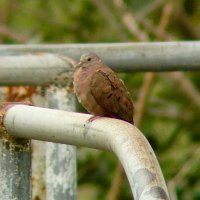
- Red-lored Parrot (Amazona autumnalis) In Hondurasthis medium-sized parrot is found mostly along the Caribbean slope. It is common elsewhere, but uncommon in the Aguan. One pair was found nesting in a snag within the newly formed reserve in Apr. 2005 (AUDIO).
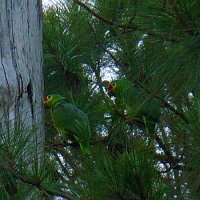
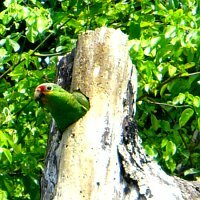
- Squirrel Cuckoo (Piaya cayana) This lovely bird occurs throughout Honduras in most habitats, even older broadleaf forest. Found singly or in pairs. While walking along branches its long tail gives it the appearance of a squirrel.
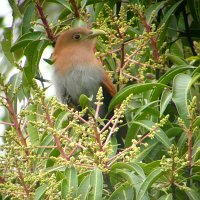
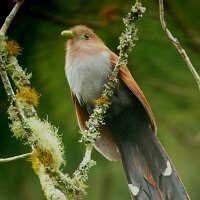
-
Pygmy-Owl sp. (Glaucidium sp.) There exists a grayish-brown pygmy-owl around the lake strictly inhabiting the pine stands at least along the entire northern section. It appears to have five white tail bars and fine spotting on the head and side of nape. Wings and scapular areas are heavily spotted and the bird closely matches the illustration on Plate 25, 2A in Howell and Webb. Monore obtained a specimen very close by on the east slope of Cerro Santa Barabar (now Santa Barbara N.P.) at 1,980m. (Monroe, 1968, pp. 157 & 158). We have also found G. brasilianum and G. grisieceps in the same general area, but occupying different microhabitats. To make matters more confusing Howell is unsure if the voice of G. gnoma south of Chiapas, Mexico has been described. If it proves to be different than birds from north of the Isthum it could be named the Guatemalan Pygmy-Owl (G. cobanense). (AUDIO)
-
- Ferruginous Pygmy-Owl (Glaucidium brasilianum) An aggressive diurnal and nocturnal species, this small owl is common throughout Honduras.
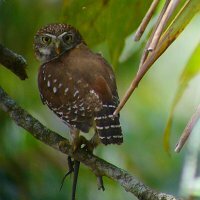
- It occurs in semi-open areas, light woodland, scrub and thorn forest up to about 2,000m. It is replaced in lowland, humid broadleaf forest by B. griseiceps and in montane forest by G. gnoma. It is known to hunt small to medium sized birds, reptiles and insects. Upon imitating its call is usually attracts a wide variety of birds including tanagers, manakins, hummingbirds, warblers, wrens, gnatcatchers amongst others who are curious as to its whereabouts (AUDIO).
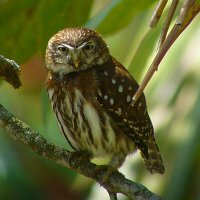
-
Common Pauraque (Nyctidromus albicollis) This is the most commonly encountered nightjar in Honduras. It
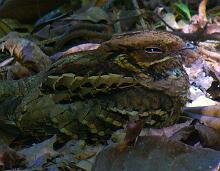 inhabits open areas or scrub up to at least 1,800m. It is typically seen along roads or trails around dusk where there is little traffic. During the breeding season of the summer months they are much more vocal (AUDIO).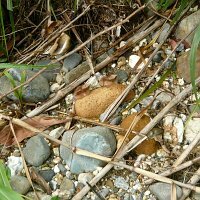
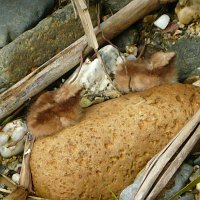
- Spot-tailed Nightjar (Caprimulgus maculicaudus) This species is fairly common in the lake area in short, grassy areas and along the lake's edge. Two were seen in Feb. 2005 during a VENT tour sitting near each other along the edge of a soccer field at Hotel Las Glorias. They were approached very closely. Another was also seen (same individual?) in April 2005 with R. Ridgely in the mud flats near the lakeshore.
- Violet Sabrewing (Campylopterus hemileucurus) This large, gorgeous hummer is found throughout the territory from sea level to about 2,500m. It occurs in and around humid forest and is a very conspicuous bird, especially at feeders.
-
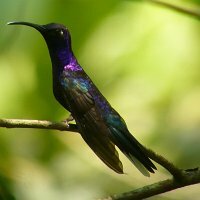
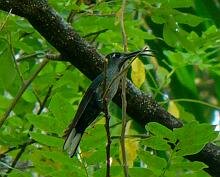
- Green-breasted Mango (Anthracothorax prevostii) This large hummingbird is found throughout most of Honduras in a wide variety of habitats. More often than not it feeds and perches from middle heights up to the canopy.
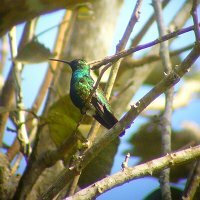
- White-bellied Emerald (Amazilia candida) This small hummer looks surprisingly similar to the Azure-crowned Hummingbird (A. cyanocephala) and can occur together in certain areas. The White-bellied is smaller overall and lacks entirely and blue shimmer on the head.
- For more info and photos see ?Birds of Special Interest?.
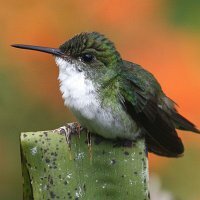
- Berylline Hummingibird (Amazilia beryllina)This hummer occurs in the interior of Honduras. It is very similar in appearance to the Rufous-tailed Hummingbird (A. tzacatl) and the two occur together in the Lake Yojoa basin.
- Cinnamon Hummingbird (Amazilia rutila) This hummer is common throughout most of Honduras in its proper habitat and elevation and is often a dominant species at flower patches. It is found in coastal scrub, gardens, light broadleaf woodland and pine-oak forest. It even occurs in the Mosquitia pine savanna.
-
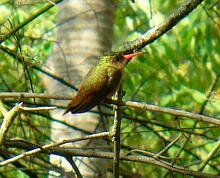
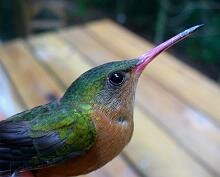
- Sparkling-tailed Hummingbird (Tilmatura dupontii) This tiny hummer inhabits semi-open areas and forest edge and has a wide alititudinal range and distribution, but is more common above 600m. Although published as uncommon in Honduras (Anderson & Bonta, 2002) it is fairly common (at least locally), as stated in Monroe, 1968. It is particularly common around the lake being found at the Los Pinos visitor center and along the north side of the lake where they feed on blooming Inga trees, especially from Feb. to May.
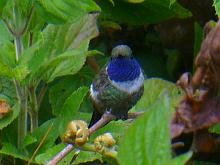
- Slender Sheartail (Doricha enicura) This little hummer is apparently rare in Honduras with the only specimen coming from the Deptl of La Paz (Monroe, 1968). On March 18, 2001 I observed one female at close range at Los Naranjos Arch. site for an extended period of time while it fed on bromeliad flowers, perched, fed, etc. I have not seen it on any subsequent visits to the same place.
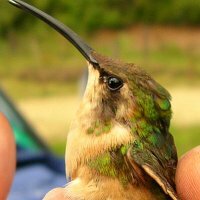
-
Gartered Trogon (Trogon caligatus) Of the threeyellow-bellied trogons in Honduras this species is the most widespread and common. It inhabits light woodland to humid, broadleaf forests up to about 1,800m. Like most other trogons it is easy to attract with a tape playback or even with a whistled imitation of its call (AUDIO). Female.
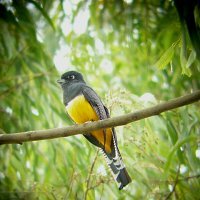
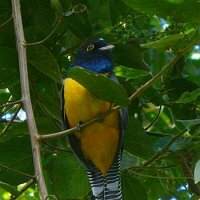
-
Rufous-breasted Spinetail (Synallaxis erythrothorax) This species is encountered in Honduras only in the northwest, terminating to the east at Lancetilla near
 Tela (where is is sympatric with the Slaty Spinetail) and south to the Lake Yojoa area. Although it exists elsewhere I have found it to be easier to find at the lake. It is frequently found at the Los Naranjos Arch. site in tall grass at the lake's edge and in scrubby second growth. If present it readily responds to a tape playback, but otherwise remains hidden in thick cover (AUDIO).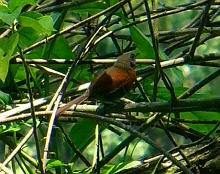
- Olivaceous Piculet (Picumnus olivaceus) This is our smallest species in the woodpecker family. There are scattered records from across the Caribbean slope in Honduras and is uncommon in most places. The most reliable places to observe it are along the power line road at the entrance of Lancetilla Botanical Gardens and the grounds of Hotel Agua Azul where I have observed it nesting.
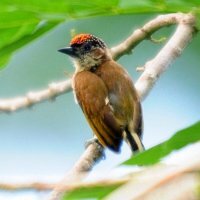
- Golden-fronted Woodpecker (Melanerpes aurifrons)This is Honduras` most common woodpecker species. It is found in wide variety of habitats, less deep broadleaf forests. This very dark individual was seen along the Lake?s edge feeding on the nectar of the Flame of the Forest tree.
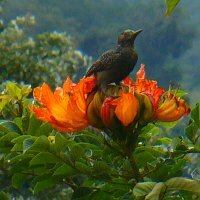
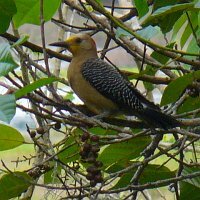
-
Barred Antshrike (Thamnophilus doliatus) This charismatic antbird is found throughout the country from sea level to at least 1,500m. It occurs in a variety of brushy habitats to second growth forest with a thick understory. Its distinct, rapid song is commonly heard everywhere in its appropriate habitat (AUDIO).
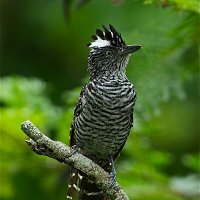 male
male
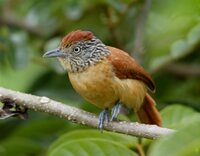 female
 - Dusky Antbird (Cercomacra tyrannina) This antibrd is found throughout most of Honduras in scrubby and second growth areas. The female is a two tone brown. This individual was found along the road leading into Cerro Azul Meambar N.P. in the same thickets where the Rufous-breasted Spinetail exists.
- Yellow-bellied Elaenia (Elaenia flavogaster) This common flycatcher is found throughout much of Honduras and is heard far more often than seen as it usually calls from the tree tops. When excited it raises its crest exposing a white spot. It is especially common around Lake Yojoa.
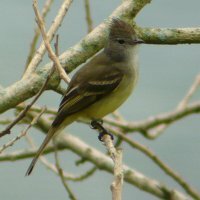
- Sepia-capped Flycatcher (Leptopogon amaurocephalus) This small flycatcher is found along the Caribbean slope in humid forest habitats, most often in the forest understory. It often goes unnoticed unless one knows its vocalization, it in itself not calling too much attention.
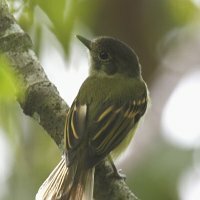
- Paltry Tyrannulet (Zimmerius vilissimus) This small flycatcher is quite local in Honduras. I have found it mostly in Rio Platano, Lancetilla and Lake Yojoa. There almost always seems to be one around the lower cabins at the Los Pinos visitor center in Meambar N.P. They are, however, often difficult to observe as they stay high in the trees. Common
- Northern Bentbill (Oncostoma cinereigulare) This small tyrannid is found all along the Caribbean slope in mostly humid forest habitats, but has been found occasionally in the arid scrub forest of Olanchito. It also inhabits the forest understory. Like the Sepia-capped Flycatcher it often goes unnoticed.
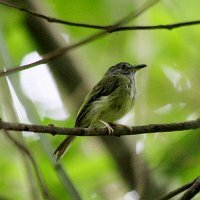
- Tody-Flycatcher (Todirostrum cinereum) This small flycatcher is found along the Caribbean slope and extreme southern Honduras in forested areas. It is common along Rio Platano and at Lake Yojoa. Its peculiar habit of wagging its tail back and forth, small size and coloration set it apart from all other birds found here.
-
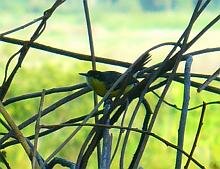
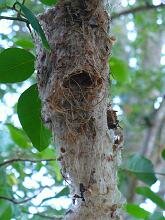
- White-throated Flycatcher (Empidonax albigularis) This resident Empidonax can be found in a wide variety of habitats throughout Honduras from near sea level to at least 1,600masl. It is fairly common around Lake Yojoa at the edge of marshes. This photo was taken at the sewage treatment ponds in El Progreso.
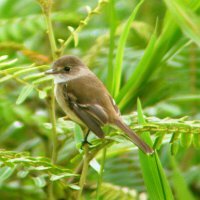
- Brown-crested Flycatcher (Myiarchus tyrannulus) This Myiarchus is common throughout Honduras and is found from sea level to at least 1,200m. It inhabits more open woodland, forest edge and a variety of other semi-open areas. Its loud wuip call and larger size distinguish it from the common Dusky-capped Flycatcher.
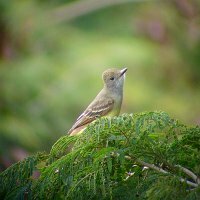
- Tropical Kingbird (Tyrannus melancholicus) This is the most common kingbird in Honduras and inhabits open areas to forest edge. It is the most commonly seen bird perched on electric wires.
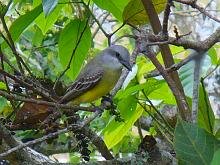
- White-winged Becard (Pachyramphus polychopterus) All three Honduran Becards apart from the Rose-throated are scarce species, even in their appropriate habitats. Of the three scarce species the White-winged is the most encountered and I have seen it in Rio Platano and Los Naranjos at Lake Yojoa. In 2011 the H.O.S. guide course students observed a nesting pair off the wooden boardwalk at Los Naranjos.
- Northern Rough-winged Swallow (Stelgidopteryx serripennis) This resident swallow is found throughout most of Honduras in open to semi-open habitats. They often nest in holes in walls or drainage pipes in walls.
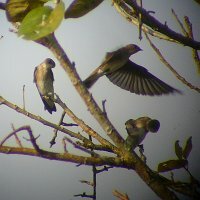
-
Rufous-and-white Wren (Thryothorus rufalbus) This wren has a patchy distribution in Honduras that runs along the north coast towards Trujillo and south to Lake Yojoa then reappearing around Tegucigalpa towards San Marcos de Colon. It inhabits a variety of habitats and elevations, but always favoring dense, understory vegetation. It occurs fairly commonly along the forested paths at the Los Naranjos Arch. site where its strange song can be heard echoeing in the understory (AUDIO).
-
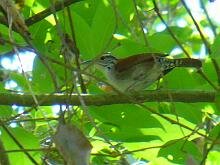
- Southern House Wren (Troglodytes musculus) This small wren is believed by some authors to be distinct from the Northern House Wren. The Southern is found south of the Isthmus of Tehauntepec and the Northern to the north. This bird is commonly found around and in the roofs of human habitations. Where found in the wild it inhabits the understory brush of woodland or second growth such as that along the entrance road into Celaque N.P.
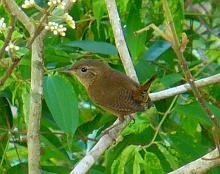
- Golden-winged Warbler (Vermivora chrysoptera) This lovely migrant resident wood-warbler is always a good find. One was found on two consecutive days in the brush at the Hotel Agua Azul.
- Tennessee Warbler (Vermivora peregrine) The Tennessee is common throughout the country in almost any habitat. It often occurs in small feeding flocks, especially at nectar sites. Some individuals gather substantial pollen loads on the forehead from the flowers they feed on and may even look like an entirely different species.
- Tropical Parula (Parula pitiayumi) A colorful resident warbler, this Parula is infrequently encountered. It inhabits rainforest and edge and at times joins mixed species flocks. It can sometimes be seen on the grounds of Hotel Agua Azul at Lake Yojoa.
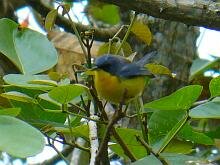
- Common Yellowthroat (Geothlypis trichas) Another common migrant wood-warbler is this species. It is found throughout the country and favors wet areas with long grass. It is very common around Lake Yojoa.
- Yellow-breasted Chat (Icteria virens) This migrant Parulid can be found throughout much of Honduras in a variety of habitats that include rain forest edge, flooded forest and thickets. It can often be found at the Los Naranjos arch. site.
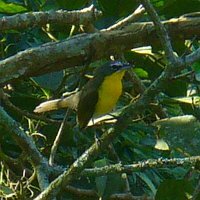
- White-winged Tanager (Piranga leucoptera) This lovely tanager is found sporadically throughout Honduras, but is not easy to find anywhere. It is almost a regular find at Meambar N.P. where a pair often occurs along the long loop trail.
- Crimson-collared Tanager (Ramphocelus sanguinolentus) This lovely tanager is found throughout the Caribbean slope in humid habitats. It will enter forest edge, but prefers semi-open areas and overgrown fields. Male and female are virtually identical.
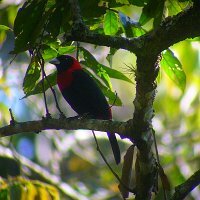
- Passerini`s Tanager (Ramphocelus passerinii) This lovely tanager is found throughout the Caribbean slope in humid habitats. It will enter forest edge, but prefers semi-open areas and overgrown fields. The male is black and red while the female is a washed out mustard-yellow, both with bluish bills.
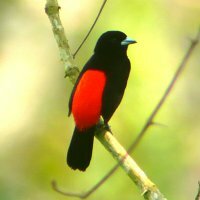
-
Blue-Gray Tanager (Thraupis episcopus) One of the most common tanagers found in Honduras, it occurs in semi-open areas, gardens, parks and light woodland to at least 1,500m.
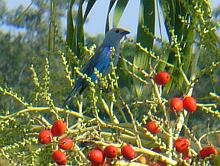
- Yellow-winged Tanager (Thraupis abbas) The striking colors and pattern on the bird render it unmistakable. It can be found all over Honduras up to about 1,700m. It inhabits a wide variety of habitats.
-
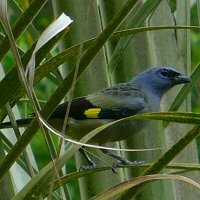
- Golden-hooded Tanager (Tangara larvata) This lovely tanager is found throughout the Caribbean slope in and around humid forest habitats. It is often found in pairs or with mixed species feeding flocks. It is often found at the Los Pinos visitor?s center.
- Red-legged Honeycreeper (Cyanerpes cyaneus) This delightful little bird is found throughout most of the Caribbean slope of Honduras in and around humid forest habitats. It is mostly a canopy dwelling species that can often go unnoticed due to its size and diminutive call. It is sympatric with the Shining Honeycreeper at places such as Pico Bonito N.P. and La Mosquitia.
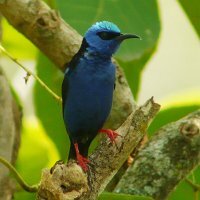
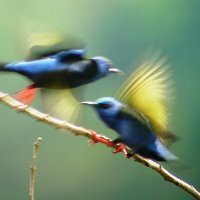
- White-collared Seedeater (Sporophila torqueola) This small seedeater is common throughout most of Honduras in any semi-open habitat. The male is strikingly different than the plain brown females.
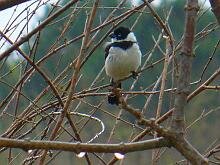
- Thick-billed Seed-Finch (Oryzoborus funereus) This species occurs along the Caribbean slope of Honduras in a variety of habitats including riparian areas, wetlands and rain forest edge. The individuals in these photos were found at the edge of Lake Yojoa at the Hotel Agua Azul.
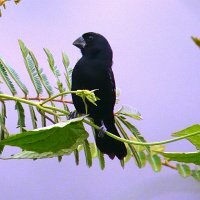
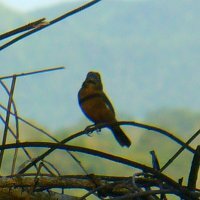
- Green-backed Sparrow (Arremonops chloronotus) Taxonomic issues still plague this group of sparrows. In Honduras the Green-backed is found in dry forest, scrub and humid second growth. It remains to be seen if the Olive form/species exists here as well. This photo was taken along the entrance road to Meambar N.P. where it is fairly common.
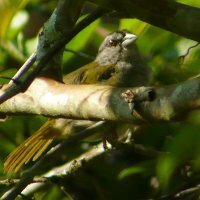
- Buff-throated Saltator (Saltator maximus) This saltator is found throughout the Caribbean slope of Honduras in humid habitats, especially forest edge. On one occasion I encountered an individual at Hotel Agua Azul stealing pieces of cut leaves away from leafcutter ants as they descended from a tree. Upon inquiring with other colleagues no one had ever heard of this behavior previously. What to call it? Avicleptobotany?
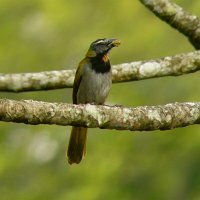
- Blue-black Grosbeak (Cyanocompsa cyanoides) This large grosbeak occurs throughout the Caribbean slope of Honduras and is found in humid broadleaf forest habitats. It is often found in pairs in the forest understory.
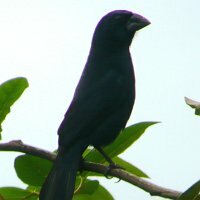
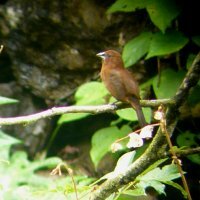
- Rose-breasted Grosbeak (Pheucticus ludovicianus) The male grosbeak has a large red patch on its breast, especially notable when their migration period approaches. They are found scattered throughout Honduras in a wide variety of habitats, but mostly at forest edge and semi-open areas.
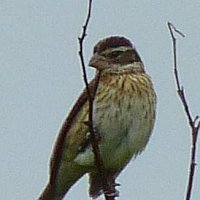
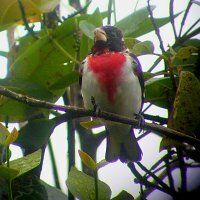
- Blue Grosbeak (Passerina caerulea) This grosbeak contains populations that are both migrant and breeding residents. They inhabit scrubby areas, second growth and overgrown fields. They are often found alongside Indigo and Painted Buntings as well as other seedeaters.
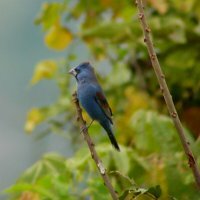
- Painted Bunting (Passerina ciris) This is the most colorful migrant species found in Honduras. It inhabits brushy areas and often fallow corn and bean fields filled with weeds. It is most frequently found in any size valleys.
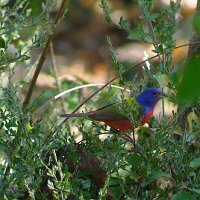
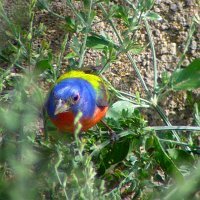
-
Chestnut-headed Oropendola (Psarocolius wagleri) Honduras has only two species of oropendolas, Montezuma and this one. The Chestnut-headed tends to be found at higher elevations than Montezuma. It is also a colony nester, but with the colonies smaller and a smaller nest smaller and a smaller nest
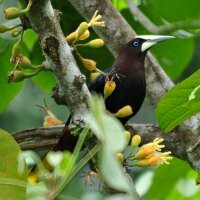
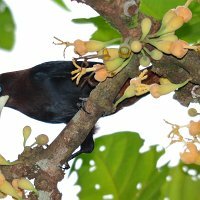
- Tricolored Munia (Lonchura malacca) This is the newest exotic bird to hit Central America and it has finally reached Honduras, being found in small flocks around Lake Yojoa and just recently in eastern Copan. They were first reported at L. Yojoa in July 2004 (N. American Birds, Volume 57,2004), and are frequently seen around the lakeshore where they probably feed on seeding plants.
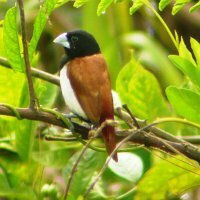
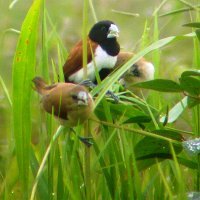
Department of Copan
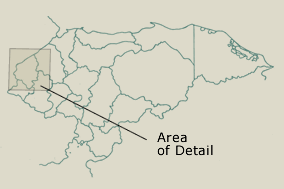
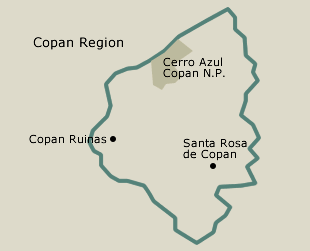
The Dept. of Copan encompasses about 2,200 km² hectares and covers altitudes of about 200m to almost 2,400m. It has a rich mix of habitats and its proximity to the continental divide affords this area a high avian diversity. Whereas the majority of people come to see the archaeological site those that venture into the countryside to go bird watching are usually rewarded no matter where they go.
In the Rio Amarillo valley approaching Copan Ruinas along the main highway there still exists a reserve of humid, broadleaf forest of about 120 hectares. This is a very important area and contains one of the last remaining stands of humid forest in the whole interior of western Honduras. A number of Caribbean slope species who inhabit humid forest reach their southern limit of distribution in western Honduras in this forest. Many of the hills and mountains throughout the department are covered in pine/oak forests mixed with other broadleaf species. The valley of Copan itself holds remnant patches of semi-deciduous forest. Along certain mountain ranges there still exists extensive mid-elevation broadleaf forests and several montane habitats as well that frequently yield new species for the department.
To date just over 400 species have been recorded within the department. This information will soon be submitted for publication in an article in the journal Ornitologia Neotropical (Neotropical Ornithology-Gallardo, in preparation). A number of species can be found here that are at their altitudinal range limits or geographical limit in terms of being either a Pacific or Caribbean slope species. The area is rich in North American migrants and is a regular flyway for species such as the Mississippi Kite which can usually be found in the hills in mid April on their northward trip.
The following accounts are for species typically found in Copan.
-
Black Vulture (Coragyps atratus) Almost
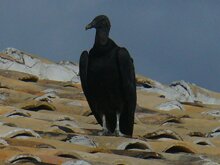 wherever one finds a carcass or a garbage dump one will find this very common and abundant bird. The white patches on the underside tips of the wings differentiate it quickly from the other black vultures. It tends not to be found in heavily forested areas where it is replaced by the King Vulture.
 -
Mississippi Kite (Ictinia missisippienses)
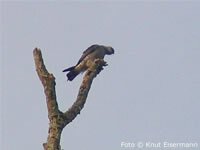 This North American migrant seems to have an interesting migration pattern through Honduras where it flies closer to the Pacific coast on its way south then more towards the Caribbean on their way north. We have regularly found them around mid-April in the Lake Yojoa area and in the hills just north of Copan Ruins.
- Plain Chachalaca (Ortalis vetula) Honduras´ most common and abundant chachalaca species is found throughout the north coast, in the west and center of the country. It is found in a variety of semi open areas to woodland and humid forest, being quite adaptable. In some occasions it will approach human settlements in search of food if it knows it will not be disturbed. It is a species that is hunted whenever and wherever possible. It is replaced in the extreme south by the White-bellied Chachalaca (O. leucogastra) and in the east by the Gray-headed Chachalaca (O. cinereiceps).
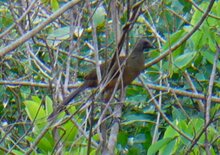
- Crested Bobwhite (Colinus cristatus) The taxonomic status of this wide ranging group of quail has yet to be settled and there is considerable variation in plumage coloration. They inhabit a wide range of semi-open and forested habitats, arid scrub,etc. They have not, however, been found in humid, broadleaf forest habitats. The male depicted here shows the typical plumage found in the Copan area. Males will at times jump up into a tree at heights of up to 8-10 ft. to answer to a tape playback.
-
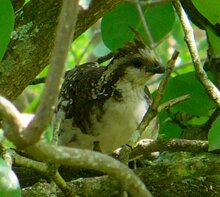
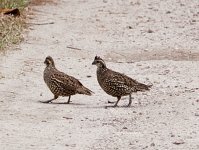
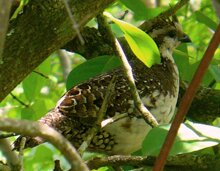
- Spotted Wood-Quail (Odontophorus guttatus) This forest dwelling quail is found in much of the Honduran highlands usually above 600m. to about 2,000m. Like many of the tropical quail they are often heard singing, but are difficult to observe. They have been found at two locations north of Copan Ruins in mid-elevation broadleaf forest at 1,100-1,300m.
- Inca Dove (Columbina inca) This common little dove is easy to separate from the others by its long tail and plain sandy color with a scale-like pattern.
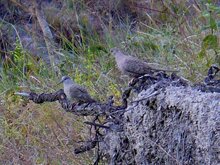
- White-tipped Dove (Leptotila verreauxi) Honduras´ most common and visible Leptotila dove. It is found throughout the country in semi-open areas to light woodland. It is usually seen walking on the ground and although common it is difficult to approach. Found singly, in pairs or occasionally in small groups.
-
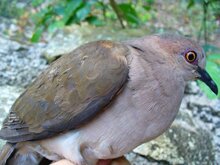
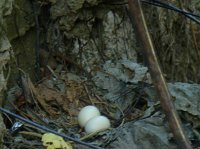
-
White-winged Dove (Zenaida asiatica) This is a
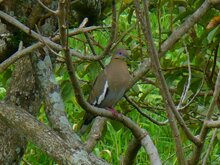 very common species throughout Honduras in open areas and light woodland. Along the north coast it appears to be replaced by the Pale-vented and Red-billed Pigeons. It has even been recorded on the hike en route to the Rio Platano headwaters along deforested areas.
 - Groove-billed Ani (Crotophaga sulcirostris) This widespread and common bird can be found virtually everywhere on the mainland. It often follows livestock in search of prey that is scared up. The Smooth-billed Ani (C. ani) inhabits the Bay Islands.
-
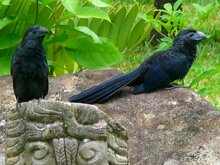
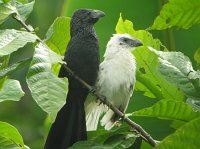
- Chuck-will`s Widow (Caprimulgus carolinensis) Although there are scattered records throughout much of Honduras this species is still uncommon and especially difficult to observe on a day roost. This was captured at the Macaw Mt. bird park in Copan.
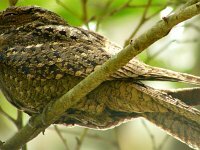
- Great Swallow-tailed Swift (Panyptila sanctihieronymi) This large, graceful swift finds its home all around Copan and is common here. It feeds on insects cuaght typically high up in the air, but will occasionally descend to within 40 feet or so above the ground. In 2003 I found a fledgling on the ground at what is now the Macaw Mt. bird sanctuary. They were nesting in the vertical sandstone cliffs behind the creek and roost there as well. They can typically be seen in the late afternoon flying over the Copan valley near the Enchanted Wings Nature Center.
-
Black-crested Coquette (Lophornis helenae) This charming little hummer is considered uncommon
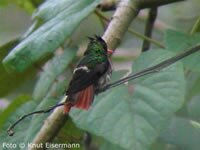 with scattered reports from Pico Bonito, Olancho and Lake Yojoa, but is fairly common to common around Copan. It is found principally in the foothills to the north and south of Copan Ruins. Around Nov. to Jan. they are found daily feeding on the yellow flowers of a large shrub, (small tree) which I believe is a Composite. On the dirt road past the community of La Laguna it's possible to view several feeding at the same time and is probably the best place in Honduras to view this species. They are also regularly seen at the Malcote Reserve. ?For more info and photos see Birds of Special Interest?.
 - Ruby-throated Hummingbird (Archilochus colubris) This is the smallest of all the long distance migrants that reach Honduras. It is found throughout the country from sea level up to the highest cloud forests and occupies many different habitats in search of nectar. In this photo it shares a feeder on Utila with (the giant) Green-breasted Mango and the Canivet's (Fork-tailed) Emerald.
-
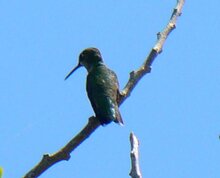
-
Collared Trogon (Trogon collaris)
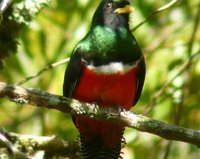
This lovely bird is found throughout Honduras from sea level to well over 2,000m. It inhabits young, secondary forest habitats to old growth. It is easily drawn in with a whistled imitation of its two-note call. The sexes are highly dimorphic; the male having metallic green upperparts and the female having brown. 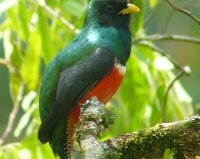
-
Golden-fronted Woodpecker (Melanerpes aurifrons) This boldly patterned
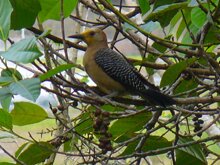 woodpecker is the most common species in Honduras. It is found in semi-open areas to light woodland in humid to arid environs. Its almost laugh-like call gives its presence away. At places like the Lodge at Pico Bonito it co-inhabits forest edge with its rainforest counterpart, the Black-cheeked Woodpecker (M. pucherani).
 - Ruddy Foliage-Gleaner (Automolus rubiginosus) This uncommon furnarid is hard to come by in Honduras. It typically inhabits thick undergrowth in the highlands and can be difficult to observe. It can usually be found in certain heavily forested ravines along the road past La Laguna and can be drawn out with an audio recording.
-
Olivaceous Woodcreeper (Sittasomus griseicapillus)
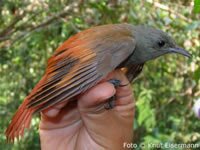
This widespread and common species ranges from Mexico down into S. America. In Honduras it inhabits humid broadleaf forest and humid pine/oak associations. It occurs from sea level to at least 1,800m. -
Wedge-billed Woodcreeper (Glyphorynchus spirurus)
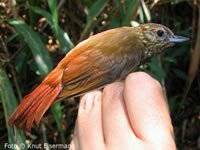
This is another common species in Honduras that occurs along the Caribbean slope. It ranges from s. Mexico to S. America. It inhabits humid pine/oak associations and humid broadleaf forest. In Honduras it is found from sea level to at least 1,300m. 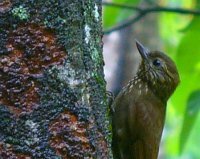
-
Northern Barred Woodcreeper (Dendrocolaptes sanctithomae) This large
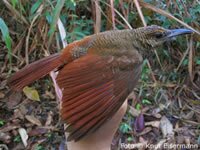 species ranges from s. Mexico to S. America. It is fairly common to uncommon and occurs mostly along the Caribbean slope of Honduras. It is found from sea level to at least 1,800m. and inhabits humid pine/oak associations and humid broadleaf forest.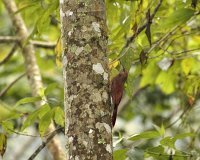
-
Ivory-billed Woodcreeper (Xiphorhynchus flavigaster) This species ranges from
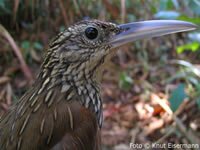 Mexico to n.w. Costa Rica and is common throughout most of Honduras. It is found from sea level to at least 1,500m. It is found in a variety of habitats including semi-deciduous forest, humid broadleaf forest and pine/oak forests and mangroves. Its loud descending, laugh-like call is heard on almost every outing.
 -
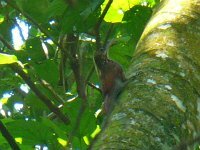 ç
ç -
Streak-headed Woodcreeper (Lepidocolaptes souleyetti) This bird ranges from s. Mexico
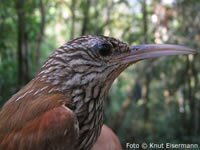 to S. America and is common along the entire Caribbean slope and fairly common along the Gulf of Fonseca. It is found from sea level to over 1,800m. It inhabits humid to semi-arid forests and often in scattered trees in cattle pastures. It is particularly common at Lancetilla Botanical Gardens and Los Naranjos Archaeological site at Lake Yojoa.
 -
Ochre-bellied Flycatcher (Mionectes oleagineus)
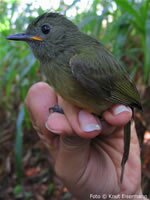
This small flycatcher ranges from s. Mexico to S. America. and occurs commonly throughout most of Honduras. It is found from sea level to at least 1,800m. in a variety of habitats including scrub, humid broadleaf forest and pine/oak woodland. -
Northern Bentbill (Oncostoma cinereigulare) This small flycatcher
 ranges from s.e. Mexico to Panama. In Honduras it occurs commonly along the Caribbean slope and uncommon to fairly common along the Gulf of Fonseca. It is found from sea level to at least 1,500m. in a variety of habitats including arid scrub, humid broadleaf forest and pine/oak woodland.
 - Yellow-olive Flycatcher (Tolmomyias sulphurescens) This nearly nondescript flycatcher is found throughout most of Honduras in a wide variety of habitats. Its typical call is a plain three-note hiss-hiss-hiss. Although common it is quite often difficult to get a good, close view as it usually stays high in the trees.
- Royal Flycatcher (Onychorhynchus coronatus) Finding this bizarre flycatcher in the mountains of Copan was quite the surprise. It is fairly common in the lowlands of Honduras where it is typically found along forested streams and rivers. On Apr. 29, 2005 we observed a nesting pair at the Malcote Nature Reserve at about 1,200m. along a spring that divided a coffee plantation and broadleaf forest. It was strangely unrecorded on any previous visit there.
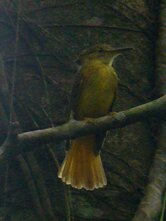
-
Yellow-bellied Flycatcher (Empidonax flaviventris)
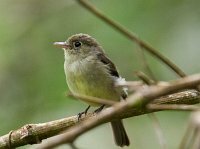
This migrant flycatcher is common throughout Honduras in a variety of habitats. It is found from sea level to well over 2,000m. - Black Phoebe (Sayornis nigricans) This is common to fairly common flycatcher found throughout much of Honduras. It is often found in pairs along watercourses, but not always. Birds in Honduras have less white on the belly than those found in North America.
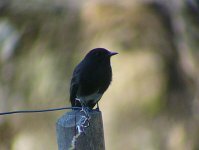
- Dusky-capped Flycatcher (Myiarchus tuberculifer) This resident flycatcher is found throughout Honduras from sea level to well over 2,500m in virtually every habitat. Its mournful wheuuu vocalization easily separates it from the other Myiarchus spp.
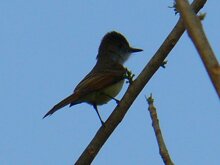
- Great Kiskadee (Pitangus sulphuratus) This is yet another common and abundant flycatcher found throughout Honduras. It inhabits light woodland, forest edge, gardens, etc. Its loud kis-ka-dee call separates it from the similar Boat-billed Flycatcher.
-
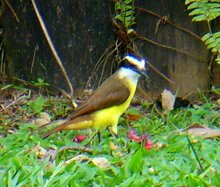
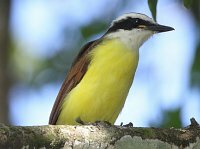
-
Sulphur-bellied Flycatcher (Myiodynastes luteiventris) Sulphur-bellied Flycatcher
 (Myiodynastes luteiventris) This is one of the few birds that breed in Central America and winter in S. America. It breeds from Mexico to Costa Rica and is common throughout Honduras. It is found from sea level to around 1,800m. It inhabits semi-open areas, semi-deciduous forest and humid forest habitats. Its loud "squeeze toy"-like call usually gives away its presence.
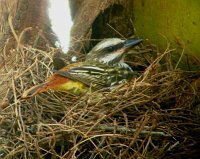
- Eastern Kingbird (Tyrannus tyrannus) Although commonly seen (sometimes by the hundreds) along the north coast during migration it is rarely encountered as far inland as Copan. One individual was seen on the morning of May 12, 2005 at the Enchanted Wings Nature Center in Copan and is rather a late occurrence for this species.
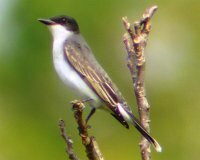
- Rose-throated Becard (Pachyramphus aglaiae) This is Honduras´ most common Becard and it can be found in virtually every habitat and semi-open areas. Like many species in this group the male and female are sexually dimorphic; the female rich browns and the male slaty black. Some males found have the rosy throat and others do not.
-
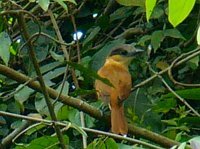
- White-collared Manakin (Manacus candei) This species occurs along the Caribbean slope in rainforest habitats. Although the Rio Amarillo Valley in Copan lies within the Caribbean slope it was nonetheless a big surprise to find it there. During my GPS work there I observed two different males in the Gobiado rainforest in young second growth and another in an old abandoned coffee farm adjacent to the forest. This constitutes the first record for the department.
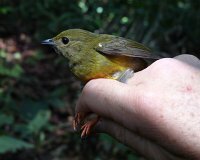
-
Red-capped Manakin (Pipra mentalis)
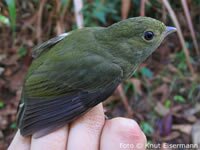
This species is found from s.e. Mexico to S. America and in Honduras occurs along the Caribbean slope. It is found from sea level to about 1,600m primarily in humid broadleaf forest and occasionally in pine/oak woodland. It is fairly common throughout. 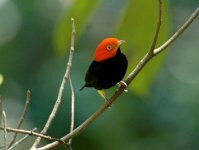
- White-eyed Vireo (Vireo griseus) This striking vireo is found widespread in Honduras, but is infrequently encountered. It may inhabit coastal scrub, riparian forest, pine-oak woodland and even dry, thorn scrub forest. It can be found singly, in pairs or joining mixed flocks.
-
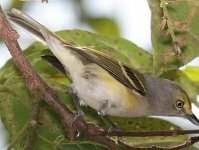
- Blue-headed Vireo (Vireo solitarius) This migrant species is common throughout the country, typically favoring pine/oak woodland, but can be found in broadleaf forest as well. It is often found associating with mixed species flocks.
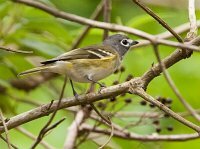
- Yellow-green Vireo (Vireo flavoviridis) This breeding migrant can be found in a variety of forested habitats and usually remains in the canopy. It is very similar looking to the Red-eyed Vireo except for the greenish flanks.
- Rufous-browed Peppershrike (Cyclarhis gujanensis) This is one of the most interesting members of the vireo family and really stands out. Its bold color pattern and variety of calls are unmistakable. It is found throughout interior Honduras in mostly broadleaf forest edge up to at least 1,600m. It has just been recorded in the southern section of the Rio Platano B.R.
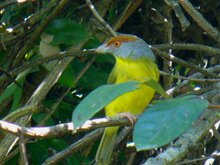
- White-throated Magpie-Jay (Calocitta formosa) Although this jay is widespread along the Pacific slope it is worth mentioning here due to its graceful beauty. They are quite nomadic in habit, but small flocks are usually present in the Copan valley.
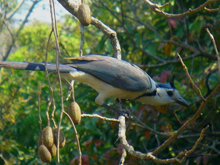
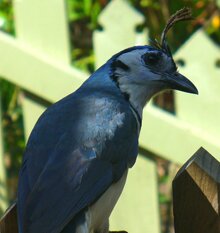
- Green Jay (Cyanocorax yncas) Our most colorful jay has a spotty distribution in Honduras. The most recent records are from north east Olancho, the northern fringe of Pico Bonito N.P., the mountains behind San Pedro Sula, Cerro Azul Meambar N.P, Honduran Emerald Reserve and near the Malcote Reserve in Copan. At the San Pedro and Meambar locales they are fairly common, but uncommon elsewhere. Their occurrence at the Emerald Reserve within the arid thorn scrub forest near Olanchito is odd.
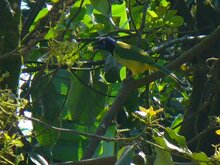
-
Brown Jay (Cyanocorax morio) This is the largest and most widespread jay in Honduras.
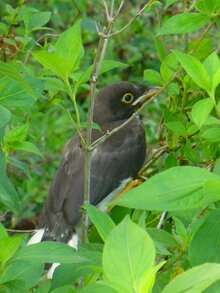 It is fairly common to common most everywhere ranging from sea level to at least 1,500m. The only place I have not observed them is the core zone of the Rio Platano Bioshpere Reserve where there are large tracts of undisturbed broadleaf forest. They often mob raptors of any size.
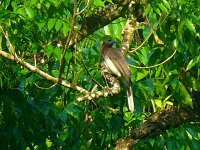
- Gray-breasted Martin (Progne chalybea) This large member of the swallow family is found throughout most of the country. It can occur in open areas, around lakes and in cities. It often nests under the roofs of gas stations, in billboards and in tile roofed houses. It occurs in small flocks.
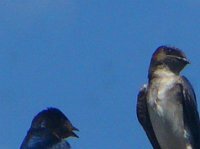
- Rufous-naped Wren (Campylorhynchus rufinucha) This curious and loud wren has a strange distribution in Honduras, being found around the Copan Ruins area, Sula valley, Lake Yojoa and southern Honduras. It inhabits cities and semi-open areas as well as semi-deciduous forest. It may occur in groups of five or six birds. The Lake Yojoa populations sound distinctly different than birds found in Copan.
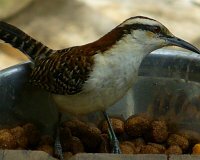
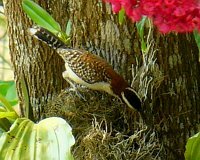
-
Spot-breasted Wren (Thryothorus maculipectus)
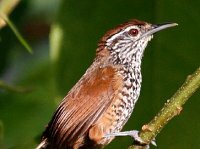
-
This wren is found from n.e. Mexico to n. Costa Rica. In Honduras it occurs along the Caribbean slope and is found from sea level to around 1,400m. It inhabits mostly humid to semi-humid habitats where it is frequently seen feeding amongst dense tangles. It is common to fairly common throughout. - Plain Wren (Thryothorus modestus) This not so plain wren is common throughout most of the interior of western and central Honduras. It can be found in scrubby habitats and light woodland up to at least 2,000m and is particularly common in scrubby areas around pine/oak forest. As with many wrens, easy to detect by voice, but difficult to observe unless a tape is used. Quite often some pygmy-owl tooting will draw one out for a brief view.
-
N. Nightingale Wren (Microcerculus philomela) This small, forest dwelling wren is perhaps the most difficult to observe in Honduras. It is very local and where it occurs its whimsical song may be heard, but the bird is nearly impossible to see as it remains low to the ground in thick cover. However, it usually responds well to a tape playback. In Copan I have found it at the Miramundo coffee plantation and the Malcote Nature Reserve; both close to 1,300m. (AUDIO).
- Orange-billed Nightingale-Thrush (Catharus aurantiirostris) The Orange-billed is a fairly common species throughout the country where it inhabits thickets and thick forest undergrowth from near sea level to at least 2,000m. It is, however, one of best ?skulkers? and it is heard far often more than it is seen. With patience one can observe it singing from a prominent perch within the thick cover.
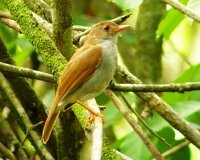
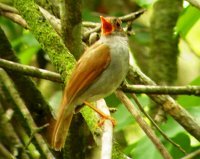
-
Swainson's Thrush (Catharus ustulatus)
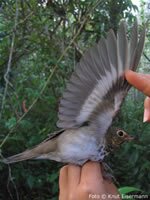
This migratory bird is found throughout Honduras as an uncommon to fairly common species. It is found from sea level to well over 2,500m. It inhabits humid to semi-deciduous forest. Although some over winter in Honduras they are infrequently encountered. Around April and May, however, they can be more easily found as a greater number of birds that winter to the south are en route back to N.A. - Clay-colored Robin (Turdus grayi) This is our most abundant Thrush in Honduras. It is found in virtually all types nof disturbed areas and forest edge to light woodland. It is common in big cities. Although common it has, like most Thrushes, a beautiful song.
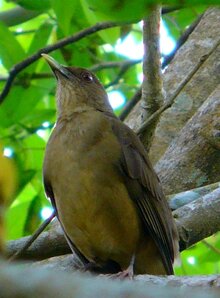
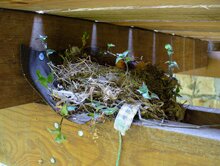
-
Gray Catbird (Dumetella carolinensis)
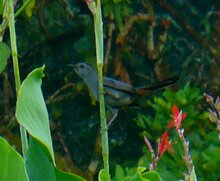
This N.A. migrant winters from the s.e. USA to Panama. In Honduras it occurs along the Caribbean slope from sea level to around 2,000m. It is common to fairly common in humid to semi-deciduous forest habitats, typically skulking in thick vegetation. - Blue-winged Warbler (Vermivora pinus) This lovely migrant resident can be found throughout much of Honduras occurring principally below 1,500m. Although it can be found in mature forest it is more common in second growth and older scrub.
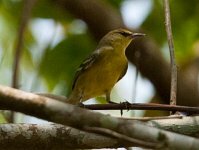
- Yellow Warbler (Dendroica petechia) This resident migrant is one of the most common warblers found in Honduras. It occurs nearly everywhere in most habitats. A place where they is likely to turn up almost without a doubt are in Willow (Salix sp.) trees along rivers and creeks.
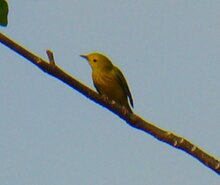
- Yellow-rumped Warbler (Dendroica coronata) This migrant resident is quite local in Honduras, but where present it can be found in open grassy areas, often with some kind of tree cover nearby.
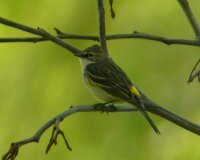
-
Black-and-white Warbler (Mniotilta varia)
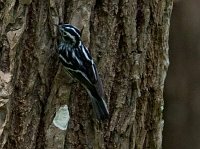
This common N.A. migrant winters from s. USA to n. S.A. It is found from sea level to at least 2,500m. and occurs in virtually every major habitat. It forages along branches and tree trunks muck like a piculet or creeper. -
Ovenbird (Seiurus aurocapillus)
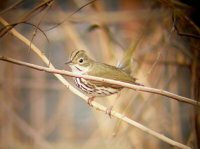
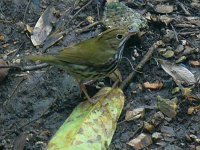
This N.A. migrant winters from Mexico to n. S.A. It occurs throughout Honduras from sea level to over 2,000m. It inhabits most major habitats where it typically is found walking on the ground in search of food. -
Kentucky Warbler (Oporornis formosus)
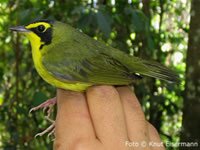
This N.A. migrant winters from s.e. Mexico to n. S.A. It is found from sea level to at least 1,800m. It inhabits humid to semi-deciduous forest habitats where it typically is found in the thick understory. - MacGillivray`s Warbler (Oporornis tolmiei) This lovely warbler is found throughout much of the country typically above 700m. It inhabits scrubby second growth and forest edge. It is the only migrant resident in this genus.
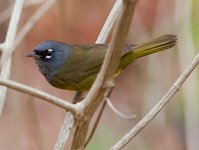
- Gray-crowned Yellowthroat (Chamaethlypis poliocephala) Our only breeding yellowthroat west of the Sula Valley. It is also found in the interior of central and eastern Honduras where it is allopatric with the Olive-crowned Yellowthroat. The Gray-crowned is found in a variety of semi-open habitats, gardens and light woodland. It is fairly common in Copan.
-
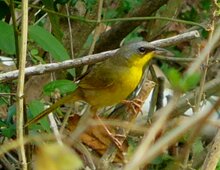 Female
 -
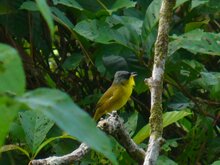 Male
Male -
Rufous-capped Warbler (Basileuterus rufifrons)
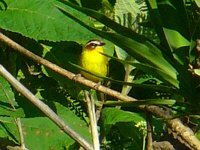 This resident wood-warbler is common throughout the interior of Honduras occupying a range of habitats and elevations. It is found just above sea level to around 1,600m. and occupies scrubby areas, pine/oak woodland and humid, young secondary forest. It is typically found in the understory either singly or often in pairs (AUDIO).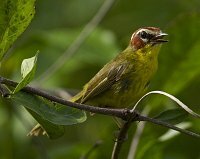
-
Red-throated Ant-Tanager (Habia fuscicauda))
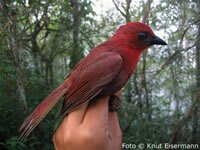
This common species ranges from e. Mexico to n. S.A. In Honduras it occurs principally along the Caribbean slope and is found from sea level to at least 1,400m. It inhabits a wide variety of habitats and attends ant swarms. -
Scarlet Tanager (Piranga olivacea)
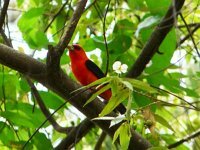
This lovely N.A. migrant winters in S.A. In Honduras it is typically found around Oct. and Nov. then in March to May with the greatest numbers occurring along the north coast. It is found from sea level to at least 1,200m. -
Crimson-collared Tanager (Ramphocelus sanguinolentus)
This handsome tanager is found from s. Mexico to w. Panama. It occurs along the Caribbean slope in humid forest habitats and adjacent scrub from sea level to about 1,200m. It is particularly common in the Lake Yojoa basin. 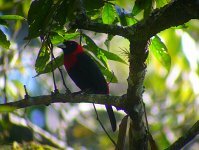
- Grayish Saltator (Saltator coerulescens) This Saltator is widespread in the interior of Honduras, typically inhabiting drier areas than the other two species, but it does occur in Wampusirpe, Gracias-A-Dios close to humid rainforest. Travels in pairs or small groups. Its gray coloration and white supercilium easily distinguish it.
-
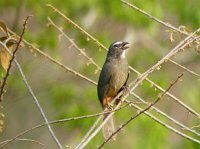
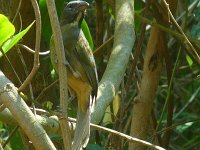
- Black-headed Saltator (Saltator atriceps) This Saltator is common throughout much of Honduras from sea level to nearly 2,000m. It occupies a variety of semi-open to forested habitats. It usually travels in small flocks of 5-12 birds. Its vocalizations are quite loud. It is slightly bigger than the Buff-throated Saltator and has a bright white throat patch, not buffy colored.
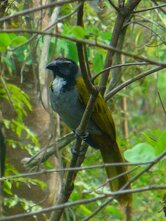
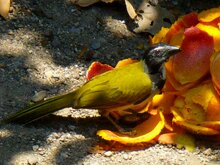
-
Yellow-throated Euphonia (Euphonia hirundinacea)
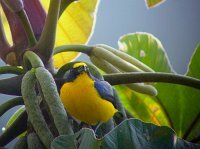
-
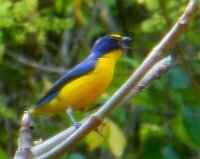
This species ranges from n.e. Mexico to w. Panama. It is common in Honduras where it inhabits mostly the Caribbean slope. It occurs from sea level to around 1,800m. Like other euphonies it is fond of mistletoe berries, wild figs and the fruits of the "Capulin" tree (Muntingia sp.). -
Blue-hooded Euphonia (Euphonia elegantissima) Although this colorful bird is fairly common throughout Honduras it is locally common around Copan and quite easy to observe here. For a number of months flocks of them descend upon trees past La Laguna that are filled with fruiting mistletoe plants and can be seen closely (AUDIO).
-
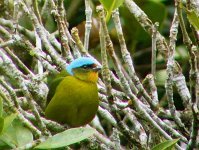 Female
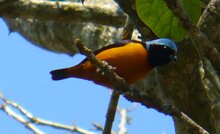 Male
Male -
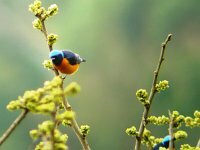 Male
Male - Olive-backed Euphonia (Euphonia gouldi) Although common along the north coast it is infrequently encountered this far inland. They have been recorded in the humid, broadleaf forest of the Malcote Nature Reserve at 1,300m. This area marks their southernmost distribution in western Honduras as well as its altitudinal limit.
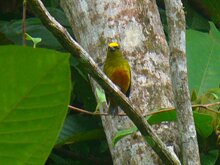
- Melodious Blackbird (Dives dives) This blackbird is common throughout Honduras and is found in a wide variety of open areas to woodland habitats. Commonly found in cities. Typically calls from a high point in a tree.
-
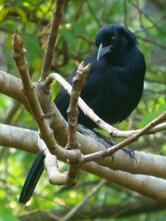
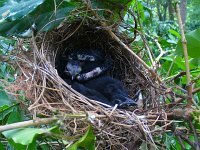
- Great-tailed Grackle (Quiscalus mexicanus) Our only grackle can be found commonly everywhere in Honduras and the Bay Islands except in heavy forest habitats. This bird was shot on Guanaja.
-
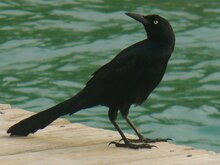 Male
Male -
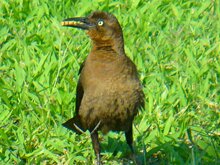 Female
 -
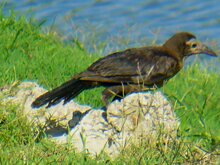 Juvenile
 - Bronzed Cowbird (Molothrus aeneus) This is the smaller of our two cowbirds and is found throughout Honduras in a variety of open to semi-open habitats and light woodland as well as humid forest edge. It parasitizes any number of nests including orioles.
- Yellow-tailed Oriole (Icterus mesomelas) This oriole is uncommon in Honduras and is typically found along the north coast, but locally and in low numbers. We recorded them in the Rio Amarillo valley in the Pena Quemada humid forest along with the Black-faced Grosbeak. This marks the southernmost range for this species in western Honduras.
-
Altamira Oriole (Icterus gularis)
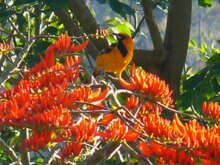
This large, handsome oriole is found throughout Honduras inhabiting open areas, light woodland, and dry habitats. It tends not to be found along the north coastwhere it is replaced by the Spot-breasted Oriole. -
Streak-backed Oriole (Icterus pustulatus)
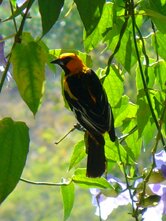
This oriole is very similar in appearance to the Spot-breasted and Altamira. It ranges from n. Mexico along the Pacific coast s. to n.w. Costa Rica. It inhabits scrub, gardens and light woodland from sea level to at least 1,800m. Its scolding chatter-like call easily distinguishes it from the other two similar species. All 3 of these look-alikes are found together in the Copan valley. - Lesser Goldfinch (Carduelis psaltria) This species is common throughout the country. It typically inhabits semi-open areas where there is an ample supply of seeds
North Coast
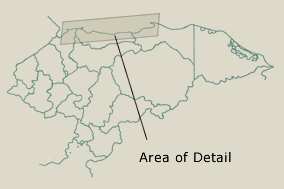
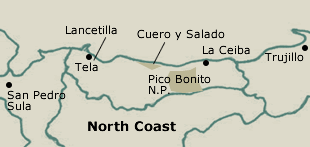
This section covers the north coastal strip stretching from Omoa, Cortez through La Ceiba, Atlantida to Trujillo, Colon and spans about 250 kilometers. It has a mix of habitats that include coastal wetlands and mangrove-lined lagoons to broadleaf forests that range from sea level to over 2,400m. The broadleaf forest cover constitutes about 1.5 million acres.
Around Tela we find Punta Izopo and Jeanette Kawas N.P.'s and the Lancetilla Botanical Gardens. Closer to La Ceiba along the north coast is the Cuero y Salado W.R. Behind La Ceiba is the towering Pico Bonito N.P. and behind Trujillo is Capiro-Calentura N.P. Of these Lancetilla's birds are more well known with Pico Bonito being under explored, but probably the most diverse. Lancetilla's easy access and moderately low-lying terrain have afforded it years of inventorying by early collectors, researchers and birders alike. Pico Bonito's terrain and access, however, are a different matter altogether. Most of the northern section is very steep and in many places completely vertical so it's no wonder that no real bird inventories have been done over 1,000m. We know that many cloud forest denizens exist higher up as many migrate down to near sea level during the non-breeding months of Oct. to early Feb. including the Resplendent Quetzal, thrushes, tanagers, etc. (See "Known or suspected altitudinal migrants at Pico Bonito N.P.). This park itself which covers over 50,000 hectares probably contains close to 400 species.
The following species accounts contain birds found along the north coast and include some otherwise rare birds.
- Little Tinamou (Crypturellus soui) Our smallest and most widespread tinamou occurs from sea level to at least 1,400m. It is heard far more often than seen where it calls from thick cover. With patience, however, one can call one in with audio playback and get a good view.
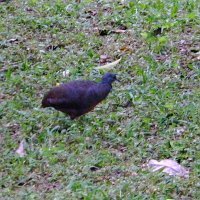
- Slaty-breasted Tinamou (Crypturellus boucardi) Although this bird is widespread along the north coast and commonly heard, it is usually difficult to observe. It favors dense forest understory and can sometimes be seen with luck on trails in the early a.m. or late afternoon.
- Anhinga (Anhinga anhinga) This aquatic bird is frequently found along rivers and mangrove estuaries where it dives and hunts fish while underwater. It is commonly encountered at the Cuero y Salado W.R.
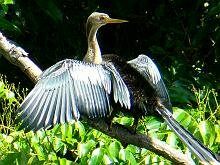
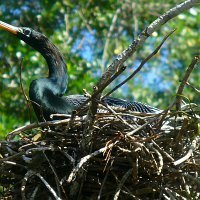
- Great Egret (Ardea alba) This large, all white egret is found throughout Honduras typically being associated with wetland and aquatic habitats.
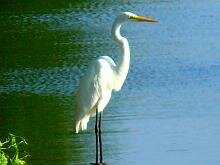
- Snowy Egret (Egretta thula) This small, all white egret is distinguished from similar species by its think black bill and black feet with yellow socks. It is typically found around aquatic and wetland habitats.
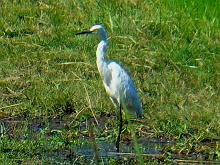
- Tricolored Heron (Egretta tricolor) This lovely heron is restricted to wetland and aquatic habitats and is less frequently encountered than many other species. Its white belly easily distinguishes it from the Little Blue Heron.
- Green Heron (Butorides virescens) This small heron is commonly found throughout Honduras wherever there in significant wetland habitats. It also occurs on the Bay Islands.
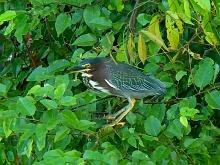
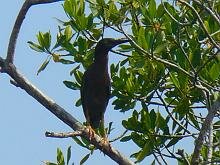
- Cattle Egret (Bubulcus ibis) Our most common egret in Honduras. It is found literally everywhere and especially where there is livestock. They often pick off ticks from the livestock or catch prey that is scarred up.
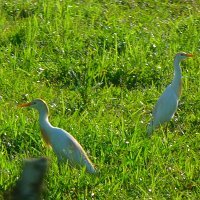
- Black-crowned Night-Heron (Nycticorax nycticorax) This night-heron is not so easy to find in Honduras, but I have recorded it in the Choluteca area, Olancho and the north coast. This photo was taken at Los Micos Lagoon inside Jeanette Kawas N.P. near Tela. Three individuals were seen in close proximity.
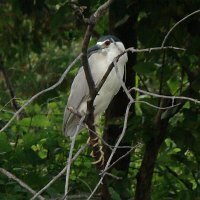
- Yellow-crowned Night-Heron (Nyctanassa violacea) The adult of this species is unmistakable. It is typically found around wetland habitats and mangrove estuaries, but can also be found along riparian habitats in even the most arid environments such as Olanchito. It is mostly nocturnal and is common at Cuero y Salado W.R.
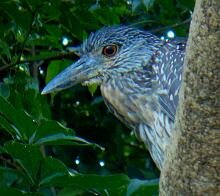
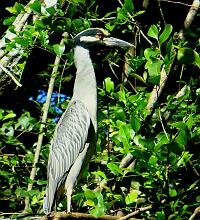
- Boat-billed Heron (Cochlearius cochlearius) This odd looking heron deserves to be mentioned here as it is a frequently found denizen in a number of mangrove-lined lagoons. It is almost a strictly nocturnal feeder and the exact function of its large bill is still unknown. They can be found at Cuero y Salado W.R. and Jeanette Kawaw N.P.
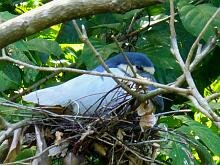
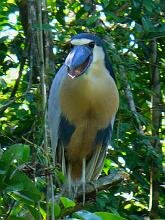
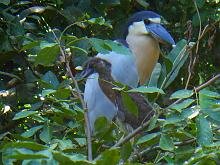
- Jabiru (Jabiru mycteria) Our largest stork is found primarily along both coasts inhabiting fields, marshes and shallow lagoons. It has been reported to nest in Caribbean Pine in the Mosquitia pine savanna due south of Brus Lagoon (J. Salaverri-pers. comm.).
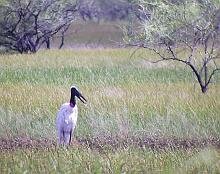
- Wood Stork (Mycteria americana) Wood Storks are found commonly throughout Honduras, but are typically associated with wetland habitats. Often times they are seen in large groups soaring far above as they prepare to move to feeding grounds.
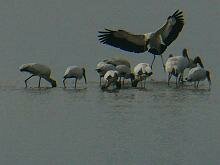
- Turkey Vulture (Cathartes aura) This species is commonly found throughout the country in virtually all habitats.
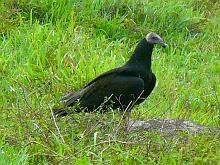
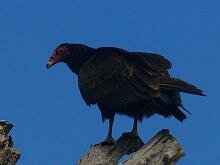
- King Vulture (Sarcoramphus papa) Our largest and most colorful vulture is found throughout Honduras, but is uncommonly encountered. Mostly seen flying high overhead. Photo here was from 4 Kings found at a fresh cow carcass in the Honduran Emerald Reserve near Olanchito, Yoro.
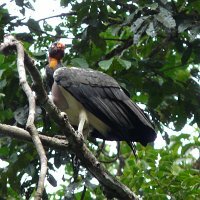
- Double-toothed Kite (Harpagus bidentatus) This kite is a rare to uncommon find in most of Honduras. Although it may soar to great heights it spends much of its time perched in the subcanopy on an exposed branch. This adult was shot right along the coast just outside of Tela.
- Plumbeous Kite (Ictinia plumbea) This kite can be found throughout Honduras from sea level to at least 1,000m. It is fairly common along rivers in La Mosquitia and around Cerro Azul Meambar N.P. This photo was taken at the Honduran Emerald Reserve near Olanchito, Yoro. It can sometimes be found flying with Mississippi Kites.
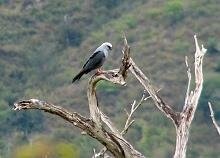
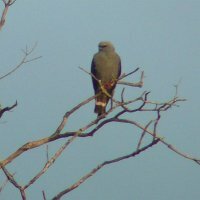
- Bicolored Hawk (Accipiter bicolor) This small forest dwelling accipiter is exceedingly uncommon in Honduras. There are but a few historical specimens and few recent sightings. James was extremely fortunate to have documented this individual in the forest behind the Pico Bonito Lodge.
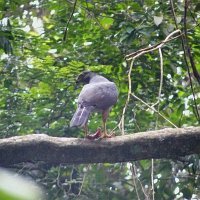
- Crane Hawk (Geranospiza caerulescens) This odd bird of prey is infrequently encountered in Honduras, but is reported to be widespread (Monroe, 1968). I have seen only one which was perched on an electric wire alongside the road at the Rio Bonito bridge crossing on Apr. 19, 2005.
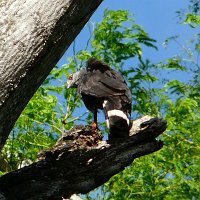
- White Hawk (Leucopternis albicollis) Honduras´ only large nearly all white bird of prey. It is unlikely to be confused with any other bird. It inhabits humid forest and can at times be seen in pairs or more as they take to warming skies. It is particularly common in the Pico Bonito area.
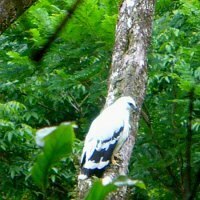
- Gray Hawk (Asturina nitida) This lovely hawk is present throughout much of Honduras. Although it can occur in more arid sites, it prefers more humid habitats
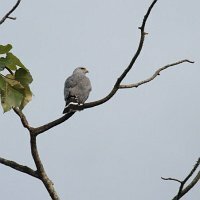
- Common Black-Hawk (Buteogallus anthracinus) This species inhabits many habitats throughout the country and is particularly common in mangrove estuaries and the Bay Islands. This juvenile was shot near Tela in Punta Sal N.P.
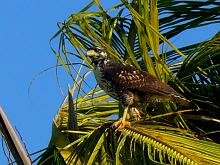
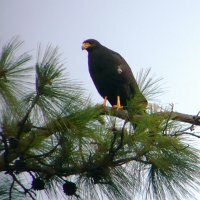
- Great Black-Hawk (Buteogallus urubitinga) This species is very similar to the Common and can be difficult to tell apart and are often sympatric. One must read the field guides carefully to learn how to tell them apart. In these photos one can see two major differences: The barring on the thighs and how long the tips of the primaries are while at rest.
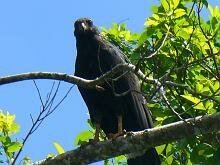
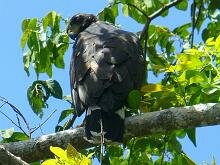
- Black-and-white Hawk-Eagle (Spizastur melanoleucus) This magnificent bird of prey is uncommon in Honduras with recent sightings coming from La Mosquitia, Olancho and the north coast. There have been a slew of recent sightings along Rio Coloradito in the vicinity of the Lodge at Pico Bonito where it may well be nesting as well as the CURLA study area. It has been seen at the Lodge from both canopy towers.
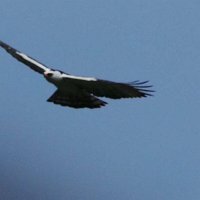
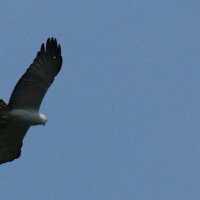
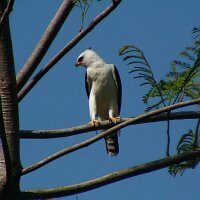
- Barred Forest-Falcon (Micrastur ruficollis) This secretive bird inhabits mostly broadleaf forest from sea level to at least 2,100m. where they apparently feed on insects. They will occasionally come into a tape playback. Heard frequently, but uncommonly seen.
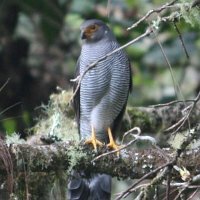
- Collared Forest-Falcon (Micrastur semitorquatus) This large falcon is often heard as it calls from high in the subcanopy, but is seldom seen. It inhabits mostly humid rain forests throughout the country, but can be found in gallery woodland and even beach scrub.
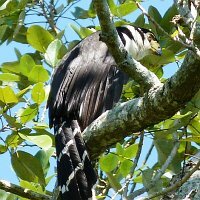
- Crested Guan (Penelope purpurascens) This large guan inhabits primarily broadleaf forest from sea level to well over 2,000m. Can be found singly, pairs or in small groups. It is often found high in the tree tops and will soar to safety.
- Great Curassow (Crax rubra) This is the largest cracid in Honduras and lives primarily in humid, broadleaf forest. In most of the country outside of La Mosquitia it has been extirpated due to hunting and habitat loss. It is still fairly common in Pico Bonito N.P. and in 2005 we heard its deep, resonant call amongst the mangrove forest at Cuero y Salado W.R.
- Black-eared Wood-Quail (Odontophorus melanotis) Another forest dwelling quail that is difficult to observe. This species ends its northern limit of distribution in northwestern Honduras at Lancetilla. It occurs in Pico Bonito N.P. in the forest understory in small flocks and where it exists it can be heard singing, but nearly impossible to see.
- Gray-necked Wood-Rail (Aramides cajanea) This large, spectacularly colored rail is found along the Caribbean slope in Honduras inhabiting mangrove estuaries to wet grasslands and has even appeared in the arid, thorn scrub forest in Olanchito. Is locally common along the banks of Rio Platano.
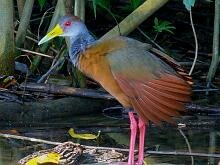
- Sungrebe (Heliornis fulica) This finfoot inhabits slower moving rivers and lagoons with adjacent forest cover. It is usually seen singly, occasionally in pairs in quiet eddies or lagoon backwaters. It usually swims for cover along the bank when seen and will sometimes jump out of the water and perch on a horizontal branch just above the water. It is fairly common along the backwaters of Cuero y Salado W.R.
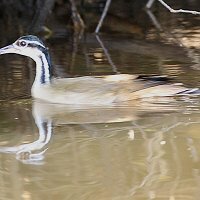
- Sunbittern (Eurypygia helias) This beautiful bird is fairly common throughout Honduras along forested rivers and streams. It still occurs along the stream at the Lancetilla Botanical Gardens in low numbers. It is much more common along the fast flowing, crystalline rivers that come out of Pico Bonito N.P.
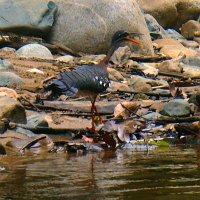
- Collared Plover (Charadrius collaris) This small, resident plover is uncommon in Honduras. It is usually found as solitary individuals along isolated beaches. This bird was shot near Tela using the digiscope method.
- Semipalmated Plover (Charadrius semipalmatus) This plover is a migrant resident that can be found along both coasts of Honduras and is common to fairly common. They are usually found in small groups and are often associated with other seabirds such as terns and other shorebirds.
- Sanderling (Calidris alba) The Sanderling is another migrant shorebird that is commonly found along sandy beaches, often associating with other shorebirds and terns.
- Herring Gull (Larus argentatus) The Herring Gull can be found sparingly along the north coast. This individual was found near Omoa.
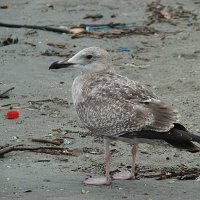
- Sandwich Tern (Sterna sandvicensis) This tern is found primarily along the north coast and is often fund with the Royal Tern. It is locally common on the beaches in Punta Sal N.P.
- Rock Pigeon (Columba livia) Our only feral pigeon can be found throughout the country around any sizeable human habitations.
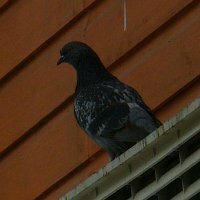
- Pale-vented Pigeon (Patagioenas cayennensis) The Pale-vented is found along the Caribbean slope and is more common along the coast, although it is also common along the shores of Lake Yojoa.
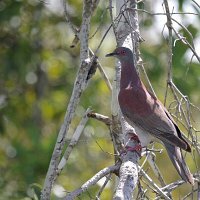
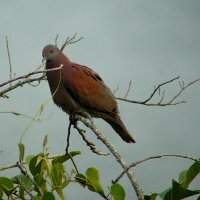
- Red-billed Pigeon (Patagioenas flavirostris) This common pigeon is found virtually throughout Honduras in many different habitats.
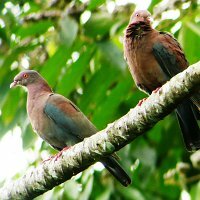
- Short-billed Pigeon (Patagioenas nigrirostris) This forest dwelling pigeon is found throughout much of Honduras in wet forest habitats from sea level to at least 1,500m. It typically remains high the subcanopy where it is usually difficult to observe.
- Gray-chested Dove (Leptotila cassini) This dove is found along the Caribbean slope in humid forest habitats usually below 1,400m. It is typically found foraging on the forest floor and will occasionally come out to semi open areas. An individual was found nesting in a fern thicket at the Pico Bonito Lodge.
-
Ruddy Quail-Dove (Geotrygon Montana)
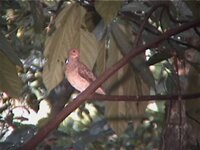 This handsome quail-dove inhabits rainforest in western, northern and eastern Honduras and is uncommon to fairly common. It inhabits the forest floor where it may be heard more often than seen. We were lucky to get video footage of this one at the Lodge at Pico Bonito.
 - Olive-throated Parakeet (Aratinga nana) This parakeet inhabits most of the Caribbean slope in a variety of habitats ranging from humid broadleaf forest to semi-deciduous forest. It is quite common along the north coast of Honduras and often nests in termite colonies. Can be seen in flocks of 20 or more.
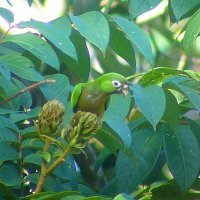
- Brown-hooded Parrot (Pionopsitta haematotis) This lovely, small parrot is found along the Caribbean slope in Honduras in and around lowland, humid rainforest. At times it can be found in pairs or large flocks, especially at fruiting trees. Where available it is fond of fruiting Nance-wild craboo (Byrsonima crassifolia) trees where this photo was taken. It was recently (4/07) found in the Rio Amarillo, Copan remnant rainforest far away from existing known populations.
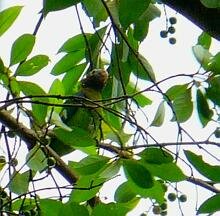
- White-crowned Parrot (Pionus senilis) This colorful parrot can be found throughout much of Honduras in wet forest habitats. In some places such along the north coast and La Mosquitia large flocks can still be seen.
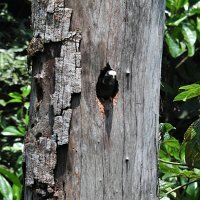
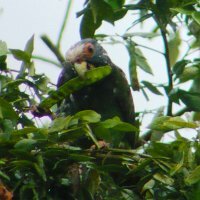
- Mangrove Cuckoo (Coccyzus minor) This cuckoo occurs along both coasts of Honduras and is uncommon, but present in very low densities. They are found at Cuero y Salado W.R., Lancetilla, and Jeanette Kawas N.P. In March 2005 one individual actually hopped out to the edge of a mangrove branch to look at us in our boat at Cuero y Salado.
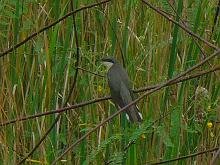
-
Guatemalan Screech-Owl (Megascops guatemalae) In Honduras this small
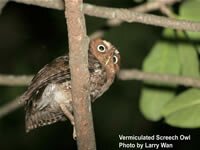 owl inhabits scrubby areas, pine/oak forests to humid, broadleaf forest to at least 1,300m. At the Lodge at Pico Bonito it is very by Thornton common in the cacao orchards and responds well to a tape and will even answer in the mid morning hours. Some day roosts include Cohune Palms or against a trunk of heavily foliated tree.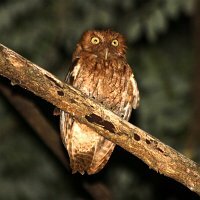
-
Mottled Owl (Ciccaba virgata) This is perhaps
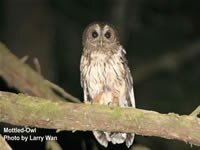 the most common of the larger owls found in Honduras.It occurs in humid, broadleaf forest, arid forest and well up into montane habitats. Its call is commonly heard at night when no other species of owl seem to be present. Like most other owls, they readily come to an AUDIO tape playback.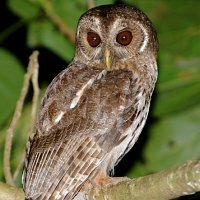
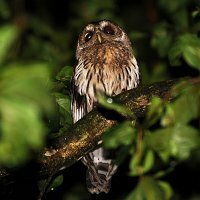
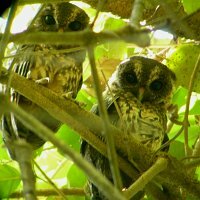
- Lesser Nighthawk (Chordeiles acutipennis) This migrant nightjar can appear just about anywhere in the country in a wide variety of habitats. During migration it can be seen by the hundreds along the north coast flying at dusk.
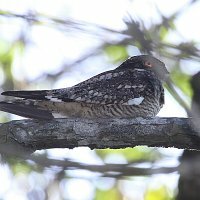
- Spot-tailed Nightjar (Caprimulgus maculicaudus) The distribution of this lowland species is patchy in middle America from southeast Mexico, Honduras and in the pine savannas of Nicaragua. It probably also occurs in the savannas of the Honduran La Mosquitia. In Honduras all historical and recent recent records are from Lake Yojoa. One was observed well at dusk along the lower entrance road to the Lodge at Pico Bonito situated between two fields.
- Long-billed Hermit- (Phaethornis longirsotris) This large hummer is found along the Caribbean slope in and around rainforest habitats. It often comes to feeders and ornamental flowers such as the Heliconia seen here.
-
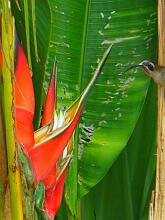
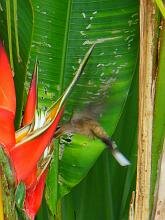
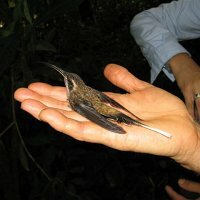
- Stripe-throated Hermit (Phaethornis striigularis) This little hummer is found throughout the Caribbean slope in rainforest habitats.
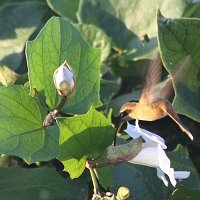
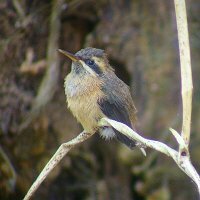
- Scaly-breasted Hummingbird (Phaeochroa cuvieri) This species inhabits lowland rainforest edge and lighter second growth and it quite uncommon in Honduras. One individual was seen on Aug. 13, 2004 from the second tower at the Lodge in an abandoned cocoa plantation. There was an unidentified flowering vine (appeared to be Cucubirtiaceae) at which this hummer and six other species were seen feeding within about 40 minutes.
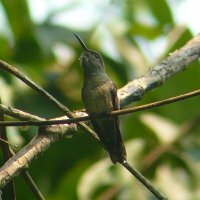
- White-necked Jacobin (Florisuga mellivora) This lovely hummer is common to fairly common around Pico Bonito, typically being found along creeks or rivers.
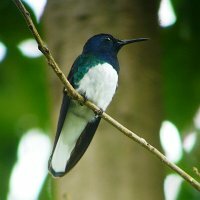
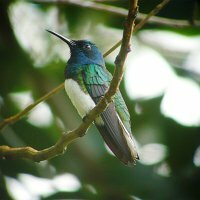
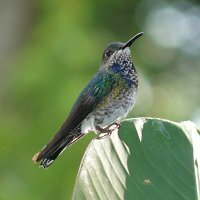
- Brown Violet-Ear (Colibri delphinae) Although infrequently encontered outside of La Mosquitia, this hummer has been seen around the lower perimeter of Pico Bonito N.P. near the entrance of the CURLA study area and the lower Lodge grounds. It is possible that it is more abundant higher up on the slopes as is the case in La Mosquitia.
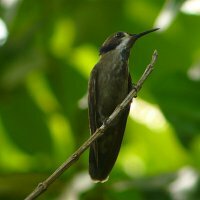
- Violet-headed Hummingbird (Klais guimeti) This small, attractive hummingbird reaches it northern limit of distribution in the rainforests of the Nombre de Dios mountain range. It is uncommon there as well as the rest of its range in Honduras. The Lodge at Pico Bonito, however, is a good place to see it where it is usually found just up on the ridge trail in light gaps, often singing on a perch high up. The bird here was found feeding on the flowers of a Cashew tree alongside the pool at the Lodge.
- Crowned Woodnymph (Thalurania colombica) This beautiful hummer is found in rainforest habitats throughout the Caribbean slope. It is frequently seen bathing in shaded streams inside the rainforest where even here its colors seem to glow in the dark. The female is much smaller with a gray belly and white on the tips of the tail
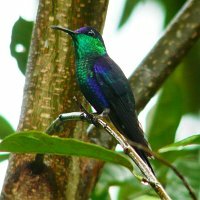
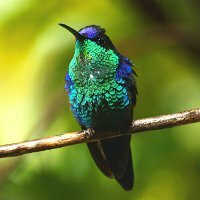
-
Rufous-tailed Hummingbird (Amazilia tzacatl) This hummer
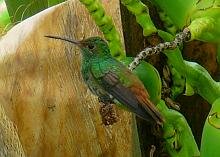 is widespread along northern and eastern Honduras and inland to Comayagua and Olancho. It is especially common at some sites along the northern edge of Pico Bonito N.P. It is sympatric with the very similar Berylline Hummingbird (A. beryllina) around Lake Yojoa.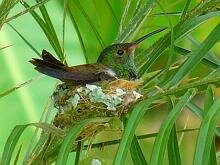
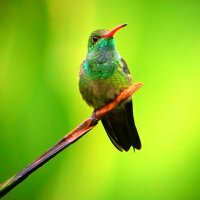
- Green-breasted Mountain-Gem (Lampornis sybillae) Although previously unrecorded for this area one individual was observed in Nov. 2002 in the rainforest of Pico Bonito N.P. at the Lodge. The bird had most likely migrated downslope from the cloud forest higher up.
- Long-billed Starthroat (Heliomaster longirostris) This large hummer can only be confused with the Plain-capped Starthroat. In most of the country the two species are not sympatric. The former usually inhabits more humid areas and the latter drier habitats.
- Black-headed Trogon (Trogon melanocephalus) This trogon occurs along the north and south coasts of Honduras and inland in some areas such as Lake Yojoa. It inhabits rain forest edge, mangrove estuaries and even arid thorn scrub forest.
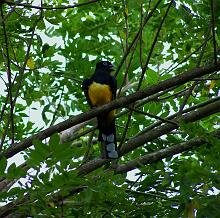
- Slaty-tailed Trogon (Trogon massena) Our largest, short tailed trogon occupies humid, broadleaf forest along the Caribbean slope, inland to Lake Yojoa and a population in Copan. It is uncommonly encountered.
-
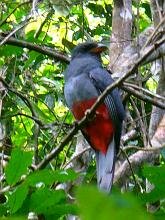
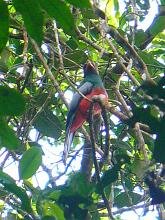
-
Blue-crowned Motmot (Momotus momota) This striking
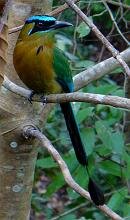 species is common throughout Honduras occuring up to about 2,000m. It inhabits forest edge, deep humid forest and gallery forest, sometimes in close proximity to the Turqoise-browed Motmot. by Thornton Its deep, resonating "hoot-hoot" call is frequently heard on walks (AUDIO).
 - Keel-billed Motmot (Electron carinatum) For detailed info, see "Birds of Special Interest".
-
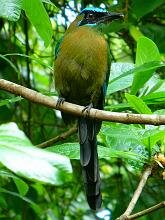
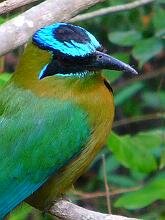
- Ringed Kingfisher (Ceryle torquatus) The New World´s largest kingfisher is found throughout the country in appropriate habitat, tending to favor larger bodies of water than other species.
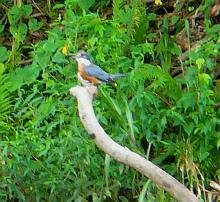
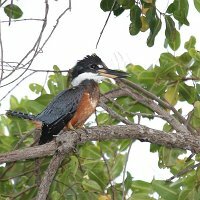
- Amazon Kingfisher (Chloroceryle amazona) The Amazon is widespread in Honduras occurring along rivers, lakes, fish ponds and mangrove estuaries.
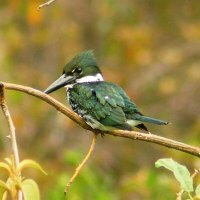
- Green Kingfisher (Chloroceryle americana) This kingfisher is common throughout Honduras in most aquatic habitats including small creeks.
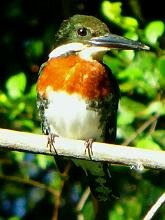
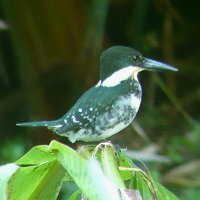
-
American Pygmy Kingfisher (Chloroceryle aenea) This
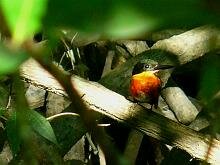 tiny kingfisher occurs all along the north and south coasts of Honduras where they are typically found in mangrove estuaries. They also inhabit small streams and occasionally flooded roadside ditches (one pair once observed along road into Lancetilla). Although it is widespread it can be difficult to observe as it usually darts into thick cover when approached.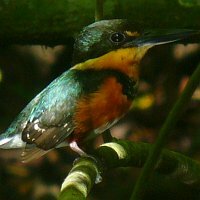
- White-necked Puffbird (Notharchus macrorhynchos) This odd looking bird is very infrequently encountered in Honduras, despite what other literature may say. I am lucky if I find one every two years or so! Finding this individual on the Lodge ridge trail was quite the surprise.
-
Rufous-tailed Jacamar (Galbula ruficauda) This, the northernmost
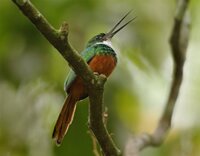 ranging of jacamars, is fairly common to common along the north coast and La Mosquitia. It inhabits humid, broadleaf forest where it feeds on insects and specializes in butterflies. Its loud call is very similar to the Royal Flycatcher (AUDIO).
 -
Collared Aracari (Pteroglossus torquatus) This small toucan ranges from s. Mexico down into S. America.
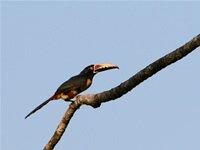 It is fairly common to common throughout most of Honduras where there is proper habitat. It is found often in small groups in rain forest habitats and edge as well as semi-deciduous forest and occasionally in humid pine/oak woodland. It occurs from sea level to at least 1,500m. Its high-pitched screech is usually heard before the bird is seen.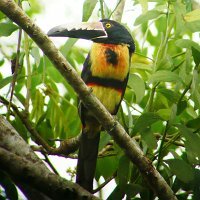
- Yellow-eared Toucanet (Selenidera spectabilis) This beautiful toucanet inhabits deep rain forest east of the Sula Valley and is uncommon in Honduras with most sightings coming from Pico Bonito N.P. The species' is suppose to be found more frequently along the Cangrejal River near the Bejuco waterfall (J. Salaverri, pers. comm.). One individual was seen on Dec. 29, 2003 at the Lodge along the ridge trail. This sighting coincided with the fruiting of many Melastoma trees when other uncommon birds were present as well.. ?For more info and photos see ?Birds of Special Interest?:
-
Keel-billed Toucan (Ramphastos sulfuratus) This, and
 the Chestnut-mandibled Toucan are Honduras' two largest species, both of which inhabit humid, broadleaf forest. The Chestnut-mandibled is restricted to La Mosquitia. The Keel-billed is found throughout the country up to about 1,400m. and is common. Its frog-like call usually gives away its presence. At times seen in groups of up to 20 birds at the Lodge (AUDIO).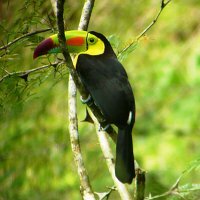
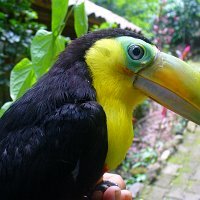
- Black-cheeked Woodpecker (Melanerpes pucherani) This woodpecker occurs along the Caribbean slope in humid rainforest and edge where it replaces the Golden-fronted. It is usually found singly, in pairs and sometimes accompanies mixed flocks.
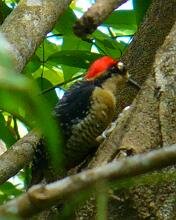
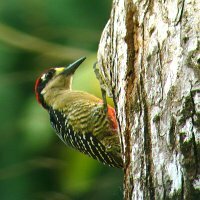
- Smoky-brown Woodpecker (Veniliornis fumigatus) This small, rather plain woodpecker is found mostly along the Caribbean slope in humid forest habitats. Unlike many woodpeckers, this species can often be found in thick second growth near the ground level. One of its vocalizations, a mad vireo-like sound, often gives away its presence.
- Chestnut-colored Woodpecker (Celeus castaneus) Honduras´ loveliest woodpecker is found along the Caribbean slope in rainforest habitats and edge. Will sometimes enter Citrus plantations to feed on ripe fruit. Found singly, in pairs and at times accompanies mixed flocks.
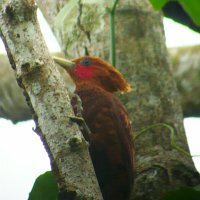
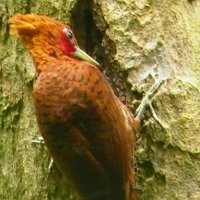
- Pale-billed Woodpecker (Campephilus guatemalensis) This large woodpecker is widespread in Honduras, but not near as common as the similar Lineated and tending to prefer more humid forest conditions.
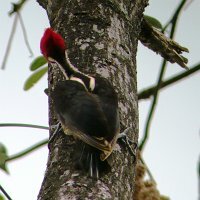
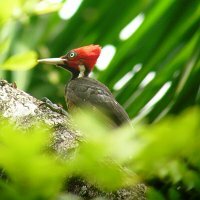
- Olivaceous Piculet (Picumnus olivaceus) This, the smallest of the woodpecker family, is fairly common to uncommon in Honduras being widespread, but encountered in low numbers. It is usually found foraging singly or in pairs amongst epiphytes and gleaning small limbs. I have recorded it at Pico Bonito N.P. and Lancetilla.
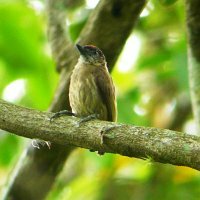
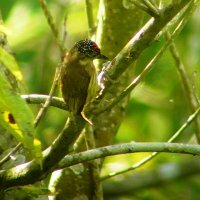
- Plain Xenops (Xenops minutus) This small furnarid is fairly common in humid forest habitats and even occurs in large mangroves. It typically stays high in the subcanopy where it feeds along small twigs.
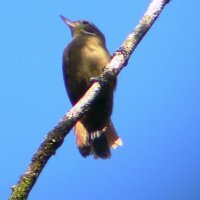
-
Scaly-throated Foliage-Gleaner (Anabacerthia variegaticeps) Although recently published as an uncommon species in Honduras (Anderson & Bonta, 2002), I have found it to be fairly common. It inhabits heavy second growth in humid forest as well as more mature forest from sea level to well over 2,000m. It feeds much like a Plain Xenops in tangles at low to high levels either singly or in mixed flocks (AUDIO).
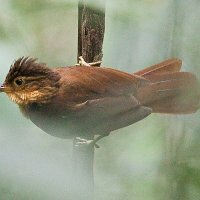
-
Tawny-winged Woodcreeper (Dendrocincla anabatina) I have found this species to be uncommon in most of Honduras within its rain forest habitats. I have three sightings for Pico Bonito N.P.; Dec. 31, 1996, Dec. 15, 2001 and Apr. 9, 2001 (AUDIO).
-
Great Antshrike (Taraba major) This large antshrike is uncommon throughout most of Honduras, but is locally common at Lancetilla. It can usually be found in the thick vegetation along the entrance road together with the Barred Antshrike near the front gate where the high tension power lines cross the road (AUDIO).
- Western Slaty-Antshrike (Thamnophilus atrinucha) This bird is common in the La Mosquitia region in rainforest habitats. Other than that is rarely found in its supposed range along the north coast. It has recently been found in a habitat that is not typical for this species. It was photographed by both D. Medina and I in flooded mangrove estuaries (in Punta Izopo and Cuero y Salado W.R. respectively). In the literature I reviewed (Monroe, 1968; Ridgely, 1989; and Howell, 1995) this type of habitat is not described for this species.
- Russet Antshrike (Thamnistes anabatinus) This humid, broadleaf forest species is the least observed antshrike in Honduras and is uncommon throughout except at Pico Bonito N.P. where it can be locally and seasonally common. From Jan. to April it can typically be found along the Lodge's ridge trail either singly, in small flocks or attending mixed flocks. It is quite possible that this bird is also an altitudinal migrant at this park.
- White-flanked Antwren (Myrmotherula axillaris) This antwren has its northern limit of distribution in Honduras east of the Sula Valley. All of the historical records and recent sightings have come out of Olancho and La Mosquitia. On Dec. 26, 2003 I observed one amongst a mixed species flock along the Lodge's ridge trail. This is the record I am aware of for this species away from eastern Honduras.
- Chestnut-backed Antbird (Myrmeciza exsul) This antbird was first recorded in Honduras in 1983 (Anderson & Bonta, 2002) and is rarely encountered. It ends its northern limit of distribution in the rain forests east of the Sula Valley. One individual was seen on Feb. 18, 1997 along a trail at the edge of the forest in Pico Bonito N.P. This is apparently the only record away from La Mosquitia.
- Yellow-bellied Tyrannulet (Ornithion semiflavum) This diminutive flycatcher is found along the Caribbean slope in humid forest habitats where it inhabits edge and deep forest. It is heard more often than seen.
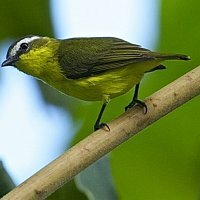
- Yellow-olive Flycatcher (Tolmomyias sulphurescens) This common flycatcher is found throughout most of Honduras on both slopes in a variety of forested and habitats. Its loud 3 note ?hissing? call usually gives away its presence.
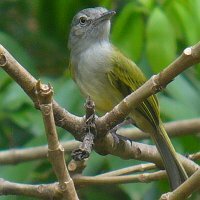
- Ruddy-tailed Flycatcher (Terenotriccus erythrurus) This tiny flycatcher inhabits rainforest and small clearings within. It is infrequently recorded and I have only seen it at Pico Bonito N.P. and the headwaters of Rio Platano B.R.
- Eastern Wood-Pewee (Contopus virens) This migrant transient winters in South America. On its migration route it can be found virtually anywhere, but is more common along the Caribbean slope. It is very similar in appearance to the Western Wood-Pewee (C. sordidulus) and care must be taken in sorting them out. Best done by call.
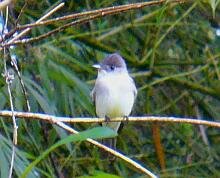
- Bright-rumped Attila (Attila spadiceus) This wonderful flycatcher can be fairly common in lowland to mid-elevation rain forests, but is usually only detected by its long drawn out song. It usually remains high in the subcanopy and can be quite difficult to observe.
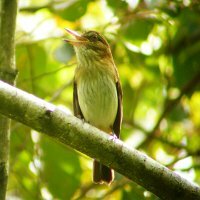
- Great-crested Flycatcher (Myiarchus crinitus) This resident migrant is found throughout Honduras, but is infrequently found. It seems to be more visible as the time for its northward migration draws near. Can sometimes be found in association with other Myiarchus species.
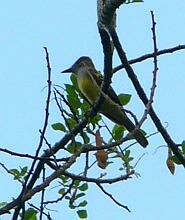
- Boat-billed Flycatcher (Megarynchus pitangua) This is one of the four look-alikes found in Honduras. Size wise it can only be confused with the Great Kiskadee, but the Boat-billed has an obviously larger bill, a different rattle-like vocalization and lacks the rufous on the wings. It is found throughout the country, but does not quite tolerate extremely disturbed areas as the Kiskadee.
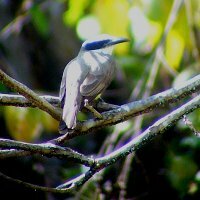
- Social Flycatcher (Myiozetetes similes) The Social is a common bird found throughout the country in almost any semi-open area, forest edge and light woodland. It is even common in urban areas. It looks very similar to our White-ringed Flycatcher (Conopias albovittatus) that is found only in extreme eastern Honduras and inhabits the rain forest canopy.
-
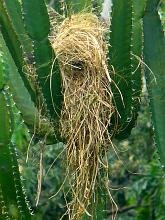 Nest
Nest 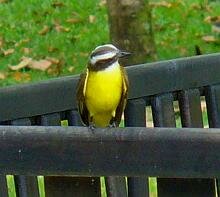
- Thrush-like (Mourner on cd) Schiffornis (Schiffornis turdina) This odd bird inhabits rain forest understory where its three note whistle is often heard echoing. It will come to a good imitation. It is common in La Mosquitia, but rare elsewhere. It has been found in Pico Bonito N.P. around the CURLA Campamento area
- .
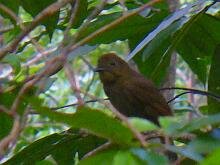
- Gray-headed Piprites (Piprites griseiceps) This odd bird is rare throughout Middle America (Ridgely, 1989) and occurs in humid broadleaf forest. It is usually seen accompanying mixed species flocks at lower to mid levels in the forest. I observed one in a mixed flock on Feb. 27, 2001 along the Lodge's ridge trail. One other was observed there by Lodge Naturalist, James Adams. All other records come out of Olancho and La Mosquitia, but rarely encountered there as well.: ?For audio recording go to the Xeno-Canto website where I placed a recording taken in La Mosquitia in 2009?.
- Rufous Mourner (Rhytipterna holerythra) This atypical flycatcher is found along the Caribbean slope of Honduras in humid, broadleaf forests. It usually inhabits the subcanopy and often joins mixed species flocks.
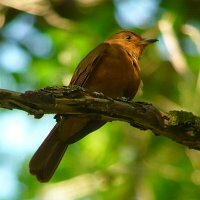
-
Masked Tityra (Tityra semifasciata)
This handsome bird is common throughout Honduras from sea level to over 2,000m. It inhabits semi-open areas, gardens, light woodland and humid, broadleaf forest up into montane habitats,but less common. Its nasal calls frequently give away its presence. -
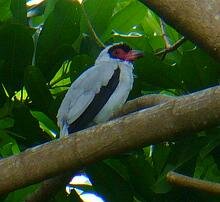 Male
Male -
 Female
 - Black-crowned Tityra (Tityra inquisitor) This handsome bird inhabits humid forest and edge. It is found along the Caribbean slope of Honduras and is uncommon to locally common. It has also recently been found in the Rio Amarillo forests near Copan Ruins.
- Lovely Cotinga (Cotinga amabilis) This spectacular bird (at least the males) are locally common at the Lodge and can be seen almost daily throughout the year. At certain fruiting trees they can be seen in small numbers and at times right in front of the conference room. From the first observation tower the males are frequently seen perched a top a number of trees at eye level. For more info see "Birds of Special Interest".
-
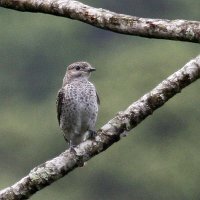 Female
 -
White-collared Manakin This lovely species is
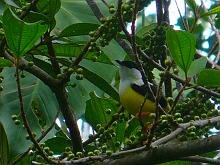 common all along the north coast, inland around L. Yojoa and into La Mosquitia. It inhabits humid, broadleaf forest and reaches an elevation of at least 700m. It is quite common at Lancetilla Botanical Gardens and Pico Bonito N.P. Its loud wing snapping and buzzy calls usually gives away its presence.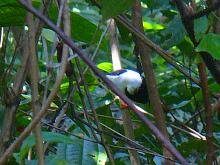
-
Lesser Greenlet (Hylophilus decurtatus) This little bird
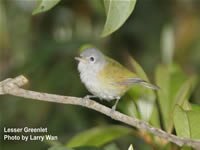 is common throughout the country in broadleaf forest up to about 1,500m., but more common below 800m. It is often found in mixed species flocks and is easy to bring in closer with an imitation of the Ferruginous Pygmy-Owl.
 - Wood Thrush (Hylocichla mustelina) This colorful bird is a common winter resident along the Caribbean slope. It can be found inhabiting the forest understory and trails as well as cacao and citrus plantations.
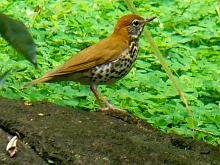
- Gray Catbird (Dumetella carolinensis) This migrant resident is common throughout much of Honduras in a wide variety of semi-open to light woodland habitat. It occurs from sea level to about 2,000m.
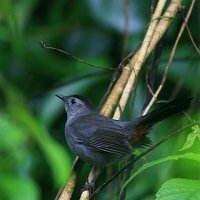
- Chestnut-sided Warbler (Dendroica pensylvanica) This Neotropical migrant occurs mostly along the Caribbean slope in humid forest conditions. The immature color phase seen in this photo is frequently seen and often gives people difficulty in identifying it.
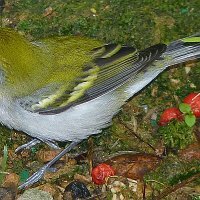
- Magnolia Warbler (Dendroica magnolia) The Magnolia is one of our most common migrants and occurs throughout most of Honduras in a wide variety of habitats
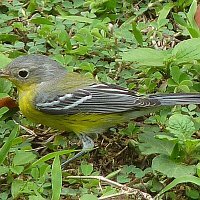
- Black-throated Blue Warbler (Dendroica caerulescens) This lovely warbler is rarely encountered in Honduras. One male in alternate plumage was seen at the Lodge in light woodland in early Apr. 2005.
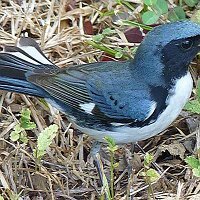
- Cerulean Warbler (Dendroica cerulea) Another warbler that is rarely encountered in Honduras. One male in alternate plumage was seen at the Lodge near the conference room in early Apr. 2005.
- American Redstart (Setophaga ruticilla) The male is a very distinguishable bird with its orange and black markings, but females and immatures are pale gray-brown overall with pale yellow markings. This migrant is found commonly throughout.
-
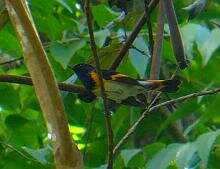 Male
Male 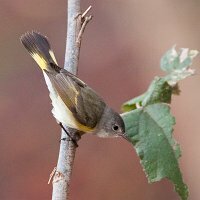
- Northern Waterthrush (Seiurus noveboracensis) This common migrant can be found literally anywhere there is a puddle of water. It is much more abundant than the similar looking Louisiana Waterthrush.
- Hooded Warbler (Wilsonia citrine) The male Hooded is a handsome bird that can be found throughout Honduras from sea level to at least 1,400m. It is often found inhabiting understory brush and frequently seen on the ground.
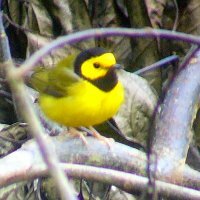
- Buff-rumped Warbler (Phaeothylpis fulvicauda) This resident wood-warbler terminates its northern limit of distribution in Honduras east of the Sula Valley. It is almost always found along rivers and streams inside the rain forest. Although not uncommon in Pico Bonito N.P. it can often be difficult to observe as it usually flies away with one's presence. The Zacate Falls trail is one of the best places to observe it at one of a number of stream crossings.
- Bananaquit (Coereba flaveola) The distribution of this little bird is patchy in Honduras and is infrequently encountered. I have, however, observed it on a number of occasions along the base of Pico Bonito N.P. usually at forest edge either singly or in small groups, at times with mixed species flocks. It has been observed at the Lodge and the CURLA study area.
- Black-throated Shrike-Tanager (Lanio aurantius) This striking bird ranges from southern Mexico to northern Honduras along the Nombre de Dios mountain range. It is found within deep forest and almost always accompanying mixed species flocks at mid to upper levels within the forest. It is frequently encountered along the Zacate Falls trail and at the Lodge.
- White-shouldered Tanager (Tachyphonus luctuosus) This tanager reaches its northern limit of distribution in Honduras along the Nombre de Dios mountain range. It is locally common to fairly common around Pico Bonito N.P. where it typically accompanies mixed species flocks.
- Red-crowned Ant-Tanager (Habia rubica) This is the more common of the two ant-tanagers and is found in a wide variety of forest habitats. It is common throughout most of Honduras and can be found in small flocks of the same species or accompanying understory mixed flocks, and at times attending army ant swarms.
- Red-throated Ant-Tanager (Habia fuscicauda) This common understory tanager is found in lowland and mid-elevation rain forest habitats throughout the country. The male in this photo was found singing at the Lodge at Pico Bonito in early July 2008.
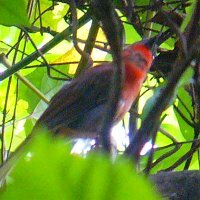
- Summer Tanager (Piranga rubra) This resident migrant is common throughout Honduras and the Bay Islands. The adult male with its bright red coloration is unmistakable, but the brown female may be confused with other species.
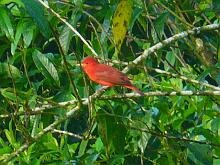
- Yellow-winged Tanager (Thraupis abbas) This tanager is common throughout much of the country, especially along the Caribbean slope near humid forest habitats.
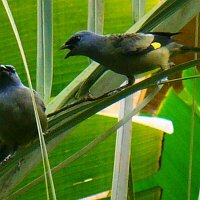
-
Rufous-winged Tanager (Tangara lavinia) This spectacular species ends its northern limit of distribution in Honduras east of the Sula Valley. It typically inhabits deep rainforest and edge, but will venture out into semi-open situations to feed at fruiting trees. Around Pico Bonito N.P. it is locally/seasonally common. From Nov. to Jan. and sometimes in Apr. they can be found at the Lodge. In Dec. 2003 they were particularly common as they fed throughout the day in mixed flocks on a fruiting Melastoma tree and were easy to approach at nearly eye level (AUDIO).
-
Golden-hooded Tanager (Tangara larvata) This multi-colored bird is common throughout the Caribbean slope in Honduras in light woodland, forest edge and fields with fruiting bushes. They often accompany mixed flocks and travel in small groups.
- Green Honeycreeper (Chlorophanes spiza) The male of this species is spectacular and unmistakable. It inhabits broadleaf forest throughout the country. It can be found as solitary individuals or accompanying mixed flocks. This photo was taken at the Lodge at Pico Bonito as it fed on oranges.
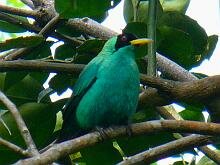
- Shining Honeycreeper (Cyanerpes lucidus) This yellow-legged species in uncommon outside of La Mosquitia. It is locally/seasonally common at the Lodge from Nov. to Jan. when some Melastoma trees are fruiting. At this time they may accompany large flocks of other honeycreepers, euphonias, tanagers and saltators.
- Blue-black Grassquit (Volatinia jacarina) This bird is found throughout most of the country and inhabits many areas where the Variable Seedeater is not found. It can be told apart from that species by its straighter, more pointed bill. The male also has the habit of jumping up and down from its perch.
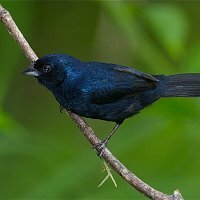
- Variable Seedeater (Sporophila Americana) This small black bird inhabits the Caribbean slope and tends to favor more humid areas. It is sympatric with the Blue-black Grassquit in the Lake Yojoa area. It can be told apart from that species by its shorter more rounded bill.
- Thick-billed Seed-Finch (Oryzoborus funereus) This finch is found in northwestern, northern and eastern Honduras. It inhabits a variety of habitats including marshes and humid forest understory. Like many in this family the males are black and the female is a warm, brown color.
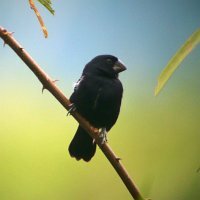
- Buff-throated Saltator (Saltator maximus) Unlike others in this genus, this one is far less vocal. It also tends to inhabit mostly humid forest and edge up into the lower highlands. Once seen, however, its buffy throat easily distinguishes it.
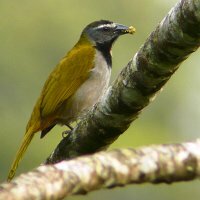
- Black-faced Grosbeak (Caryothraustes poliogaster) This grosbeak is found along the entire Caribbean slope in rainforest habitats. They usually travel in large, noisy flocks whence they are looking for fruiting trees. It has also been recorded in the remnant rainforest in the Rio Amarillo Valley, Copan.
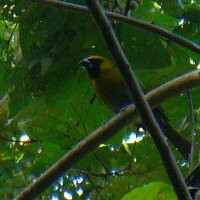
- Ruddy-breasted Seedeater (Sporophila minuta) I observed just one pair at close range on the edge of a pineapple field just west of Rio Bonito where they were most likely feeding on seeding grasses. This species inhabits the Pacific slope from Mexico to Panama down into S. America. It occurs on the Caribbean slope at least in Panama (Ridgely, 1989) with one record from La Ceiba, Atlantida in Honduras.
- Red-winged Blackbird (Agelaius phoeniceus) This unmistakable bird is found in wetland areas along the Caribbean slope of Honduras, principally where Cattails grow. It has been recorded at Cuero y Salado W.R., marshes near La Ceiba, the Lake Yojoa basin and along the Rio Patuca.
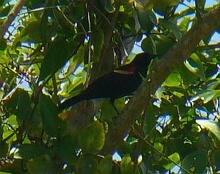
- Giant Cowbird (Scaphidura oryzivora) Only two cowbirds are presently found in Honduras at the moment. The Giant seems to be found in any kind of abundance where there are healthy Oropendola colonies. In Rio Platano, for example, at times one can see many together along the banks of the river. It is similar in appearance to the Grackle, but is much chunkier and has a shorter tail.
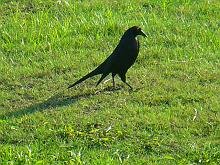
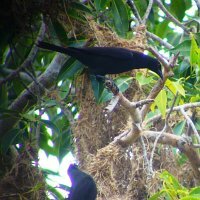
- Black-cowled Oriole (Icterus prosthemelas) This handsome oriole is confined mostly to the Caribbean slope and is found around rain forest edge, plantations and in coastal scrub. It is fond of palms.
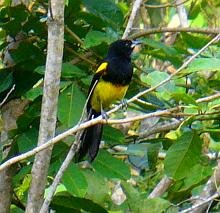
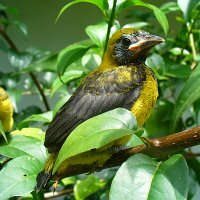
-
Yellow-backed Oriole (Icterus chrysater) In Honduras
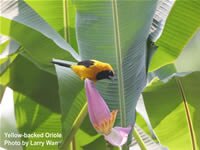 this striking oriole typically inhabits pine/oak forests at mid to upper elevations. They have been recorded at the Lodge on two occasions: Apr. 17, 2001 and early Apr. 2005 during a tour with R. Ridgely. This photo was taken at the Lodge as the oriole fed on the nectar from an ornamental banana plant.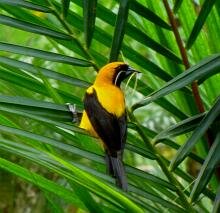
- Spot-breasted Oriole (Icterus pectoralis) This lovely Oriole is widespread in Honduras from interior valleys to the flood plains of the north coast. The spots on the flanks seen on most individuals readily identify this species from the other orange colored species.
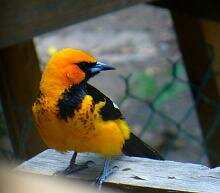
-
Baltimore Oriole (Icterus galbula) This showy migrant oriole is found throughout the country from sea level to well over 2,000m. It can be seen in flocks especially with the Orchard Oriole ( I. spurious) at the Lancetilla Botanical Gardens where they feed on flower nectar from trees such as Ingas.
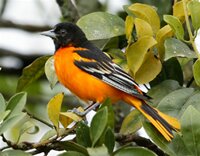
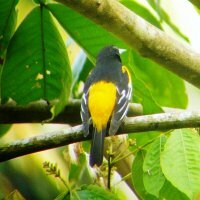
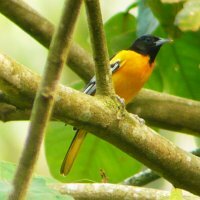
- Yellow-billed Cacique (Amblycercus holosericeus) In Honduras there are two cacique species with the Scarlet-rumped being confined to the La Mosquitia region. The Yellow-billed is found throughout Honduras typically below 2,000m. It is actually common in most thick scrubby and second growth habitats. It is recorded by voice far more often than it is seen due to its extreme skulking behavior. After so many years Alan Harper got me this wonderful photo during a Naturalist Journeys tour at the El Puente archaeological site near La Entrada, Copan while two birds worked a bamboo thicket
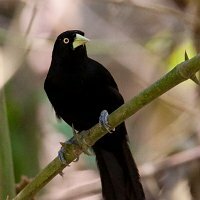
- Montezuma Oropendola (Psarocolius montezuma) Of our two oropendolas this one is the largest. It inhabits rainforest and edge along the Caribbean slope. In places with heavy deforestation as in Copan their numbers dwindle with a diminishing food supply of fruits. It typically inhabits lower elevations than the Chestnut-headed. It is common in La Mosquitia, Pico Bonito N.P., Lancetilla Botanical Gardens and Lake Yojoa.
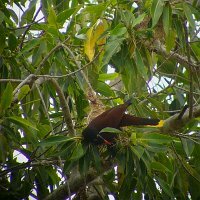
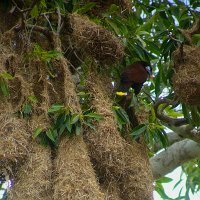
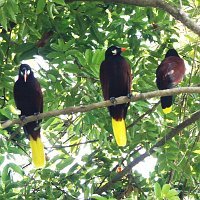
-
Scrub Euphonia (Euphonia affinis) Its name is somewhat
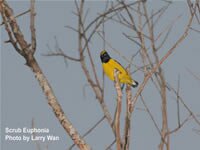 misleading into making one believe that it inhabits scrub, which it does at times, but also a variety of other habitats as well. It is found throughout Honduras up into lower montane habitats and is often found with the Yellow-throated Euphonia, especially at fruiting mistletoe or Melastoma trees and shrubs. One pair was observed from Feb. to Apr. 2005 as they built a nest and raised young in a Myrmecophila orchid at the Lodge.
- Olive-backed Euphonia (Euphonia gouldi) This colorful euphonia is found in humid broadleaf forest habitats up to about 1,500m. along the Caribbean slope. Like most euphonias it is quite fond of mistletoe and Melastomataceae fruits.
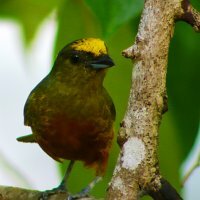
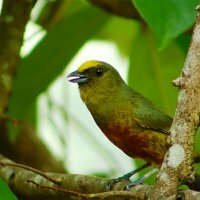
- White-vented Euphonia (Euphonia minuta) This is Honduras` least abundant Euphonia species. It has been recorded in Olancho, La Mosquitia and along the north coast at Pico Bonito N.P. One of the most reliable places to see it is at the Lodge at Pico Bonito. It can usually be found feeding on the mistletoe fruits near the reception area or down the entrance road just past the guard post.?
Known or suspected altitudinal migrants of Pico Bonito National Park:
- Highland Guan (Penelopina nigra)
- Brown Violet-Ear (Colibri delphinae)
- Green Violet-Ear (Colibri thalainus)
- Violet Sabrewing (Campylopterus hemileucurus)
- Stripe-tailed Hummingbird (Eupherusa eximia)
- Green-breasted Mountain-Gem (Lampornis sybillae)
- Magnificent Hummingbird (Eugenes fulgens)
- Resplendent Quetzal (Pharomachrus mocinno)
- Emerald Toucanet (Aulacorhynchus prasinus)
- Yellow-eared Toucanet ? (Selenidera spectabilis)
- Spotted Woodcreeper (Xiphorhynchus erythropygius)
- Azure-hooded Jay (Cyanolyca cucullata)
- Ruddy Foliage-Gleaner (Automolus rubiginosus)
- Russet Antshrike (Thamnistes anabatinus)
- Tufted Flycatcher (Mitrephanes phaeocercus)
- Slate-colored Solitaire (Myadestes unicolor)
- Black-headed Nightingale-Thrush (Catharus mexicanus)
- White-throated Thrush (Turdus assimilis)
- Common Bush-Tanager (Chlorospingus ophthalmicus)
- White-winged Tanager (Piranga leucoptera)
- Blue-crowned Chlorophonia (Chlorophonia occipitalis)
- Rufous-winged Tanager (Tangara lavinia)
- Shining Honeycreeper ?(Cyanerpes lucidus)
- Brown-capped Vireo (Vireo leucophrys)
- Golden-crowned Warbler (Basileuterus culicivorus)
Olanchito,Yoro (Honduran Emerald site)
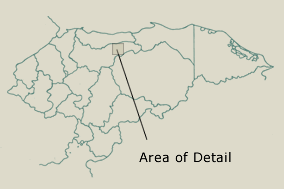
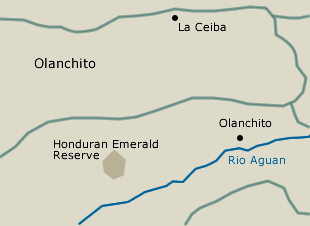
The Aguan Valley is in the Dept. of Yoro on the south side of the Nombre de Dios mountain range (much of which lies within Pico Bonito N.P.). Much of it lies within the mountains' rain shadow, naturally converting extensive areas into a virtual desert replete with cacti, succulents and many thorn-laiden plants. Most of the rain falls between June to November and there is an abundance of flowering plants and a myriad of insects. In the remainder of the year the land bakes under the hot, tropical sun. Many of the plants lose their foliage to conserve water or have thick or small leaves. Cacti and acacias protect themselves with a spiny armament.
A number of endemic plants have been discovered here and a new species of Cerambycid beetle is being described. The area harbors a strange mix of birds which typical of this arid habitat, are Caribbean slope species, migratory shorebirds, range isolates, while others are usually confined to the Pacific coast. To date some 150 species have been recorded in the valley proper with a great deal expected to be found in the nearby foothills.
The only endemic bird known to exist in Honduras is found here, the Honduran Emerald (Amazilia luciae). Currently, it exists in the Aguan Valley and the Olancho Valley near San Esteban, Olancho. Although it is the most abundant hummingbird species in the Aguan (4 have been recorded) it is nonetheless a critically endangered species. It has been estimated that between 6,000-8,000 acres of suitable habitat remain in the Aguan, most of which is privately owned. Every year suitable habitat is altered or destroyed to make way for crops or cattle.
However, efforts are under way to protect the Emerald, its habitat and the other desert dwelling inhabitants. A reserve has been declared west of Olanchito whose core zone is composed of an old Honduran military base. There is also a strong desire to acquire adjacent lands where prime habitat still exists. Organizations involved include: the World Bank, Pico Bonito Foundation (FUPNAPIB), Honduran Roads Agency (SOPTRAVI), Conservation International (CI), American Bird Conservancy (ABC), and the Alliance for Zero Extinction (AZE) as well as other biologists, botanists and naturalists.
Long term goals are to build a visitors' center, have park guards and install a trail system Currently, R. Gallardo has been the only guide who regularly takes visitors out to the area and perhaps with the addition of a visitor's center other companies will take an interest.
The following accounts are for some of the more interesting species and records found in the Olanchito dry forest.
-
Roseate Spoonbill (Platalea ajaja) Typically found along rivers, lagoons or marshes along the coasts it is surprising to have found this bird along ponds in the Aguan Valley.
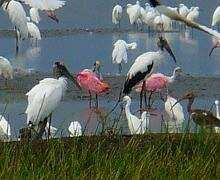
- Hook-billed Kite (Chondrohierax uncinatus) This bird of prey is uncommon to fairly common in Honduras occupying light woodland and edge as well as thorn scrub forest. It is locally common in the Aguan where individuals can be seen on almost every visit.
-
Roadside Hawk (Buteo magnirostris) This small raptor is found throughout Honduras from sea level to over 2,000m. It occupies a wide variety of habitats from open areas, arid scrub to light woodland. It is especially common in the Aguan Valley.
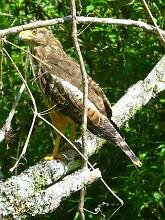 Juvenile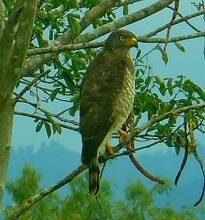
- Laughing Falcon (Herpetotheres cachinnans) This lovely falcon is common throughout the country and is found to at least 1,800m. It inhabits semi-open areas and light woodland where they hunt for prey such as snakes.
-
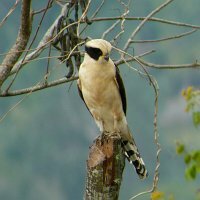
- American Kestrel (Falco sparverius) This small bird of prey occurs throughout Honduras away from the Caribbean coastline. It is typically found inhabiting semi-open area and pine-oak woodland. It is often seen perched on roadside electric poles and is common in Olanchito.
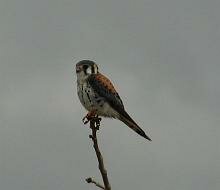
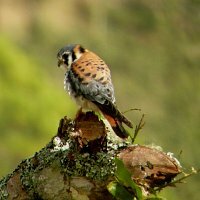
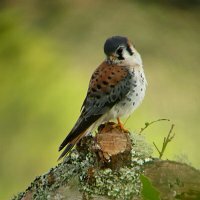
-
Ruddy Crake (Laterallus ruber) Finding this species alongside the road at a small pond just west of Olanchito was a surprise as it typically inhabits larger marshy areas, riverbanks and wetlands. Its distinctive descending trill was clearly heard and the bird identified from it (AUDIO).
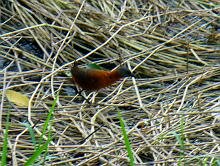
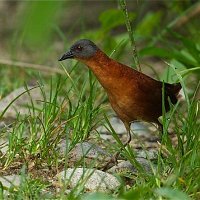
- Gray-necked Wood-Rail (Aramides cajanea) This, our largest rail, seems quite out of its ?normal? habitat occurring in the arid scrub forest of the Aguan Valley. This photo constitutes the third known report of the species in the area. The first sighting was at a nearby pond along the entrance road to the Honduran Emerald Reserve which in July `08 was dried up.
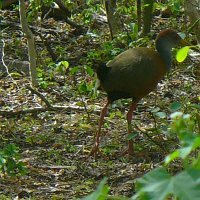
-
Double-striped Thick-Knee (Burhinus bistriatus)
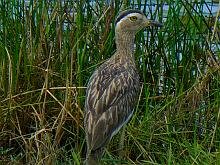
-
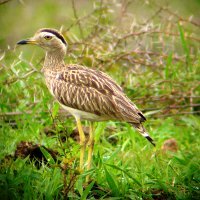
One of the few interesting birds that benefits from habitat alteration in the Aguan is this large, unusual species. It is almost strictly a crepuscular and nocturnal species when it feeds on large insects and other prey. In the heat of the day it sits or stands in the shade of small trees or bushes. It can be seen in near barren fields with scrubby grass and rocks in the early morning hours, either singly or small groups.
- Solitary Sandpiper (Tringa solitaria) A number of shorebirds appear at various ponds in the Aguan Valley and this species is one of them.
- Common Ground-Dove (Columbina passerina) This small dove is found throughout the country in open areas and inhabits grasslands, disturbed areas and arid scrub forest.
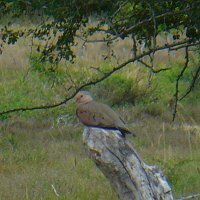
-
White-fronted Parrot (Amazona albifrons) Easily one of
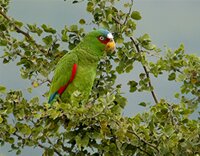 the most common and widespread parrots found in Honduras. They inhabit light forest, thorn scrub forest and semi-open areas, sometimes feeding on planted corn crops. It is common in the Aguan Valley where flocks can be seen (AUDIO).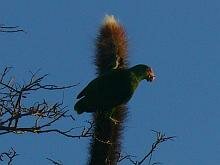
- Yellow-billed Cuckoo (Coccyzus americanus) This migrant transient cuckoo is scarce in Honduras and can occur in a wide variety of habitats. However, the sighting of this individual in Olanchito`s scrub forest was a surprise.
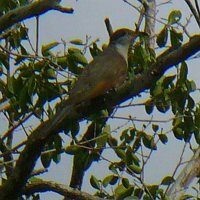
-
Lesser Ground-Cuckoo (Morococcyx erythropygus)
(See "Birds of Special Interest" for more info) -
Lesser Roadrunner (Geococcyx velox)
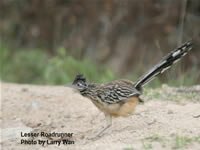
- This beautifully patterned bird is found throughout much of Honduras from near sea level well up into the highlands. It inhabits disturbed areas and scrub and although it is large it can be easily overlooked. It preys on large insects, snakes and lizards, using its speed to chase them down.
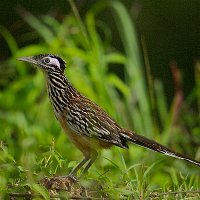
![Lesser Roadrunner]](photos/chosen/field%20work/Lesser%20Roadrunner-thumb.jpg)
- White-chinned Swift (Cypseloides cryptus) On July 30, 2005 David Narins and I observed a flock of some 50+ all black swifts in the Aguan Valley that most likely were C. cryptus, due to the elevation, time of year and its overall size.On March 25, 2008 Jeffrey Peters and I observed a flock of at least 150 of this species near the town of Las Minas during a light rain. All birds had squared off tails, not cleft. No patterns on throat or chest seen. Much flapping with some gliding.
-
Salvin's Emerald (Chlorostilbon salvini) S. Howell
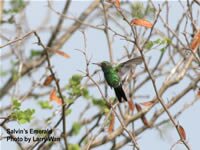 treats this species as different than the other emerald (C. cnivetii) found on the Bay Islands (Howell & Webb, 1995, pp.401-403). This species tends to be uncommon on the Honduran mainland, but fairly common in the Aguan Valley thorn scrub.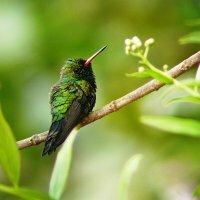
-
Honduran Emerald (Amazilia luciae) Honduras' only
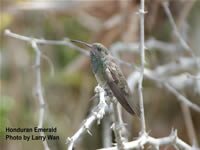 known endemic species. It is still common in the arid thorn scrub forest at certain locales in the Aguan Valley. First known to science in 1867 (Monroe, 1968) by a single specimen it was "regarded by many subsequent authors as an aberrant example of some already described Amazilia or as a possible hybrid". Monroe had even presumed it as a "forest inhabitant". See also "Birds of Special Interest".
 -
Elegant Trogon (Trogon elegans) This lovely trogon
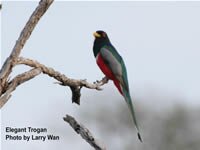 was only recently seen in the reserve in Apr. 2005. The more commonly encountered species there being the Black-headed Trogon (T. melanocephalus). In Honduras it is more common along the Pacific slope (AUDIO).
 -
Lineated Woodpecker (Dryocopus lineatus)
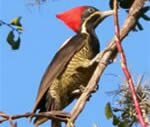
This is the second largest woodpecker in Honduras and is fairly common throughout. It can be found from sea level to over 1,500m. in a variety of habitats. Its loud, laugh-like call and loud, rapid drumming on trees usually gives away its presence. 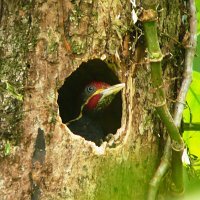
- Northern Beardless Tyrannulet (Camptostoma imberbe) In much of Honduras this tiny flycatcher inhabits dry areas, but can also be found around the perimeter of Lake Yojoa. It`s high pitched 3-note call is very reminiscent of the Yellow-bellied Tyrannulet of the north coast.
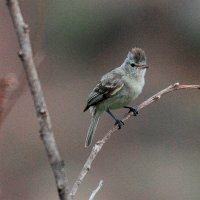
- Ash-throated Flycatcher (Myiarchus cinerascens) There are five Myiarchus flycatchers found in Honduras and this species is typically restricted to the Pacific slope. As a number of range isolates have already been recorded in the Aguan it is not surprising that this one turned up as well. One was seen well on Feb. 11, 2005 during a Natualist Journeys tour.
- Nutting's Flycatcher (Myiarchus nuttingi) Another species typically inhabiting the Pacific slope. Once was seen and heard on Aug. 15, 2004 with Barry Lyon and Victor Emanuel.
- Scissor-tailed Flycatcher (Tyrannus forficatus) Every year we usually record one or two of this species in the Aguan Valley whose occurence in this arid area along the Caribbean slop is unusual.
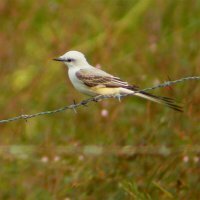
-
White-bellied Wren (Uropsila leucogastra) This small wre has a disjunct population in the Aguan Valley and apparently nowhere else in Honduras. Its species status may be uncertain as the Aguan birds do not readily respond to a tape playback of leucogastra recorded in Mexico. More work needs to be done to ascertain its status. It is common in the thorn scrub and readily comes in to a pygmy-owl imitation (AUDIO).
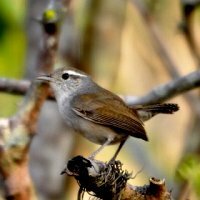
-
White-lored Gnatcatcher (Polioptila albiloris) Another species who has a disjunct population in the Aguan Valley. It is common here and is readily attracted by a pygmy-owl imitation (AUDIO).
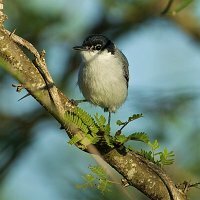
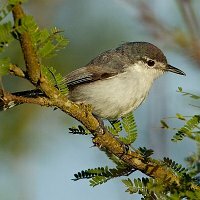
- Tropcial Mockingbird (Mimus gilvus) This bird is typically found in Honduras along the Pacific slope, but also occurs as a common species in the Aguan Valley.
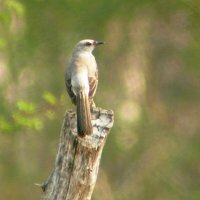
- Indigo Bunting (Passerina cyanea) This migratory bunting is fairly common to abundant in much of Honduras. It generally occurs in semi-open areas with grassy or weedy fields.
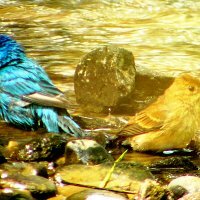
Bay Islands and Pelagic
The Honduran Bay Islands are a magnet for snorkelers and scuba divers from all over the world who come to enjoy some still spectacular coral reefs. The three main islands run in a line from southwest to northeast and are an extension of the mountain range that runs behind San Pedro Sula. Utila is the smallest and closest island to the mainland. Next is Roatan, a long, thin island that extends some 50 kms. Finally, there is Guanaja with the highest elevation of all Honduran Caribbean territories standing at 413m.
Between Roatan and the mainland are the Cayos Cochinos (Hog Cays) that consist of more than a dozen islands and cays. Far out to the northeast (about 400km from La Ceiba) are the Swan Islands (2 small islands). There are other groups of islands and cays off Honduras' north coast that would potentially yield pelagic species.
Collectors early on had taken birds from the Islands as they were easily accessible and there has been work done recently as well. More extensive pelagic surveying, however, has yet to be done. There are a number of island birds that can be found most readily and nowhere else within the Honduran territory. Some of the species are restricted to a specific islands and are noted accordingly. The following are some of the notable species.
- Brown Pelican (Pelecanus occidentalis) Our only resident pelican can be found along both coasts, the Bay Islands and occasionally inland. Adults are wonderfully colored.
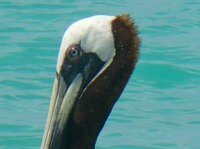
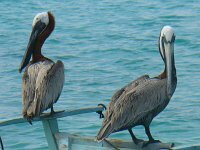
- Magnificent Frigatebird (Fregata magnificens) This large bird inhabits the coast lines of Honduras and is often seen trying to steal food from other birds such as terns and gulls. The males have a red throat pouch and females have a white breast.
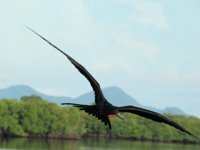
- Osprey (Pandion haliaetus) The Fishing Eagle, as it is called in Honduras, is found virtually anywhere there is suitable aquatic habitat with fish, including Tilapia farms. This photo was taken on the Bay Island of Guanaja.
- Rufous-necked Wood-Rail (Aramides axillaries) This bird ranges from coastal w. Mexico, the Yucatan peninsula down to S. America. In Honduras it has been recorded along the Pacific coast as well as on Roatan and Guanaja. May occur elsewhere. Typically found in coastal mangrove habitats, but in El Salvador has been found inland far from mangroves.
-
Black-necked Stilt (Himantopus mexicanus)
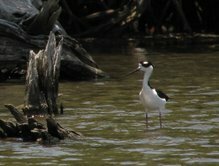
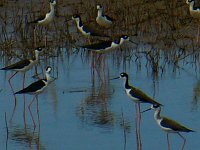
This lovely bird is found as a resident migrant on the Bay Islands, along the n. and s. coasts and Lake Yojoa. - Ruddy Turnstone (Arenaria interpres) This migrant shorebird can be found along sandy beaches during migration and more frequently along rocky shorelines in the Bay Islands.
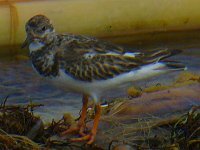
-
Parasitic Jaeger (Stercorarius parasiticus)
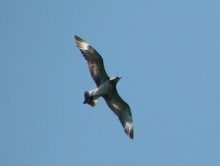
This mostly pelagic species is occasionally seen along the north coast and around the Bay Islands. This juvenile was photographed at Brus Lagoon in La Mosquitia. - Royal Tern (Sterna maxima) This is the most abundant tern species in Honduras and is commonly found along both coasts, the Bay Islands as well as at Lake Yojoa.
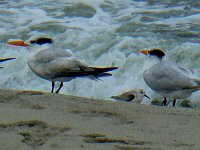
-
Bridled Tern (Sterna anaethetus)
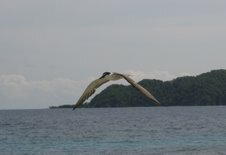
Although unreported for Honduras this species was found breeding along the Bay Islands. See "Seabirds of Bay Islands" study. - Least Tern (Sterna antillarum) This is our smallest tern species and is uncommon.
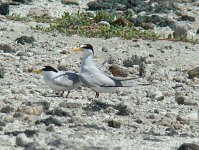
-
Brown Noddy (Anous stolidus)
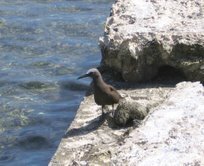
Occasionally found along the north coast, but most likely encountered around the Bay Islands. - White-crowned Pigeon (Patagioenas leucocephala) This common pigeon is found on all three Bay Islands in mangroves, forest and around human habitations. It is occasionally found along the north coast. Many were seen in La Mosquitia after hurricane Mitch I 1998.
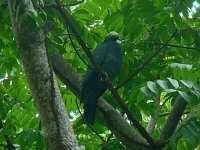
-
Caribbean Dove (Leptotila jamaicensis)
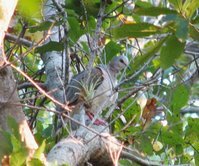
Found on Roatan and Cayos Cochinos as a fairly common breeding species. - Yellow-lored Parrot (Amazona xantholora) One specimen supposedly taken on Roatan in 1947. Current status is uncertain, but I have been informed by Lloyd Davidson (pers. comm.), who owns Macaw Mt., that he has seen small flocks of these birds around the French Harbour area. No other small parrot is suppose to exist there.
- Yellow-naped Parrot (Amazona auropalliata) This large parrot inhabits various parts of Honduras including the Gulf of Fonseca, La Mosquitia as well as Roatan and Guanaja. This photo was taken on Guanaja.
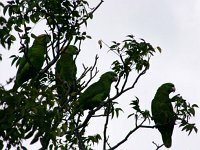
- Smooth-billed Ani (Crotophaga ani) Found on all three Bay Islands as a breeding species. On Utila it occurs more often on the north side amid cattle pastures in small flocks.
-
Northern Potoo (Nyctibius jamaicensis)
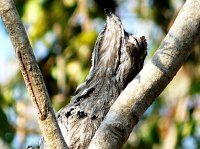
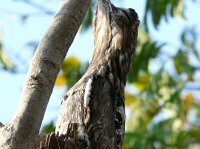
This bird is infrequently found in Honduras and inhabits woodland as well as open areas and scrub forest. This cryptic bird is extremely difficult to find in the daytime when it is at rest. This photo was taken at Cuero y Salado W.R. where local guides often know where to find it. It is also reported on Roatan. - Green-breasted Mango (Anthracothorax prevostii) This large hummer is found primarily along the Caribbean slope in Honduras and the Bay Islands. The female is strikingly different with its white belly and long, vertical black stripe.
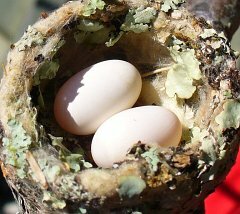
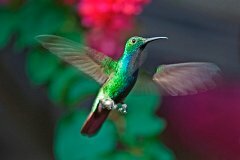
- Canivet's Emerald (Chlorostilbon canivetii) This charming little emerald green hummer inhabits the Honduran Bay Islands where it is quite common. It is considered to be a distinct species by some authorities from the Salvin's (Fork-tailed) Emerald found on the mainland. See " Howell and Webb, Birds of Mexico and N. Central America", pp. 401-403 for more info. There are four "forms" of this bird in the region, two of which occur in Honduras. They are proposed as separate species by Steve Howell based on morphological characteristics. The Canivet's is common to abundant on the Bay Islands and is often found at feeders alongside the Green-breasted Mango and Ruby-throated Hummingbird.
- Mangrove Vireo (Vireo pallens) This highly vocal bird is common on Utila and Roatan in mangroves and away from the water as well. It also occurs along the north coast in La Mosquitia.
-
Yucatan Vireo (Vireo magister)
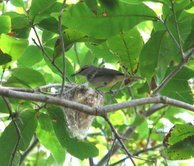
Occurs on all three Bay Islands, though rare on Utila. Occurs in either mangrove or brushy habitats. - Vitelline Warbler (Dendroica vitellina) The only place in Honduran territory where this species exists are the Swan Islands.
- Northern Cardinal (Cardinalis cardinalis) Has been found only on the Swan Islands. Uncertain if it breeds there.
- Boblink (Dolichonyx oryzivorus) This is one of the species that migrates through the Antilles and passes through the Swan Islands.
Study on Seabirds of Bay Islands (MS Word, 637Kb)
Southern Honduras
For the purpose of this website ?Southern Honduras? will be called ?Choluteca? as it is known by most Hondurans which actually consists of the Departments of Choluteca and Valle. Both Departments have Pacific Ocean shoreline in the Gulf of Fonseca which it shares with El Salvador to the west and Nicaragua to the south. It ranges in elevation from sea level to about 1,635 masl in the Cerro Las Ceniceras. The coast itself is composed of flat areas encompassing more than 2,000 kms², part of which is inundated by permanent sea water and/or seasonal wetlands. Away from the coast are low lying foothills which give way to taller mountains. Rainfall on average is much less than the rest of the country and ranges from 1,400 to 2,700 mm/yr. It has a relatively short, intense rainy season and a long dry season. Approximately half of the area is utilized by people for agricultural purposes, cattle, coffee and vast shrimp farms in the former mangroves.
Despite being on the Pacific slope Choluteca holds an ample variety of habitats that include mangrove forests, seasonal freshwater wetlands, remnant deciduous (monsoon) forest, pre-montane rain forest, ?freshwater? riparian areas, and pine/oak woodland. Major rivers that enter into the Gulf include the Guascorán, Guacirope, Choluteca and Negro. The mangrove habitats have been hit the hardest as the shrimp farm industry continues to grab more of the flat lands and convert them into monoculture shrimp farms. This is great for species that steal shrimp (if they are not shot) from the ponds, but is bad for species that rely on the mangroves such as the Rufous-necked Wood-Rail, Mangrove Black-Hawk, Mangrove Cuckoo, Night-Herons and to a large extent the Yellow [Mangrove] Warbler. The Pacific slope dry (monsoon) forest has also been nearly decimated along the Honduras coast. Some patches occur in various areas in Choluteca where the Fan-tailed Warbler, Thicket Tinamou, Long-tailed Manakin and recently discovered White-browed Wren occur. Cerro Guanacaure just east of the city of Choluteca is an excellent place to see these species.
There are a number of official protected areas and proposed reserves in Choluteca including La Botija N.P.; ?species mgt. areas? of Bahia de Chismuyo and San Lorenzo, El Jicarito and Berberia wetlands and others; Gulf of Fonseca Marine N.P.; and Cerro Guanacaure and Isla del Tigre ?multiple use areas?. The majority of these are wetland reserves aimed in hopes to protect the existing permanent and seasonal wetlands. They are in fact, extremely important for thousands of migrating waterfowl, shorebirds and other species. Our visits to the area have produced some incredible waterfowl spectacles. During our visit in Nov. 2007 to El Jicarito and La Berberia we witnessed thousands of Black-necked Stilts, perhaps a couple thousand White Pelicans as well as hundreds and even thousands of other shorebirds and ducks. The only known country records for Pinnated Bittern come from this area as well. In July 1999 Honduras actually declared almost 70,000 hectares as the world?s 1000th RAMSAR site ( see www.ramsar.org/wn/w.n.honduras_1000htm for details).
- Fulvous Whistling-Duck (Dendrocygna bicolor) This lovely resident duck is found throughout much of Honduras occurring on lakes, large ponds and estuaries. The only area where it is seasonally common is at Lake Yojoa.
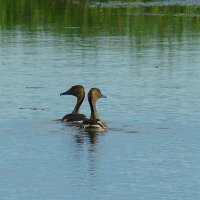
- Northern Shoveler (Anas clypeata) This migrant duck inhabits mostly freshwater habitats in Honduras, although it can be found in brackish water in the south. Recent records are from Choluteca in the Berberia wetlands, Lake Yojoa and La Mosquitia.
- Northern Pintail (Anas acuta) The pintail is uncommon to rare sighting in Honduras. This moulting male was found on the Las Tablas private property on the second visit on Nov. 28, 2010 near Monjaras. It was not there the previous day.
-
Green-winged Teal (Anas crecca)
This migrant duck reaches its southern wintering range in Honduras. Recent observations include sightings in the Choluteca wetlands of El Jicarito. -
Lesser Scaup (Aythya affinis)
The scaup has only been reported at a few localities in Honduras in recent history and it not common anywhere. The two found at a small vernal pond near Monjaras, Choluteca was a surprise. 
-
Masked Duck (Nomonyx dominicus)
On Nov. 20, 2010 Mayron and Daniel found a pair of these ducks in a small vernal pond on the Las Tablas ranch near Monjaras. This is a very rare sighting in Honduras. The next weekend when I visited the same pond these birds were gone and were replaced by the pair of Ruddy`s. I guess the pond was too small for them to hang out together. 
-
Ruddy Duck (Oxyura jamaicensis)
On Nov. 27 and 28 Mayron and I found this rare migrant duck at two localities in the Choluteca area. For more info and photos go to ?Birds of Special Interest?. -
Least Grebe (Tachybaptus dominicus)
This small grebe is widespread in Honduras and occurs from sea level to at least 1,700m. It can be found in small ponds as well as larger bodies of water. Unlike the Pied-billed, however, it is usually more restricted to places with aquatic vegetation. 
-
American White Pelican (Pelecanus erythrorhynchos)
This migrant also reaches its southern wintering range in Honduras. Although it is occasionally recorded along the north coast the majority of sightings come from southern Honduras. A visit to the area in Nov. 2007 at El Jicarito and Berberia wetlands revealed a total of some 1,000 individuals. 
-
Neotropic Cormorant (Phalacrocorax brasilianus)
This, our only recorded cormorant, species is found mostly along the northern and southern coasts of Honduras with rare scattered records far inland. It inhabits estuaries, large rivers, lakes and lagoons. 
-
Pinnated Bittern (Botaurus pinnatus)
To date this bittern has only been recorded in the wetlands of southern Honduras. 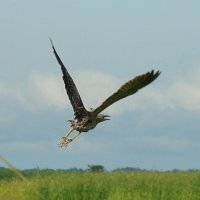
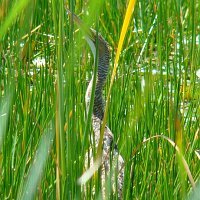
-
Reddish Egret (Egretta rufescens)
This migrant is rarely encountered in Honduras with few recent records. On Nov. 28, 2010 Mayron and I encountered six individuals in a vernal lagoon at the Berberia wetlands. The late afternoon sun made for some wonderful photos. -
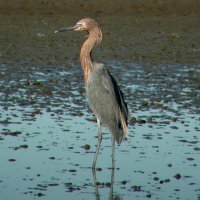
-
White Ibis (Eudocimus albus)
This ibis occurs throughout Honduras along both coasts as well as the Bay Islands. It inhabits coastal mangrove estuaries and wetland habitats. In Nov. 2007 this species was fairly common in the Berberia wetlands. 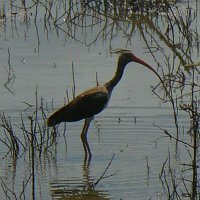
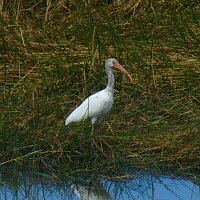
-
Glossy Ibis (Plegadis falcinellus)
I recorded this species a number of years ago in the Rio Platano Biosphere Reserve and it has also been recently found in the Choluteca area. It is by no means common or abundant anywhere. 
-
Roseate Spoonbill (Platalea ajaja)
This striking bird is found throughout Honduras in or near aquatic habitats, mostly along the north and southern coasts. It is seasonally common in the wetlands of Choluteca. 
-
Jabiru (Jabiru mycteria)
Honduras` largest stork is found primarily along both coasts, inhabiting wetlands and seasonally flooded fields. In Choluteca it is seasonally fairly common at the El Jicarito and La Berberia wetlands. 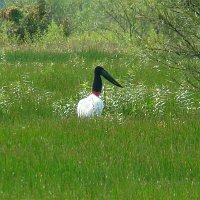
-
Wood Stork (Mycteria americana)
Our other species of stork is more widespread than the Jabiru and can survive far inland. It is still not uncommon to see flocks in the vicinity of Copan Ruins. In Choluteca, however, they are seasonally abundant and can be seen by the hundreds. 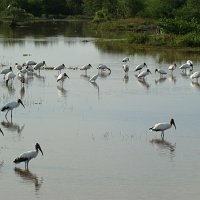
-
Pearl Kite (Gampsonyx swainsonii)
This bird was expected to be found in Honduras either somewhere in open areas of La Mosquitia or in southern Honduras. In 2009 Mario Espinal observed and photographed it on various occasions as well as in Feb. 2010 somewhere in the Dept. of Choluteca. 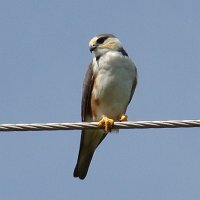
-
Double-toothed Kite (Harpagus bidentatus)
For the most part this species is found along the Caribbean slope favoring more humid conditions. There is one historical record of it not far from Tegucigalpa in 1937 which may have come from existing monsoon forest. It has since gone unrecorded in the south until we found this juvenile in the Cerro Guanacaure monsoon forest during the March `08 Choluteca Bird Count. 
-
Cooper?s Hawk (Accipiter cooperii)
Several individuals were seen soaring over the Cerro Guanacaure during the March `08 Choluteca Bird Count. It is otherwise a difficult bird to find in Honduras.
-
Harris?s Hawk (Parabuteo unicinctus)
This handsome hawk had gone unreported for Honduras and was expected to turn up in the Choluteca area. It was, in fact, found there and is a fairly common inhabitant of open to semi-open areas. On our visit in Nov. `07 we saw a number of individuals, but could not get close enough to photograph one. 
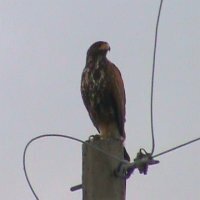
-
Zone-tailed Hawk (Buteo albonotatus)
Nowhere in Honduras is this hawk common or abundant. There are, however, scattered records from throughout the country where it inhabits a wide variety of habitats. I have even observed an individual in downtown San Pedro Sula lifting off a house roof with a cat! Looks very similar to a Turkey Vulture and easy to pass one up thinking it is a vulture. Besides the white tail band this hawk is often looking downward such as seen in this photo. 
-
Crested Caracara (Caracara cheriway)
Our most common resident caracara is found throughout the country in a variety of open to semi-open habitats. It can be particularly common in the Choluteca area. On one visit I counted well over 100 individuals in Choluteca in a field that was being plowed. 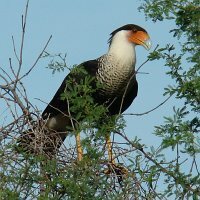
-
Peregrine Falcon (Falco peregrinus)
The peregrine is generally an uncommon sighting in Honduras, but is widespread. On numerous occasions I have found it following birds in migration or in wetland habitats where there is an abundance of potential prey. This bird was photographed in the Berberia wetlands as a White Pelican swam by. 
-
Clapper Rail (Rallus longirostris)
This species was recently discovered in Nov. 2010 by R. Gallardo and M. Mejia in the Berberia wetlands. It is a major find for Honduras and may represent an as of yet undescribed race. See ?Birds of Special Interest? for some wonderful photos. -
Double-striped Thick-Knee (Burhinus bistriatus)
In most literature for the region it states that this species inhabits grassy areas, savannas and arid valleys. This definitely is the case for the majority of Honduras so when we found it in the wetlands of Choluteca it was quite the surprise. It did, in fact, act like a giant shorebird amongst some muddy areas and an even bigger surprise was to find them out in the open at midday. In their typical arid habitats by mid morning they are usually hidden under a bush. As seen in the photo one individual was even found in the middle of a plastic covered field. All seen were quite tame and allowed for great photo opportunities. 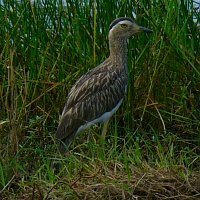
-
Black-necked Stilt (Himantopus mexicanus)
During our Nov. `07 visit we witnessed literally thousands of these birds in the El Jicarito and La Berberia wetlands. 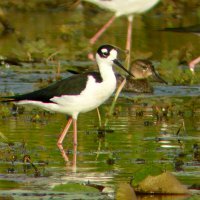
-
Greater Yellowlegs (Tringa melanoleuca)
This migrant resident shorebird can be found throughout the country in a variety of wetland habitats, although it favors muddy shorelines. 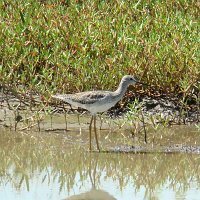
-
Lesser Yellowlegs (Tringa flavipes)
This migrant resident shorebird is very similar in appearance to the Greater and care must be taken in their identification. 
-
Spotted Sandpiper (Actitis macularius)
This shorebird is common to abundant throughout the country and inhabits most any type of wetland, rivers and even oxidation ponds. 
-
Whimbrel (Numenius phaeopus)
This large shorebird is found principally along both coasts inhabiting beaches and mudflats. 
-
Long-billed Curlew (Numenius americanus)
For more info and photos see ?Birds of Special Interest?. -
Marbled Godwit (Limosa fedoa)
This migrant resident makes it down to the southern coast of Honduras in small numbers. Although there is a historical record for La Ceiba in 1933 (Monroe, 1968) I am not aware of any new north coast records. 
-
Least Sandpiper (Calidris minutilla)
This tiny shorebird can be found along both coasts and occasionally inland along rivers, especially during migration. 
-
Pectoral Sandpiper (Calidris melanotis)
Although there are scattered records for various parts of the country it is by no means commonly encountered anywhere. It`s similar appearance to other shorebirds may make it difficult to separate. 
-
Long-billed Dowitcher (Limnodromus scolopaceus)
Although not previously recorded for Honduras we found it in the extensive Berberia wetlands on our Nov. `07 visit. These photos constitute the first country records. 
-
Wilson`s Snipe (Gallinago delicate)
Although this species may be a widespread resident migrant it is not easy to find. It typically inhabits wet, marshy areas and can usually be found by accidentally flushing one up whence it flies out of sight into thick cover anew. I was lucky to have found this one hiding and feeding amongst mangrove roots at Berberia. 
-
Gull-billed Tern (Sterna nilotica)
This tern is generally uncommon in Honduras and can be found on both coasts. During the Nov. 2010 trip to Berberia Mayron and I found many resting in one of the vernal lagoons. 
-
Caspian Tern (Sterna caspia)
This large tern can be found as a common species in southern Honduras where large flocks can be seen. 
-
Elegant Tern (Sterna elegans)
We recorded a number of individuals in the Choluteca area during our Nov. `07 visit. Its slender, slightly decurved bill distinguishes it from other similar species. 
-
Black Skimmer (Rhynchops niger)
There are a few records of this species from the north coast in the Tela area (Monroe, 1968; Gallardo, Feb. 14, 1997). It has been found to be locally common in the Choluteca area especially around shrimp farms. Where they are not poached flocks can reach numbers greater than 100. 
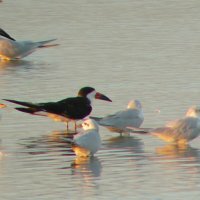
-
Mourning Dove (Zenaida macroura)
In most of Honduras this dove is uncommon to rare and can be found up to at least 1,700m. In southern Honduras, however, it is quite common, but nonetheless hard to approach closely. -
Plain-breasted Ground-Dove (Columbina minuta)
This is yet another species that was unrecorded for southern Honduras. During our Nov. `07 visit we observed one male on an access road going through the Berberia wetlands. There were adjacent grassy fields and open areas where it most likely feeds. -
Pacific Parakeet (Aratinga strenua)
This species occurs along the Pacific slope from southern Mexico to northwestern Nicaragua. It inhabits semi-open areas and deciduous forest. All of the individuals I have seen had no orange on the throats, very unlike the birds found in the interior of Honduras which show extensive orange. -
Orange-fronted Parakeet (Aratinga canicularis)
This species also inhabits the Pacific slope from Mexico to NW Costa Rica. It inhabits semi-open areas, light pine/oak woodland and semi-deciduous forest. This species is found in close proximity along with the Red-throated, Olive-throated and Barred Parakeets in the Copan area. 
-
Orange-chinned Parakeet (Aratinga jugularis)
This small parakeet ranges along the Pacific slope from s. Mexico to n. S.A. It inhabits deciduous forest and semi-open areas. 
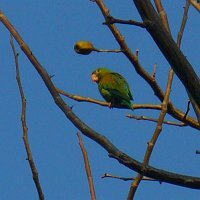
-
Striped Cuckoo (Tapera naevia)
This species is found along both coasts and inland to Copan Ruins. During the breeding season it is quite vocal, but often difficult to observe. During the Choluteca Bird Count it was found to be quite common in the Cerro Guanacaure area. 
-
Pacific Screech-Owl (Megascops cooperi)
This small owl inhabits the Pacific slope from s. Mexico to n.w. Costa Rica. It was recently found in the Choluteca by O. Komar et al at the Playa Dorada. On a visit in Oct. 2008 Daniel and I visited the same area where he was able to take this wonderful photo.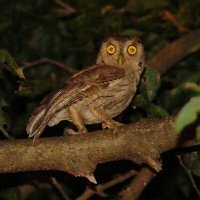
-
Striped Owl (Pseudoscops clamator)
During the same visit to Playa Dorada on Oct. 2008 I heard one individual calling in the distance and our attempt to locate it was spoiled by a big thunderstorm. On Nov. 27 one was seen on a farm near Monjaras, Choluteca. The photo shown here was taken on the campus of UNAH in Tegucigalpa. This bird is probably more widespread in Honduras than records indicate. 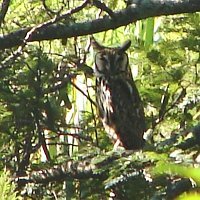
-
Blue-throated Goldentail (Hylocharis eliciae)
The range map in Howell and Webb show a ??? in southern Honduras for this species. During our Nov. `07 visit we observed one feeding on a blooming Inga in a wooded canyon alongside other hummingbird species. One was also seen during the March `08 Choluteca Bird Count, reaffirming its existence in the area.
-
Blue-tailed Hummingbird (Amazilia cyanura)
See ?Birds of Special Interest? for info. and photo. -
Plain-capped Starthroat (Heliomaster constantii)
In Honduras this species occurs principally along the Pacific slope and is not sympatric with the similar Long-billed Starthroat with the later preferring more humid conditions. In Choluteca it was found alongside many other hummers feeding on blooming Inga trees.
-
Elegant Trogon (Trogon elegans)
This lovely trogon occurs throughout much of Honduras and inhabits a variety of habitats including pine/oak forest, semi-deciduous woodland and arid scrub forest. We found it to be very common in the Cerro Guanacaure.
-
Belted Kingfisher (Ceryle alcyon)
Our only migrant kingfisher can be found throughout most of the country in appropriate habitats. 
-
Hoffman?s Woodpecker (Melanerpes hoffmannii)
This woodpecker is endemic to the Pacific coast of s. Honduras, w. Nicaragua to n.w. Costa Rica. It inhabits semi-open areas and monsoon forest edge. It`s vocalization is quite distinct from the common Golden-fronted Woodpecker. 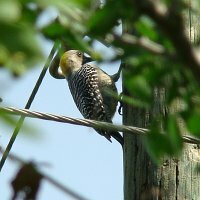
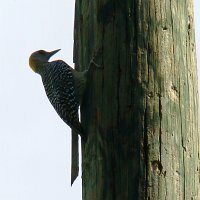
-
Greenish Elaenia (Myiopagis viridicata)
Although widespread in Honduras I have not found this species to be really common anywhere. In the Cerro Guanacaure area, however, I have found it to be at least locally common. 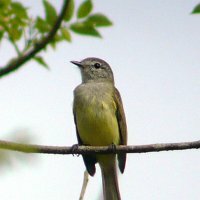
-
Ash-throated Flycatcher (Myiarchus cinerascens)
This flycatcher is mostly restricted to the Pacific slope of Honduras and occasionally dry inland valleys. It is quite difficult to tell apart from the Nutting`s unless they are calling. In this picture, however, you can clearly see the clean light yellow wing linings.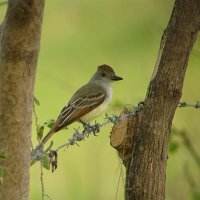
-
Scissor-tailed Flycatcher (Tyrannus forficatus)
This elegant flycatcher winters from s. Mexico to Panama and from Guatemala southward almost entirely along the Pacific slope. In the Choluteca area they are very common and hundreds can be observed daily. 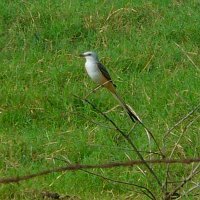
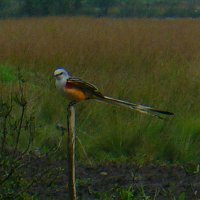
-
Long-tailed Manakin (Chiroxiphia linearis)
This is one of the most striking of all Central American manakins. For more photos and information see ?Birds of Special Interest?. 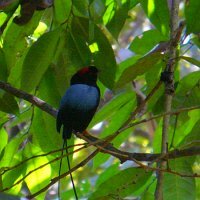
-
White-browed Wren (Thryothorus albinucha)
This species was on the list of ?Species to Watch For? as of Feb. `08. During the March `08 Choluteca Bird Count I discovered the first two on the peak of Cerro Guanacaure at 1,007 masl. I obtained two different audio recordings. The following day I returned to the mountain to look for more individuals and got three more responses. Various attempts to call them in close enough to take photos failed. It is a rather shy bird in this scrubby habitat. -
Fan-tailed Warbler (Euthlypis lachrymosa)
This lovely resident warbler inhabits the forest floor along the Pacific slope in Honduras. It is not really common anywhere, but found it to be so at the Cerro Guanacaure. 
-
Mangrove (Yellow) Warbler (Dendroica erithachorides)
This handsome bird inhabits the coastal mangroves of southern Honduras where it is fairly common. Although unreported for the north coast of Honduras it may well exist there. There are also historical records for Guanaja. %20Warbler-2-Germer-thumb.jpg)
%20Warlber-1-Germer-thumb.jpg)
-
Northern Mockingbird (Mimus polyglottos)
This photograph constitutes the second known record for Honduras. It may well be a regular, but rare to uncommon winter resident in the Choluteca lowlands. The photographed bird was seen at the Las Tablas ranch. 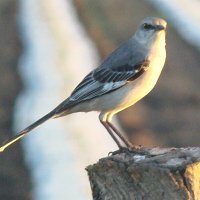
-
Western Tanager (Piranga ludoviciana)
This migrant resident tanager was found to be quite common in the monsoon forests of Cerro Guanacaure. -
Ruddy-breasted Seedeater (Sporophila minuta)
Except for one personal record near Pico Bonito this species occurs along the Pacific slope where it is common. It inhabits open areas, edges of mangrove forests and weedy fields. 
-
Stripe-headed Sparrow (Aimophila ruficauda)
This sparrow is restricted to the Pacific slope and is quite common throughout. It inhabits mangrove forest edge, scrub and monsoon forest edge. 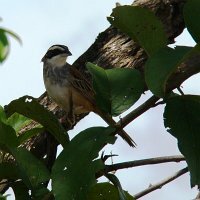
-
Blue Bunting (Cyanocompsa parellina)
This lovely little bird is found along the Pacific slope and occurs inland as far north as Copan Ruinas, but as rare individuals. It is fairly common in the monsoon forests of southern Honduras.
